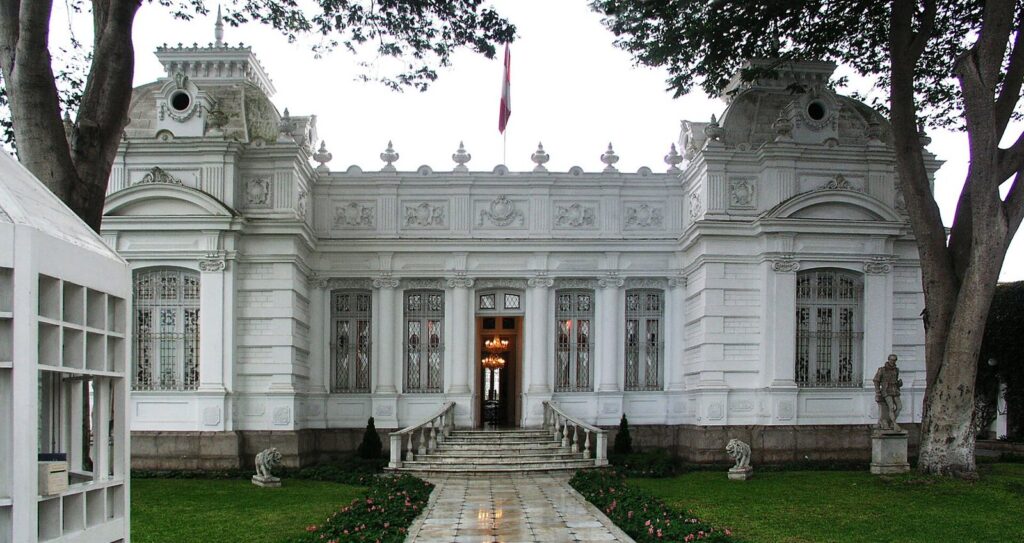
The best museums and art galleries in Lima, Peru start with Museo Larco for pre-Columbian art, MALI for the widest sweep of Peruvian art in one building, and the LUM for the recent history that explains the country you’re traveling through. With a second museum day, add Barranco’s Museo Pedro de Osma and MAC Lima; with an hour to spare downtown, walk into the central bank’s museum, which is free.
This is for visitors choosing between Lima’s museums by collection, location and opening day, which matters more here than in most capitals: nearly every museum closes on Mondays, Huaca Pucllana closes on Tuesdays instead, and the new national museum, MUNA, has been closed since December 2024. Hours and prices were checked on September 24, 2026 against each museum’s own website and the Ministry of Culture’s museum directory.
On this page: Museums compared · How to choose · Pueblo Libre · Downtown · Miraflores and San Isidro · Barranco · Contemporary art and galleries · Pachacamac and MUNA · Free days · Planning museum days · Accessibility · FAQ
Lima’s Museums Compared
Prices are the foreign-visitor adult rate in soles; most museums charge Peruvians and residents less. Time needed is a planning estimate for an unhurried visit.
| Museum | Best for | Area | Closed | Adult ticket | Time needed |
|---|---|---|---|---|---|
| Museo Larco | Pre-Columbian ceramics, metalwork and the erotic-pottery gallery | Pueblo Libre | Never: open daily | S/ 50, or S/ 45 online | 2 hours, plus lunch |
| MALI (Museo de Arte de Lima) | A survey of Peruvian art, plus temporary shows | Parque de la Exposición, Cercado de Lima | Mondays | S/ 40 | 2 hours |
| LUM (Lugar de la Memoria) | Peru’s 1980 to 2000 internal conflict | Miraflores clifftop | Mondays | Free, with ID | 1 to 1.5 hours |
| Museo Pedro de Osma | Colonial painting, silver and furniture in a mansion | Barranco | Mondays and listed dates | S/ 35 | 1.5 hours |
| MAC Lima | Contemporary art | Barranco, Miraflores end | Mondays | S/ 20 | 1 hour |
| Museo Amano | Pre-Columbian textiles | Miraflores | Mondays (visits by appointment) | S/ 35 | 1 hour |
| National museum (MNAAHP) | Archaeology and independence history, partly under renovation | Pueblo Libre | Mondays | Free | 1 hour |
| MUCEN (central bank museum) | Pre-Columbian pieces, Peruvian painting and coins | Historic center | Mondays and holidays | Free | 45 min to 1 hour |
| Museo de Arte Italiano | Italian art from around 1900 | Paseo de la República, by MALI | Sundays (except the first) and Mondays | S/ 6 | 45 min |
| San Francisco convent and catacombs | Cloisters, library and the ossuary | Historic center | Open daily | Not published online | 1 hour, guided |
| Santo Domingo convent | Cloisters, saints’ relics and the tower | Historic center | Mondays | S/ 15 | 1 hour, guided |
| Huaca Pucllana | An adobe pyramid and its site museum | Miraflores | Tuesdays | S/ 15 by day | 1 hour, guided |
| Pachacamac | A pilgrimage sanctuary and its site museum | Lurín, 31.5 km south | Mondays | S/ 15 | Half a day |
| MUNA (Museo Nacional del Perú) | The new national museum | Lurín | Closed since December 2024 | n/a | n/a |
The bigger museums on this list each get a detailed guide of their own in this series. Below, they’re grouped by area, because in Lima the drive between museums shapes a day more than the museums themselves do.
How to Choose: Which Lima Museum Fits Your Trip?
Lima has more good museums than a short trip can hold, so choose by what you want to understand rather than by rank.
- One museum only: Museo Larco. It’s open every day, it’s the one that makes sense of everything you’ll see later in Cusco, and its terrace café makes lunch part of the visit.
- Pre-Columbian Peru in depth: Larco, then the Amano for textiles, then a site: Huaca Pucllana in Miraflores or Pachacamac to the south.
- Colonial Lima: the Pedro de Osma in Barranco for painting and silver, and the convents of San Francisco and Santo Domingo downtown.
- Peruvian art across the centuries: MALI, whose ticket covers the permanent collection and the current temporary exhibitions.
- Contemporary art: MAC Lima, MALI’s temporary shows, and the galleries covered below.
- Recent history: the LUM, which is free and sits on the Miraflores clifftop.
- A free hour downtown: MUCEN, two blocks from the Plaza Mayor, or the national museum in Pueblo Libre if you’re already at Larco.
If a museum morning is part of a wider plan, the best things to do in Lima puts the museums alongside the food, the coast and the historic center.
Pueblo Libre: Museo Larco and the National Museum
Pueblo Libre is a quiet residential district between the historic center and the coast, and it holds two of the three museums most visitors should consider. They’re 1.5 km apart, about 19 minutes on foot.
Museo Larco
Larco is the easy answer to “which Lima museum?” and, for once, the easy answer is right. The collection covers the cultures that came before the Incas as well as the Incas themselves, and the standard ticket includes the permanent exhibition, the Visible Storage rooms (shelf after shelf of cataloged ceramics) and the erotic-pottery gallery, which needs no separate ticket. Exhibition texts in the permanent exhibition and the erotic gallery come in seven languages, English among them.
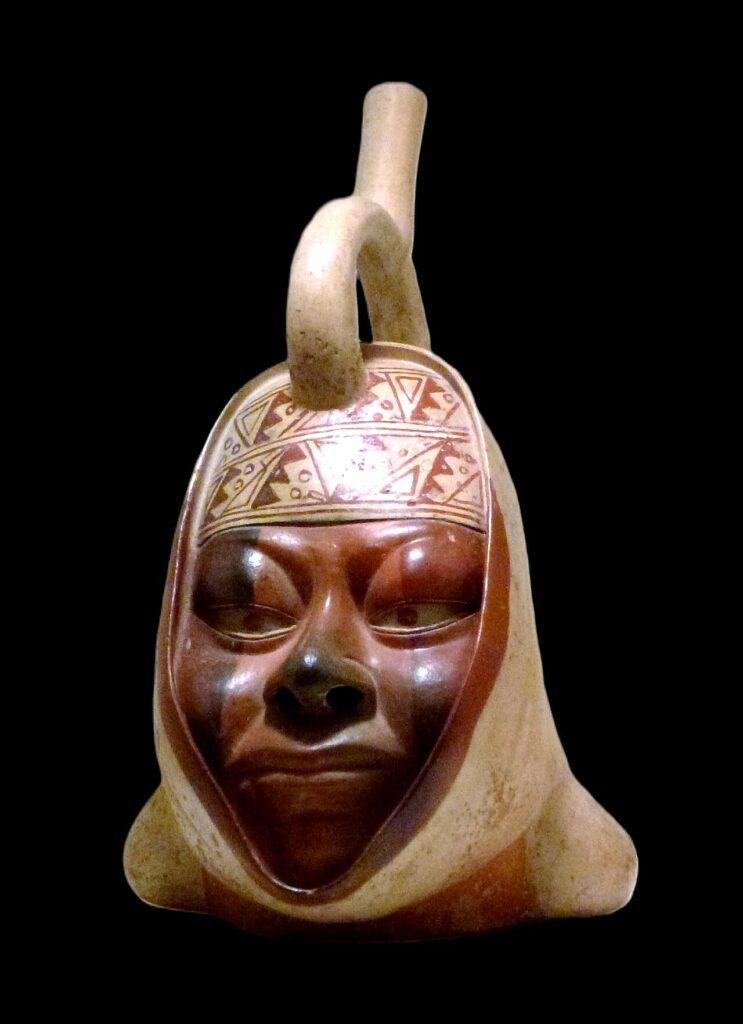
It’s also the most practical museum in the city. It opens every day of the year, public holidays included, and there’s a café-restaurant on its terraces over the gardens that you can use without a museum ticket (the museum suggests booking). Despite all that, only 8% of foreign visitors to Lima went there in 2024, according to PROMPERÚ’s visitor survey, so on most days you’ll share it with far fewer people than the Plaza Mayor.
Plan it: Av. Simón Bolívar 1515, Pueblo Libre, with the entrance on Calle Navarra. Open daily 9 a.m. to 7 p.m., with shorter hours (10 a.m. to 6 p.m.) on December 24, 25 and 31 and January 1. Adults S/ 50 at the museum or S/ 45 online; seniors 60+ S/ 35 (S/ 30 online); students and ages 9 to 17 S/ 25 (S/ 20 online); children 3 to 8 S/ 1; under-3s free. Child rates apply only to children with direct relatives, up to three per family. Ramps reach the exhibition rooms and gardens, wheelchairs are lent free, and there are accessible restrooms on both levels. From Parque Kennedy it’s 9.9 km by road, about 35 minutes at Lima’s average speed and 51 in the evening rush.
The national museum (MNAAHP)
The Museo Nacional de Arqueología, Antropología e Historia del Perú faces Plaza Bolívar, a short walk from Larco. It’s free for everyone, which is the good news. The less good news is that a full improvement and construction project is under way, and the renewed displays you can see are in the Sala Independencia, on the independence era, in the Quinta de los Libertadores. Go if you’re already at Larco and curious about the independence story; don’t cross the city for it until the renovation is finished. It’s also a reminder that state museums can close at short notice: the Ministry of Culture shut its Lima museums, this one included, from March 9 to 14, 2026, during a natural-gas shortage.
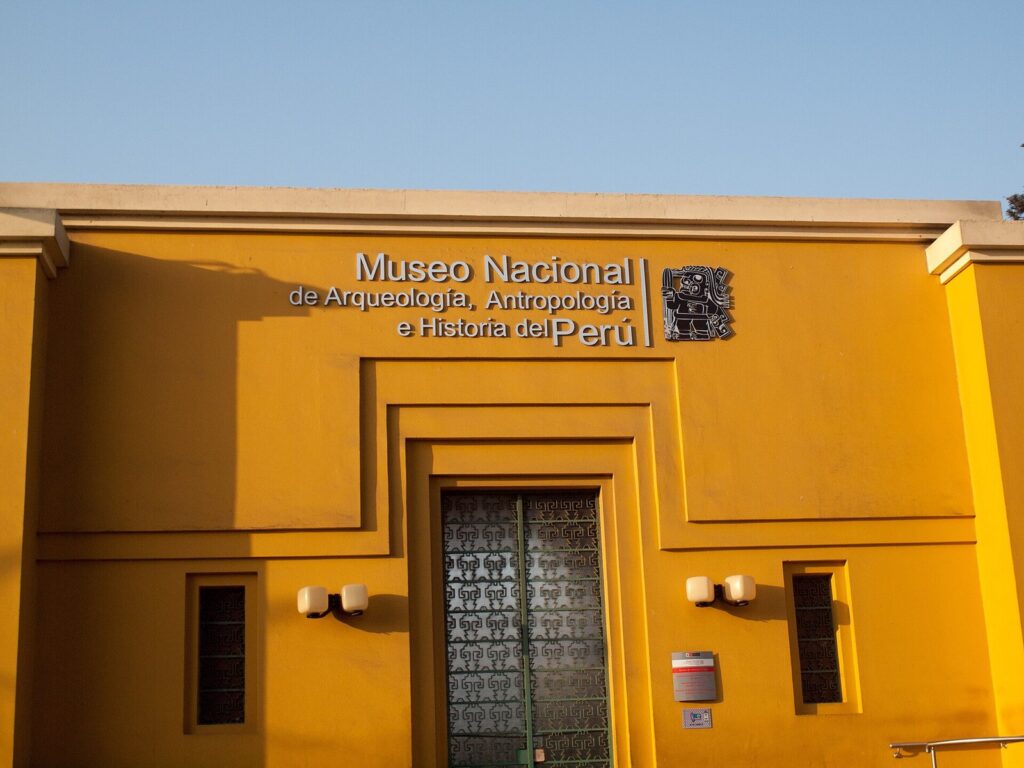
Plan it: Plaza Bolívar s/n, Pueblo Libre. Tuesday to Sunday, 9 a.m. to 7:30 p.m.; closed Mondays. Free. The Ministry’s directory lists wheelchair access. Group reservations go to [email protected]. For lunch nearby, the Lima food guide covers Pueblo Libre’s old taverns as well as the Larco café.
Downtown and Parque de la Exposición: MALI, MUCEN and the Convents
The historic center and the park just south of it hold the densest cluster of museums in Lima. Most of it is walkable by day, and the convents are covered in more depth in the guide to the historic center and archaeological sites.
MALI, Museo de Arte de Lima
MALI occupies the Palacio de la Exposición, a 19th-century exhibition hall in the Parque de la Exposición, and it’s the place to see Peruvian art as one long story rather than a single period. The ticket covers the permanent collection, MALI Colecciones, and whatever temporary exhibitions are on, which is where MALI shows a lot of its contemporary work. Pair it with the Italian art museum eight minutes away, or with a walk into the historic center.
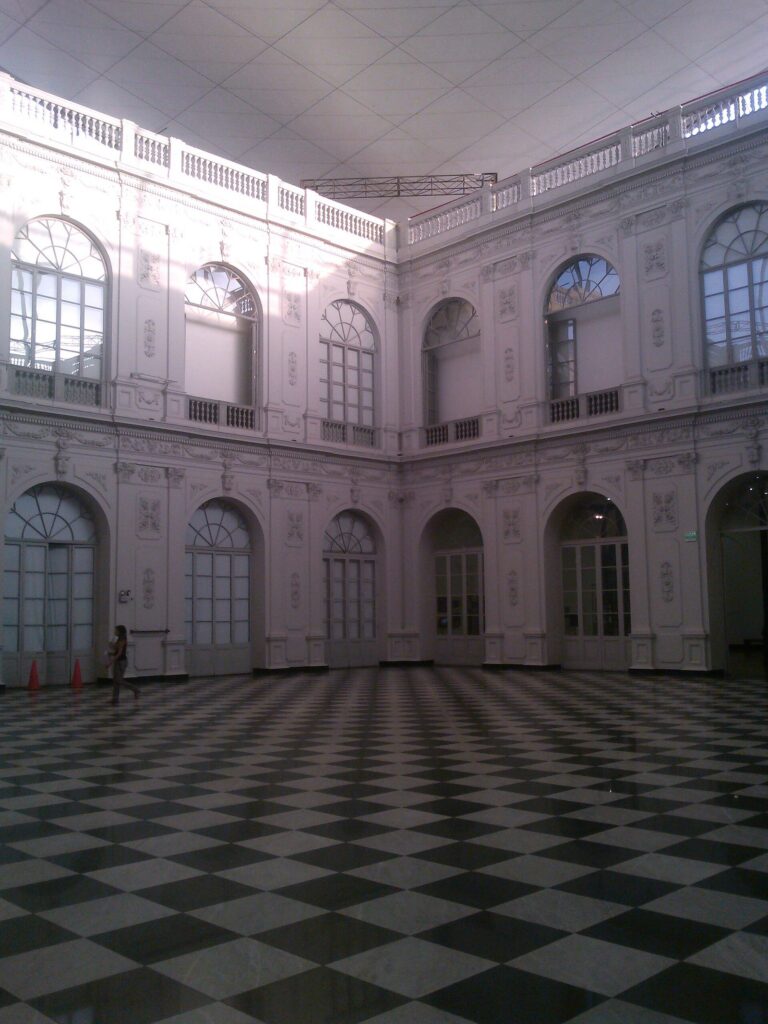
Plan it: Av. 9 de Diciembre 125, Parque de la Exposición. Tuesday to Sunday, 10 a.m. to 6 p.m., closing at 5 p.m. on Saturdays; last entry 15 minutes before closing. Closed Mondays and on January 1, May 1, August 21 and December 24, 25 and 31. Foreign visitors S/ 40, or S/ 20 for students, accredited teachers and people 65+; Peruvians and residents S/ 15; children under 8 free. Wheelchairs, ramps, lifts and adapted restrooms. From Parque Kennedy it’s 8.4 km by road, about 29 minutes, or 43 in the evening rush.
Museo de Arte Italiano
The Italian art museum is one of Lima’s odder treasures: a stone building on Paseo de la República with mosaic panels on its facade, holding nearly 200 works by more than 120 Italian artists of the late 19th and early 20th centuries, bought in 1921 and 1922. It opened in 1923. It’s small, cheap and close to MALI, which is the whole case for it; skip it if Italian painting from around 1900 isn’t your thing.
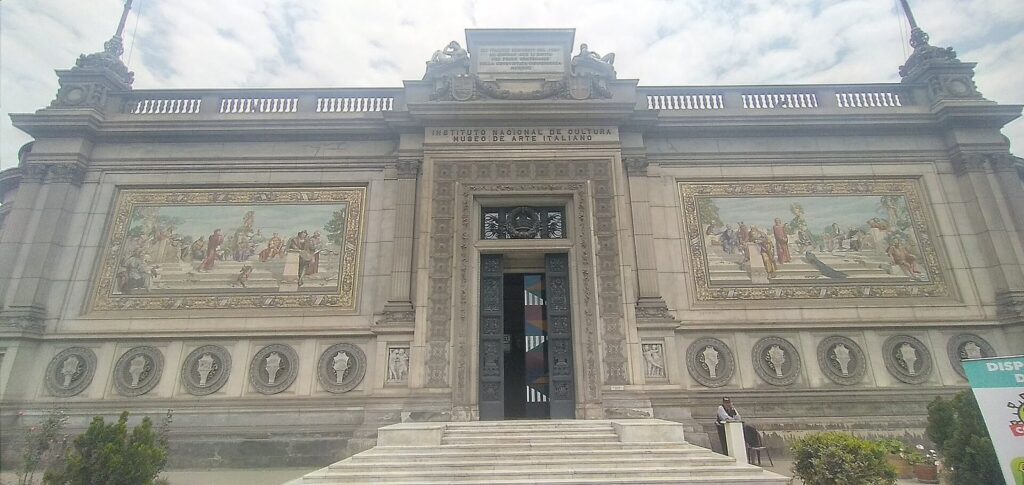
Plan it: Paseo de la República s/n. Tuesday to Saturday, 9:30 a.m. to 5 p.m. (last entry 4:30 p.m.), plus the first Sunday of each month; closed other Sundays and Mondays. Adults S/ 6; higher-education students, teachers and foreign seniors 60+ S/ 3; foreign school students S/ 1. MALI is 0.6 km away, about 8 minutes on foot.
MUCEN, the central bank’s museum
The Banco Central de Reserva’s Museo Central, MUCEN, is the best free hour in the historic center: pre-Columbian pieces, Peruvian painting and the story of the country’s money, two blocks from the Plaza Mayor. Individuals walk in without a reservation, and audioguides are available. It’s also the start of a short museum walk: San Francisco is 0.5 km away (about 7 minutes) and Santo Domingo another 0.7 km (about 9).
Plan it: Jr. Lampa 474, at the corner of Jr. Ucayali. Tuesday to Sunday, 9 a.m. to 5 p.m.; closed Mondays and on public holidays, including October 8, November 1 and December 8, 9, 24, 25 and 31. Free. Groups book online.
The convents: San Francisco and Santo Domingo
San Francisco’s convent museum is the one with the catacombs, and the visit, about an hour with bilingual Spanish and English guides, also covers the cloisters, the library and temporary exhibitions. Its website gives opening hours as daily, though the times it lists vary between pages (9 a.m. to 6 p.m. in one place, 9 a.m. to 9 p.m. in another), and it publishes no prices. One warning: the old site, museocatacumbas.com, still cited by many guides, now redirects somewhere unrelated.
Santo Domingo, about 440 m from the Plaza Mayor, holds relics of Santa Rosa de Lima and San Martín de Porres, and its S/ 15 ticket includes a guided visit and the tower. Only visitors 18 and over may climb the tower, by order of Defensa Civil. The Cathedral’s museum, on the Plaza Mayor itself, charges foreign adults S/ 30.
Plan it: Santo Domingo is open Tuesday to Sunday, 9 a.m. to 1 p.m. and 2 to 5 p.m.; seniors 60+ and university students S/ 7, children 5 to 16 S/ 2, under-5s free. For San Francisco, check the times on the museum’s current website on the day.
Two free extras downtown
The Museum of Congress and the Inquisition is listed as free and open daily, 9 a.m. to 5 p.m., with a visit of about an hour. Casa de la Literatura Peruana, in the old Desamparados railway station behind the Government Palace, is listed as free, Tuesday to Sunday, 10 a.m. to 7 p.m. Neither publishes its details in a form we could confirm directly, so treat both as good bonuses rather than anchors for a day.
Miraflores and San Isidro: LUM, Amano and Two Adobe Pyramids
If you’re staying in Miraflores, four worthwhile stops are within a short taxi ride, and two of them are within walking distance of Parque Kennedy.
LUM, Lugar de la Memoria
The Lugar de la Memoria, la Tolerancia y la Inclusión Social is the Ministry of Culture’s museum of the violence of 1980 to 2000, the internal conflict between the state and armed groups including the Shining Path. It’s a serious, carefully made place in a concrete building dug into the cliff, and it’s free. If you’re heading on to Ayacucho, Cusco or the highlands, it explains a great deal about the country you’ll see there.
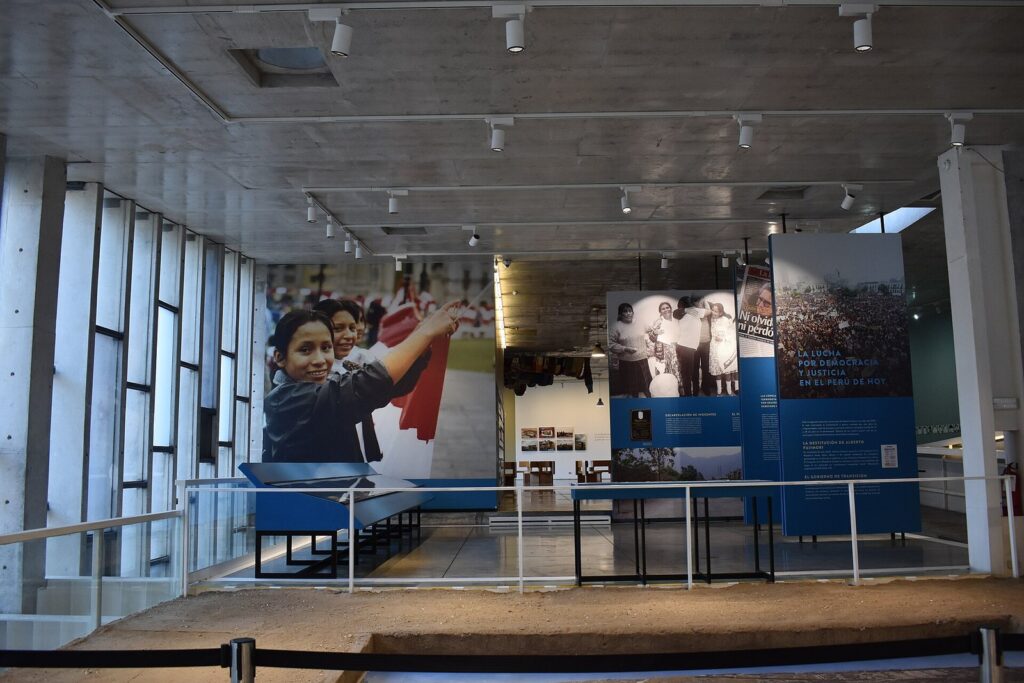
Plan it: Bajada San Martín 151, Miraflores. Tuesday to Sunday, 10 a.m. to 6 p.m.; closed Mondays. Free with an ID document; bring your passport. From Parque Kennedy it’s 3.5 km, a 47-minute clifftop walk or a short taxi ride.
Museo Amano
The Amano, the Museo Textil Precolombino, is the specialist’s museum on this list: pre-Columbian textiles in a quiet street off Av. Angamos. If Larco made you curious about how Andean cloth was woven and worn, this is the next step. Guided visits are priced per group rather than per person, which makes them good value for a couple or a family.
Plan it: Calle Retiro 160, Miraflores, at block 11 of Av. Angamos Oeste. Tuesday to Sunday, 10 a.m. to 5 p.m.; Mondays by appointment only. General admission S/ 35 (Peruvian seniors S/ 25, Peruvian students S/ 15). Guided visits S/ 60 per group, or S/ 100 for a specialized guide; book on +51 1 441-2909 or [email protected]. It’s 2.0 km from Parque Kennedy, about 27 minutes on foot.
Huaca Pucllana
Huaca Pucllana is an adobe pyramid built by the Lima culture between AD 450 and 650, in the middle of Miraflores. The visit is a guided tour of the archaeological zone plus a room of objects from the excavations and a small park of native plants and animals, and there’s an evening visit too. Two things trip people up: it closes on Tuesdays, not Mondays, and the web address huacapucllanamiraflores.pe now leads to a betting site, not the museum.
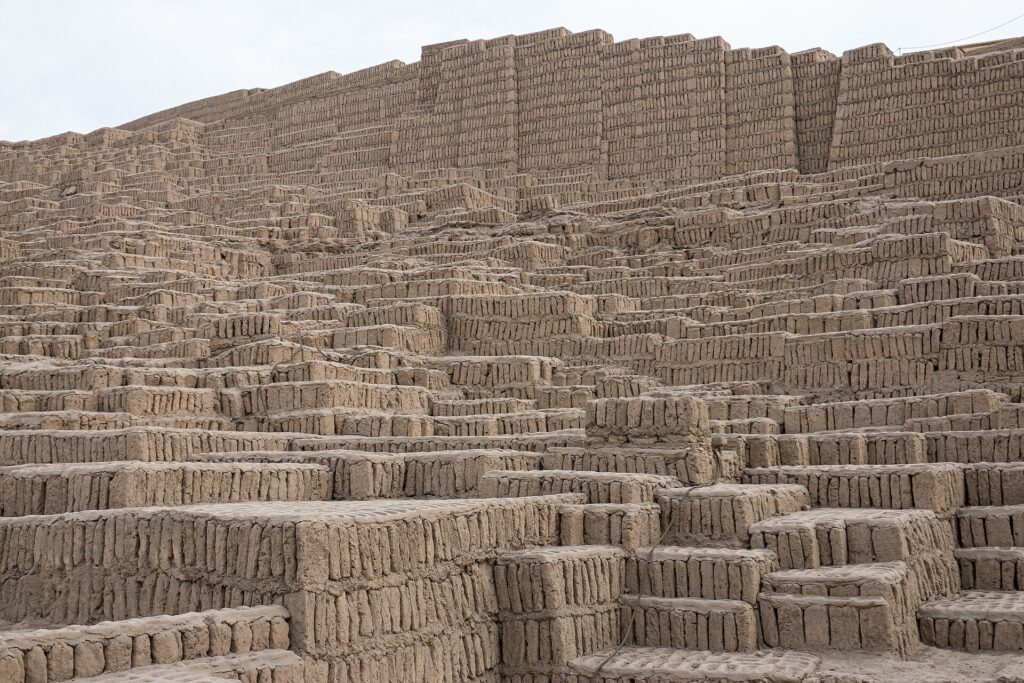
Plan it: Calle General Borgoño, block 8, Miraflores. Day visits Wednesday to Monday, 9 a.m. to 5 p.m.; closed Tuesdays. S/ 15 general and S/ 7.50 reduced by day. Evening visits Wednesday to Sunday by advance reservation, from about 6:30 or 6:45 p.m. to 9 p.m. depending on the listing, at S/ 17 (S/ 8.50 reduced). Pukllaywasi, an interactive room, is designed for visitors with visual impairments and for children.
Huaca Huallamarca
San Isidro’s own pyramid is a ceremonial center and burial ground whose structure was restored in the 20th century, with a site museum that opened in 1960. It’s smaller and cheaper than Pucllana and makes sense if you’re staying in San Isidro or can’t make Pucllana’s days.
Plan it: Av. Nicolás de Ribera 201, San Isidro. Tuesday to Saturday and the first Sunday of the month, 9 a.m. to 5 p.m. Adults S/ 5, higher-education students S/ 3, over-60s S/ 2.50, schoolchildren S/ 1.
Barranco: Pedro de Osma, MAC Lima and MATE
Barranco’s museums are further apart than the district’s size suggests. MAC Lima sits at the Miraflores end of Av. Grau, and the Pedro de Osma is at the other end, 2.6 km away, about 35 minutes on foot. Walk one way along the district’s streets and take a car back. The guide to Lima’s neighborhoods covers the rest of Barranco.
Museo Pedro de Osma
A white Republican-era mansion set in gardens, filled with the viceroyalty’s art: paintings from the Cusco School and other colonial workshops, silver, sculpture and furniture. If you’ve seen the churches downtown and want the same period at close range, without the crowds, this is where to see it. Guided tours cost extra and are worth it if colonial iconography is new to you.
Plan it: Av. Pedro de Osma 421, Barranco. Tuesday to Sunday, 10 a.m. to 6 p.m.; closed Mondays and on listed dates, which on the museum’s calendar include October 8, November 24 to 29 and several days in December. Adults S/ 35 for foreigners (S/ 30 nationals); foreign students S/ 20; foreign retirees S/ 30; children up to 10 free. Guided tours S/ 10 per person extra. Accessible, with free wheelchair loans. From Parque Kennedy it’s 4.8 km by road, about 17 minutes.
MAC Lima
The Museo de Arte Contemporáneo is Lima’s museum of contemporary art: a low modern building in a park, showing rotating exhibitions rather than a fixed display. Check what’s on before you go, because the experience depends entirely on the current shows. It’s the best-value museum in Barranco on the first Sunday of the month, when every ticket is half price.
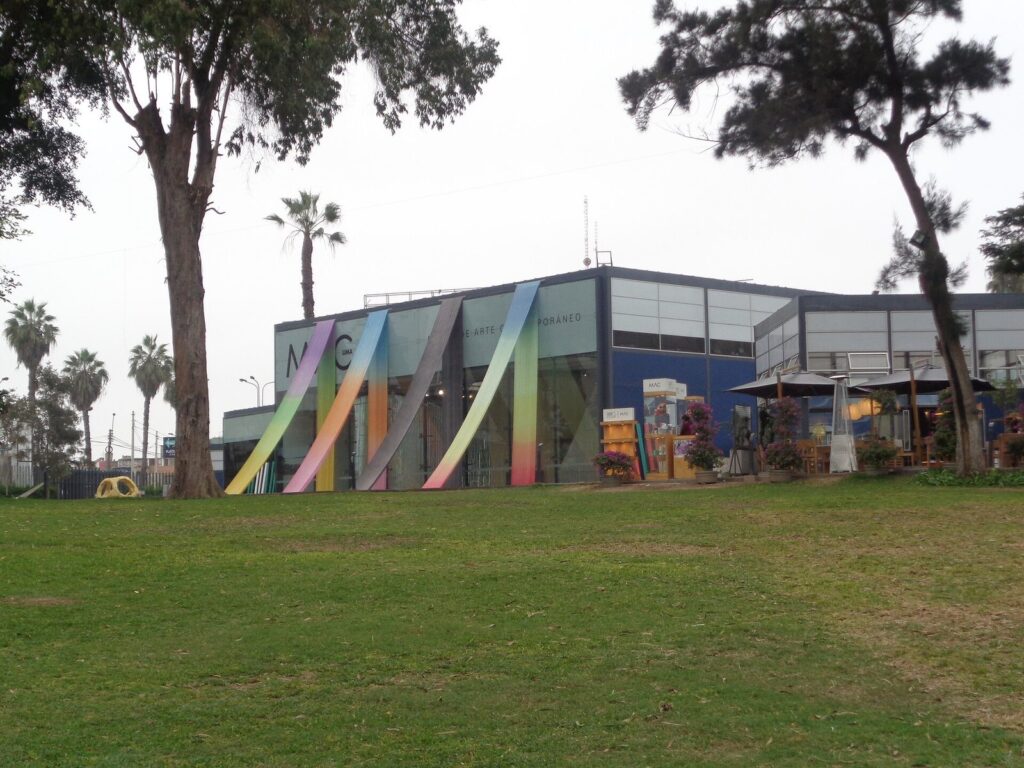
Plan it: Av. Grau 1511, Barranco. Tuesday to Sunday, 10 a.m. to 7 p.m., last entry 6:30 p.m.; closed Mondays. Foreign visitors S/ 20, or S/ 12 for students with a card, children 5 to 12 and seniors; Peruvians and residents S/ 12 (S/ 8 reduced); under-5s free; 50% off all tickets on the first Sunday of the month.
MATE, Museo Mario Testino
MATE, founded in 2012 by the photographer Mario Testino, occupies a restored mansion at Av. Pedro de Osma 409, next door to the Pedro de Osma museum, with rooms of Testino’s photographs and space for temporary shows. When we checked on September 24, 2026, its official website was offline, and the hours circulating on listings sites (Tuesday to Sunday, 10 a.m. to 6:30 or 7 p.m.) couldn’t be confirmed. Since it’s next door to the Pedro de Osma, look in when you’re there rather than making a special trip.
Where to See Contemporary Art and Galleries
Lima’s gallery scene is lively but restless. Commercial galleries cluster in Barranco, Miraflores and San Isidro, change their shows often and keep shorter hours than museums, so a list of addresses tends to date quickly. These are the dependable ways in:
- MAC Lima for rotating contemporary exhibitions, with the first-Sunday half-price deal.
- MALI’s temporary exhibitions, included in the standard ticket, which regularly give the building over to modern and contemporary work.
- MATE, if it’s open when you visit, for photography.
- Callao Monumental, which PROMPERÚ describes as a neighborhood of galleries and exhibitions, good for a cultural afternoon. Go in daylight and by booked car, as the Lima safety guide explains.
- Hotels and restaurants that double as showcases. Hotel B, a Relais & Châteaux member in a Republican-era townhouse in Barranco, is described as displaying works by contemporary Peruvian artists.
- Current listings: the Miraflores tourist information center on block 7 of Av. José Larco (Monday to Friday, 9 a.m. to 6 p.m.) and the galleries’ own social media are the quickest way to find openings that week.
Two more museums get their own guides in this series: the Museo Oro del Perú in Surco and the small Museo de la Electricidad in Barranco. We haven’t verified their current hours, so check before you go.
Pachacamac and MUNA: The Museums South of the City
Pachacamac site museum and sanctuary
Pachacamac, 31.5 km south along the old Panamericana in Lurín, was a pilgrimage sanctuary used for centuries before the Incas arrived, and its site museum is the best introduction to the ruins outside it. One ticket covers both. It’s a half-day trip rather than a museum stop, and the guide to day trips from Lima covers the drive, the buses and how it compares with other excursions.
Plan it: Antigua Panamericana Sur km 31.5, Lurín. Tuesday to Saturday, 9 a.m. to 5 p.m. (tickets until 4:30 p.m.); Sunday 9 a.m. to 4 p.m. (tickets until 3:30 p.m.); closed Mondays. Adults S/ 15, the same for every nationality; students in higher education S/ 5; ages 3 to 17 S/ 1. An optional guided tour costs S/ 50 per group and lasts about 1 hour 30 minutes; the guided-only Ruta de los Peregrinos costs S/ 20. Wheelchairs are lent against ID but can’t go into the archaeological zone; a free service takes visitors with reduced mobility around the circuit, Tuesday to Friday.
MUNA, the closed national museum
The Museo Nacional del Perú, MUNA, near Pachacamac in Lurín, is the vast new national museum that many older articles still recommend. It hasn’t received visitors since December 14, 2024; the last public day was December 13. Reports cite technical failures and problems with road access, and as of March 2026 there was no reopening date. The Ministry of Culture’s directory lists it as temporarily closed. Don’t plan around it until that changes.
Free Museums and Discount Days
Lima is kind to museum-goers on a budget, with one catch: many first-Sunday deals are for Peruvians and residents only.
| Museum | Deal | Who gets it |
|---|---|---|
| National museum (MNAAHP) | Free every open day | Everyone |
| MUCEN | Free every open day | Everyone |
| LUM | Free with ID | Everyone |
| Museum of Congress and the Inquisition | Listed as free | Everyone |
| MAC Lima | 50% off on the first Sunday of the month | All tickets |
| Museo Pedro de Osma | S/ 10 on the first Sunday of the month | Peruvian residents |
| Pachacamac | Free on the first Sunday of the month | Peruvian citizens and foreign residents with ID |
| Museo de Arte Italiano | Free entry for children, seniors, students and people with disabilities | Peruvians and residents |
| Museo Larco | S/ 5 off adult tickets bought online | Everyone |
Planning Museum Days: Opening Days, Clusters and Travel Times
The Monday problem
Most Lima museums close on Mondays, so if Monday is your only free day, build it around the exceptions: Museo Larco (open daily), San Francisco (listed as daily), Huaca Pucllana (closed Tuesdays instead) and the Museum of Congress and the Inquisition (listed as daily). The Amano opens on Mondays by appointment. On Tuesdays, the only big closure to remember is Huaca Pucllana. And in the gray months, from about June to November, museums are the natural plan for days when the coast is under cloud; the best time to visit Lima guide covers what each month is like.
Museum clusters and travel times
| Cluster | Museums | Between them | From Parque Kennedy |
|---|---|---|---|
| Pueblo Libre | Larco, national museum (MNAAHP) | 1.5 km, about 19 min on foot | 9.9 km to Larco, about 35 min by car (51 in the evening rush) |
| Parque de la Exposición | MALI, Museo de Arte Italiano | 0.6 km, about 8 min on foot | 8.4 km to MALI, about 29 min (43 in the rush) |
| Historic center | MUCEN, San Francisco, Santo Domingo, Cathedral museum | MUCEN to San Francisco 7 min, then 9 min to Santo Domingo | 9.7 km to the Plaza Mayor by road |
| Miraflores | LUM, Amano, Huaca Pucllana | Short taxi rides | Amano 27 min on foot; LUM 47 min on foot |
| Barranco | MAC Lima, Pedro de Osma, MATE | MAC to Pedro de Osma 2.6 km, about 35 min on foot | 4.8 km to Pedro de Osma, about 17 min by car |
Walking figures come from OpenStreetMap routing. Drive times apply TomTom’s 2025 average speeds for Lima, so treat them as typical rather than promised. Between clusters, book a car on an app; the guide to getting around Lima compares the options.
Three museum days that work
- Pre-Columbian day (Tuesday to Saturday): Museo Larco at 9 a.m., lunch on its terrace, a 5.1 km taxi ride (about 18 minutes) to MALI, then the Italian art museum eight minutes away before it closes at 5.
- Downtown day on foot (Tuesday to Sunday): MUCEN when it opens at 9, San Francisco and its catacombs, Santo Domingo before its 1 p.m. break, then the Cathedral and the rest of the historic center.
- Coast day (Tuesday to Sunday): the Amano at 10, the LUM after lunch, then a car to Barranco for the Pedro de Osma (until 6) or MAC Lima (until 7), with dinner in Barranco.
To fit museum days into a wider plan, the Lima itinerary for first-time visitors sets out one to five days by area. With a long layover, Larco is the museum to try: it’s 11.9 km from the new airport terminal by road, about 42 minutes at Lima’s average speed and about an hour in the evening rush. The Lima airport guide covers leaving and re-entering the terminal.
Accessibility at Lima’s Museums
Few Lima museums publish detailed access information. This is what the venues themselves say:
| Museum | What the venue says |
|---|---|
| Museo Larco | Ramps to the exhibition rooms and gardens, free wheelchair loan on the ground floor, accessible restrooms with baby changing on both levels |
| MALI | Wheelchairs, ramps, lifts and adapted restrooms |
| Museo Pedro de Osma | Accessible for people with reduced mobility; wheelchairs lent free |
| National museum (MNAAHP) | Wheelchair access listed in the Ministry’s directory |
| Huaca Pucllana | Pukllaywasi, an interactive room for visitors with visual impairments and for children |
| Pachacamac | Wheelchairs lent against ID, but not inside the archaeological zone; free reduced-mobility service around the circuit, Tuesday to Friday |
Museum Mistakes to Avoid in Lima
- Saving museums for Monday. It’s the one day most of them close. Keep Monday for Larco, Huaca Pucllana or San Francisco.
- Following an old article to MUNA. The national museum in Lurín has been closed since December 2024.
- Trusting old web addresses. museocatacumbas.com no longer belongs to San Francisco’s museum, and huacapucllanamiraflores.pe now serves a betting site. Use the links in the sources below.
- Assuming a free first Sunday applies to you. At Pachacamac and the Pedro de Osma, the first-Sunday deal is for Peruvians and residents.
- Crossing the city at rush hour. Parque Kennedy to Larco takes about 35 minutes at the average and 51 in the evening rush, so do the far museums in the morning and the Miraflores and Barranco ones late.
- Arriving at MALI late on a Saturday. It closes at 5 p.m. that day, an hour earlier than the rest of the week, with last entry 15 minutes before closing.
- Forgetting ID. The LUM is free with an ID document, so bring your passport, and teenagers can’t climb Santo Domingo’s tower, which is for visitors 18 and over.
Lima Museums FAQ
What is the best museum in Lima?
For most visitors, Museo Larco. It’s the strongest introduction to the cultures before and including the Incas, it opens every day, labels come in seven languages including English, and its terrace café makes an easy lunch. Adults pay S/ 50 at the door or S/ 45 online. MALI is the best choice if you want Peruvian art across every period instead.
Which Lima museums are open on Mondays?
Museo Larco opens every day, San Francisco’s convent museum lists daily hours, Huaca Pucllana closes on Tuesdays rather than Mondays, and the Museum of Congress and the Inquisition is listed as open daily. The Amano takes Monday visits by appointment. MALI, MAC Lima, the LUM, the Pedro de Osma, MUCEN and the national museum are all closed on Mondays.
Are Lima’s museums free on the first Sunday of the month?
Only some, and often only for Peruvians and residents. Pachacamac’s free first Sunday requires Peruvian citizenship or residency, and the Pedro de Osma’s S/ 10 rate is for Peruvian residents. MAC Lima’s half-price first Sunday applies to every ticket. MUCEN, the LUM and the national museum in Pueblo Libre are free for everyone on every open day.
Is MUNA, the Museo Nacional del Perú, open?
No. MUNA in Lurín has had no visitors since December 14, 2024, after technical failures and road-access problems, and there was no reopening date as of March 2026. The Ministry of Culture lists it as temporarily closed. Pachacamac’s site museum, a few kilometers away, is open Tuesday to Sunday.
Do Lima’s museums have information in English?
The biggest ones do. Museo Larco’s permanent exhibition and erotic gallery have texts in seven languages, including English. San Francisco’s convent tours run with bilingual Spanish and English guides, and MUCEN offers audioguides. Smaller and state-run museums are often Spanish-only, so a guided tour or a translation app helps there.
How much time should I give Lima’s museums?
A focused visitor can do Larco and MALI in one day, on any day except Monday, with a taxi between them. Two museum days cover the main collections plus the LUM and Barranco. Pachacamac needs half a day on its own because of the drive south, so don’t squeeze it into a city museum day.
Related Lima Guides
- Lima Historic Center and Archaeological Sites Guide: the convents, churches and huacas in depth.
- Lima, Peru Itinerary for First-Time Visitors: 1 to 5 Days: museum mornings fitted into full days.
- Best Things to Do in Lima, Peru for First-Time Visitors: the museums alongside everything else.
- Best Day Trips From Lima, Peru: Pachacamac and the other half-day and full-day trips.
- How to Get Around Lima, Peru as a Tourist: taxis and apps between museum clusters.
- Best Lima Neighborhoods for Tourists: Pueblo Libre, Barranco and the rest.
Sources and How We Checked
Prices, hours and closures were checked on September 24, 2026 against the sources listed below. This guide is compiled from those sources rather than from other travel lists, and it claims no first-hand visits.
- Museo Larco: plan your visit
- Ministry of Culture museum directory: MNAAHP; Museo de Arte Italiano; Huaca Pucllana; Huaca Huallamarca; MUNA; LUM; Pachacamac
- MALI: visits; MAC Lima: tickets; Museo Pedro de Osma: plan your visit; Museo Amano: official site
- Banco Central de Reserva del Perú: MUCEN visits
- Convents and churches: San Francisco museum and catacombs; Santo Domingo museum; Lima Cathedral museum
- Congress of Peru: Museum of Congress and the Inquisition; Casa de la Literatura Peruana
- Municipality of Miraflores: Huaca Pucllana; PROMPERÚ: 2024 profile of visitors to Lima; Peru Travel on Callao; the huacas of Lima
- News: Infobae on MUNA’s closure and the March 2026 museum closures
- Relais & Châteaux: Hotel B
- Routing: OpenStreetMap data via OSRM; drive times use TomTom’s 2025 Traffic Index averages for Lima
Lima Tourism Guide is an independent publication. We are not affiliated with PROMPERÚ, the Municipality of Lima or any attraction listed here, and no one paid to be included.
Photo Credits
- Museo Pedro de Osma, Barranco: photo by Xauxa Håkan Svensson, Wikimedia Commons (CC BY-SA 3.0)
- Moche portrait vessel, Museo Larco: photo by Pierre André Leclercq, Wikimedia Commons (public domain)
- National museum entrance, Plaza Bolívar, Pueblo Libre: photo by Ibrehaut, Wikimedia Commons (CC BY-SA 4.0)
- Interior of MALI, Palacio de la Exposición: photo by Santiagostucchi, Wikimedia Commons (CC BY-SA 4.0)
- Museo de Arte Italiano facade: photo by Freddiearomerop, Wikimedia Commons (CC BY-SA 4.0)
- Galleries of the Lugar de la Memoria (LUM): photo by Jon Kolbert, Wikimedia Commons (CC BY-SA 4.0)
- Huaca Pucllana, Miraflores: photo by PsamatheM, Wikimedia Commons (CC BY-SA 4.0)
- MAC Lima, Barranco: photo by Fatima Flores, Wikimedia Commons (CC BY-SA 4.0)