This Lima travel cost and daily budget guide is built the transparent way: from prices in soles that we checked with museums, transport operators and government agencies, added up into sample days, rather than from a single average of unknown origin. The short version: Lima’s sights are cheap (most entry tickets cost S/ 50 or less, and several good museums are free), a set lunch costs S/ 10 to S/ 18, and the two things that decide your budget are where you sleep and how often you take a car.
This is for independent travelers planning a few days in Lima, usually at the start or end of a wider Peru trip. The caveat that matters: hotel rates and app fares move with dates, demand and traffic, so we explain what drives them instead of printing numbers that would be wrong by the time you land. Prices were checked on September 24, 2026 against the operators’ and agencies’ own websites; where we give US dollars, we use the central bank’s rate of S/ 3.385 per dollar on September 23, 2026.
On this page: Costs at a glance · What a day costs · What visitors spend · Three days, three budgets · Hotels · Costs by base · Food and drink · Transport · Tickets and tours · Cash, cards and ATMs · Tipping · Costs people forget · Ways to save · FAQ
Lima Costs at a Glance (September 2026)
| Item | Price | Note |
|---|---|---|
| Set lunch (menú del día) | S/ 10 to S/ 18 | Soup or starter, main and a drink; prices rose in 2026 with the cost of cooking gas |
| Museum tickets | Free to S/ 50 | Museo Larco is the priciest at S/ 50, or S/ 45 online |
| Free museums | S/ 0 | LUM, MUCEN and the national museum in Pueblo Libre |
| Metropolitano bus trip | S/ 3.20 | Plus S/ 4.50 once for the card |
| Airport Express bus to Miraflores | S/ 20 | S/ 15 each for two or more |
| Palomino Islands boat trip | S/ 160 | Adults, with Tour Marino; the priciest ticket listed here |
| App rides and hotels | Quoted when you book | The two costs that vary most; see below |
| Sales tax (IGV) on hotels | Not charged to non-resident foreigners | For stays of up to 60 days, on showing a passport |
| Exchange rate | S/ 3.385 per US$1 | Central bank’s banking-system selling rate, September 23, 2026 |
Each of the topics below, from ATM fees and tipping to a full week’s costs, also gets its own detailed guide in this series.
What Does a Day in Lima Cost?
Here are three real days, priced line by line from published rates. Each total covers only the items we could verify, which is the honest way to do it: your bed, your dinner and any app rides come on top, and they’re covered in their own sections below.
A shoestring day downtown (Tuesday to Sunday)
| Item | Cost |
|---|---|
| Metropolitano card (bought once) | S/ 4.50 |
| Two Metropolitano trips, to the center and on to the Magic Water Circuit | S/ 6.40 |
| MUCEN, the central bank’s museum | Free |
| Santo Domingo convent, with a guided visit and the tower | S/ 15 |
| Set lunch near the center | S/ 10 to S/ 18 |
| Magic Water Circuit, evening | S/ 7 |
| Verified total | S/ 42.90 to S/ 50.90 (about US$13 to US$15) |
Add a booked car home from the fountains, which is the sensible way to end a night downtown.
A classic museum day (Tuesday to Saturday)
| Item | Cost |
|---|---|
| Museo Larco, ticket bought online | S/ 45 |
| MALI, foreign adult | S/ 40 |
| Museo de Arte Italiano, eight minutes’ walk from MALI | S/ 6 |
| Set lunch (or the Larco café, priced on its menu) | S/ 10 to S/ 18 |
| Three app rides: Miraflores to Larco (9.9 km), Larco to MALI (5.1 km), MALI back to Miraflores (8.4 km) | Quoted in the app |
| Verified total | S/ 101 to S/ 109 (about US$30 to US$32), plus rides |
A big-ticket sea day (Wednesday to Sunday)
| Item | Cost |
|---|---|
| Palomino Islands boat trip from Callao, adult | S/ 160 |
| Huaca Pucllana evening visit, booked ahead | S/ 17 |
| Rides to and from the pier on Plaza Grau | Quoted in the app |
| Lunch and dinner | Your choice |
| Verified total | S/ 177 (about US$52), plus rides and meals |
The pattern is clear. Tickets and public transport are cheap, and the verified part of even the big-ticket day is modest. What moves the total is everything around it: a clifftop hotel instead of a guesthouse, three app rides instead of the Metropolitano, and dinner at a restaurant with a tasting menu instead of a set lunch.
What each budget style looks like
| Style | Sleeping | Eating | Getting around | Sightseeing |
|---|---|---|---|---|
| Shoestring | A hostel dorm or a family-run hostal; 15% of foreign visitors used hostels in 2024 | Set lunches, market counters, chifa and street food | Walking, the Metropolitano and the Airport Express by day | Free museums, S/ 15 tickets and the Magic Water Circuit |
| Mid-range | A 3-star hotel or hostal, the most common choice at 39%, in Miraflores or Barranco | Set lunches, a cevichería lunch or two and a few restaurant dinners | App rides between districts, the Metropolitano for the center | Larco, MALI, the Cathedral and a Barranco museum |
| Comfort | A 4- or 5-star hotel (35% of visitors), often on the clifftop | At least one tasting menu, booked weeks ahead | Booked cars and an airport pickup | The Palomino boat, a guided Pachacamac and private guides |
How Much Do Visitors Actually Spend in Peru?
PROMPERÚ, Peru’s tourism promotion agency, surveys foreign tourists every year, and its 2024 profile of visitors to Lima gives the only measured spending figures we know of. They’re for the whole Peru trip, not just Lima:
- The average foreign tourist who visited Lima in 2024 spent US$1,417 in Peru, up from US$1,219 in 2019.
- The spread is wide: 22% spent under US$500, 21% spent US$500 to US$999, 20% spent US$1,000 to US$1,499, 13% spent US$1,500 to US$1,999, 9% spent US$2,000 to US$2,499 and 15% spent US$2,500 or more.
- They stayed an average of 12 nights in Peru (median 8) and 5 nights in Lima (median 3).
- In Lima, 39% stayed in a 3-star hotel or hostal, 35% in a 4- or 5-star hotel, 15% in a hostel and 15% with friends or family (visitors could give more than one answer).
- 54% traveled independently and 46% bought a package; among the independent travelers, 69% booked their lodging online, against 25% in 2019.
Dividing the average spend by the average stay gives roughly US$118 a night, about S/ 400 at September 2026’s rate. That’s our arithmetic, not PROMPERÚ’s, and it’s a blunt average that includes domestic flights, tours and hotels across the country. It’s still a useful check on the daily figures you’ll see elsewhere: a mid-range traveler in Lima who spends S/ 400 a day on everything, bed included, is spending like the average visitor.
Three Days in Lima on Three Budgets
PROMPERÚ’s median visitor spends three nights in Lima, so here’s what three days of sightseeing cost in tickets, public transport and lunch at each level, again using only published prices.
| Style | What’s included | Verified cost for three days |
|---|---|---|
| Shoestring | Santo Domingo (S/ 15), Magic Water Circuit (S/ 7), Huaca Pucllana (S/ 15) and MAC Lima (S/ 20); free MUCEN, LUM and national museum; Metropolitano card and six trips (S/ 23.70); three set lunches (S/ 30 to S/ 54) | S/ 110.70 to S/ 134.70 (about US$33 to US$40) |
| Classic | Museo Larco online (S/ 45), MALI (S/ 40), the Cathedral (S/ 30), Santo Domingo (S/ 15), Huaca Pucllana (S/ 15), Museo Pedro de Osma (S/ 35), Magic Water Circuit (S/ 7); Metropolitano card and four trips (S/ 17.30); three set lunches (S/ 30 to S/ 54) | S/ 234.30 to S/ 258.30 (about US$69 to US$76), plus app rides |
| Splurge | Everything in the classic column’s tickets (S/ 187), plus the Palomino boat (S/ 160), Pachacamac (S/ 15) with a group guide (S/ 50) and Casa de Aliaga (S/ 35, plus a licensed guide you hire); Metropolitano (S/ 17.30) | S/ 464.30 (about US$137), plus the guide, rides and every meal |
To turn those tickets into a day-by-day plan grouped by area, use the Lima itinerary for first-time visitors, which also keeps the car rides down by grouping sights that sit close together.
Where to Stay: What Drives Hotel Prices
Lodging is the biggest line in any Lima budget and the hardest to pin down, because rates change with the date you book, the dates you stay and the room you pick. Rather than quote nightly prices that would be out of date within weeks, here’s what moves them:
- The tier. Lima covers everything from hostel dorm beds and family-run hostales to international five-star hotels. Visitors split fairly evenly between 3-star hotels or hostales (39%) and 4- or 5-star hotels (35%), with 15% in hostels.
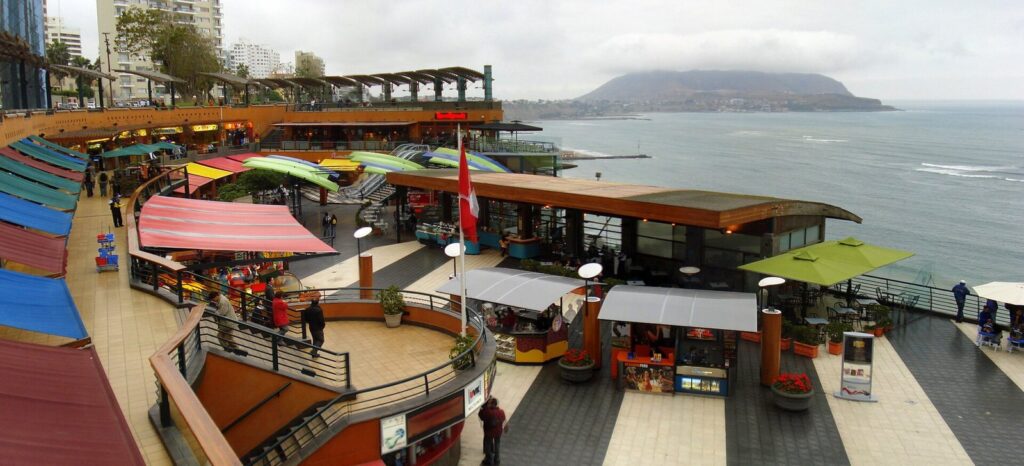
- The district and the block. Most visitors base themselves in Miraflores, and within it the clifftop and the streets around Parque Kennedy and Larcomar command the most attention. Barranco has smaller boutique hotels and hostels near the nightlife, San Isidro has business hotels, and the historic center puts you next to the sights but far from the coast.
- The room. A sea view, a balcony or a bigger room can cost more than a jump in star rating.
- The dates. Book early for the summer months (December to April), the national holidays on July 28 and 29, and big events: in 2026, the World’s 50 Best Restaurants ceremony is being held in Lima on November 4.
- What’s included. Breakfast, airport pickup and parking can make a slightly higher rate the cheaper option overall.
The hotel tax most visitors don’t know about
Peru’s sales tax, IGV, is 18%, and lodging is one place foreign visitors can legally skip it. Under Legislative Decree 919, lodging, including meals the hotel provides, sold to non-resident foreigners for stays of up to 60 days counts as an export of services and isn’t charged IGV. Hotels ask to see your passport and your entry record at check-in. When comparing rates, check whether a price includes IGV, because a rate quoted to Peruvian residents may include tax you shouldn’t be paying.
For which district suits which kind of trip, from first-timers to families and night owls, see where to stay in Lima.
How Your Base Changes Your Costs
In Lima, the district you sleep in decides how many car rides you need, and in which traffic. Most sights sit in four clusters (the historic center, Pueblo Libre, Miraflores and Barranco), and the safety advice is to ride between districts after dark, so a base close to what you want to see saves money every day. Here’s how the four usual bases compare by road:
| Base | To the new airport terminal | To the Plaza Mayor | To Museo Larco | Fixed-price links |
|---|---|---|---|---|
| Miraflores (Parque Kennedy) | 20.9 km, about 73 min (107 in the evening rush) | 9.7 km, about 34 min (50) | 9.9 km, about 35 min (51) | Airport Express stops; Metropolitano stations at Ricardo Palma and Benavides |
| Barranco (Parque Municipal) | 23.4 km to the Puente de los Suspiros, about 82 min (120) | 12.9 km, about 45 min (66) | 13.4 km, about 47 min (69) | Parque Kennedy is 3.6 km away, about 13 min by car |
| San Isidro (around Huaca Huallamarca) | 15.7 km to the Country Club Lima Hotel, about 55 min (81) | 8.3 km, about 29 min (42) | 5.7 km, about 20 min (29) | Parque Kennedy is 4.0 km away by road |
| Historic center (Plaza San Martín) | 14.1 km, about 49 min (72) | 0.9 km, a 12-minute walk | 6.1 km, about 21 min (31) | Metropolitano stations at Colmena and Jirón de la Unión; Parque Kennedy is 9.1 km away |
Distances come from OpenStreetMap routing, and the times apply TomTom’s 2025 average speeds for Lima, so treat them as typical rather than promised. Read the table as a cost map. Miraflores has the most fixed-price links, the Airport Express and two Metropolitano stations, which is part of why most visitors stay there. Barranco puts your evenings within walking distance but adds the longest rides to the center, Pueblo Libre and the airport. San Isidro is the most central for museum days. The historic center puts the colonial sights on your doorstep and sits closest to the airport by road, but every evening on the coast ends with a 9 km ride back.
Food and Drink Costs
Eating well in Lima costs less than almost anything else here, as long as you eat on local time: the big meal of the day is lunch.
The set lunch (menú del día)
Neighborhood restaurants serve a set lunch, usually a soup or starter, a main and a drink, from around noon to 3 p.m. Before March 2026, economical menus cost about S/ 10 to S/ 12; that month Infobae reported rises of up to S/ 4 as the price of a household gas cylinder passed S/ 100, with some market stalls reaching S/ 18. Budget guides in 2026 put a typical menú around S/ 15, less outside the tourist districts and more in Miraflores. It’s the single best-value meal in the city.
Cevicherías, chifas and markets
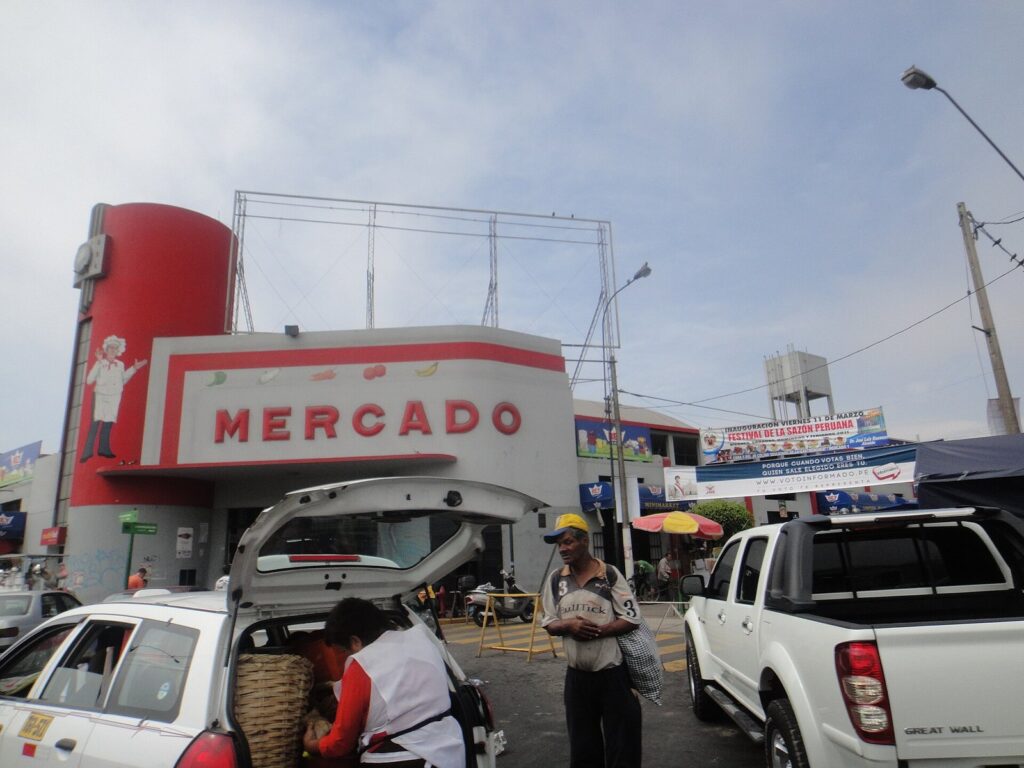
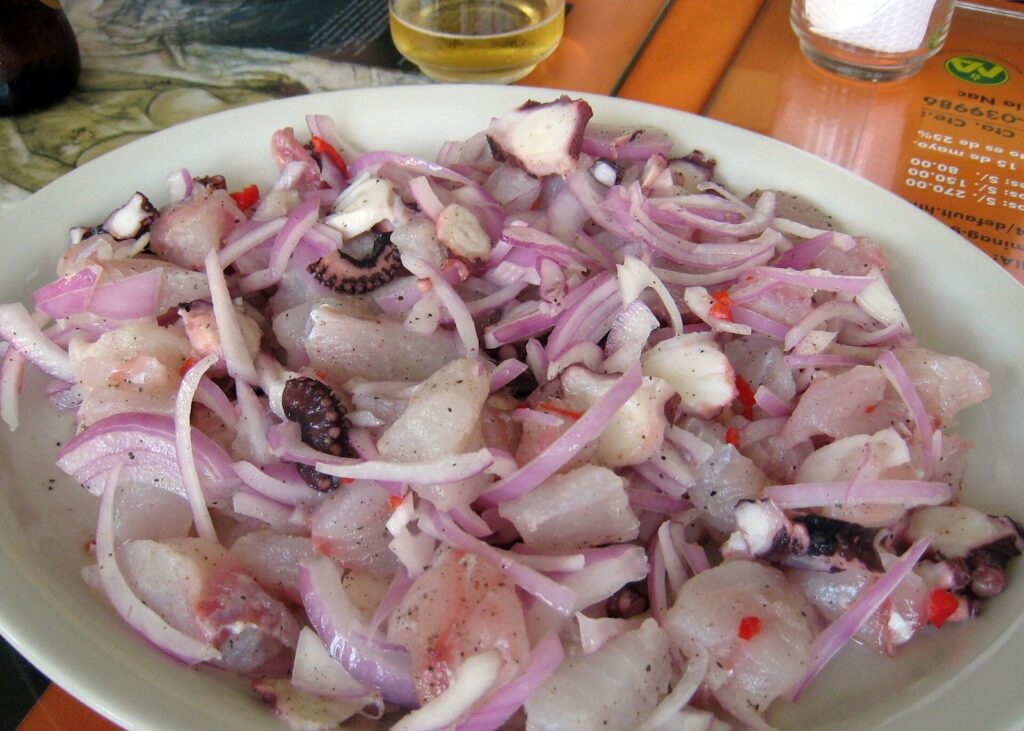
Ceviche is a lunchtime dish in Lima, and cevicherías, from simple local places to famous names, are busiest around midday; some, including Gastón Acurio’s La Mar in Miraflores, open only for lunch. Chifa, Lima’s Chinese-Peruvian cooking, is the other classic lunch that doesn’t punish a budget, especially in and around Chinatown near the Mercado Central. Markets such as Surquillo’s, a short walk from Parque Kennedy, have juice stalls and lunch counters, and 35% of foreign visitors to Lima visited a market in 2024, according to PROMPERÚ.
Fine dining and the tasting-menu splurge
Lima’s famous restaurants are a budget line of their own. Maido, in Miraflores, was named The World’s Best Restaurant in 2025, and Central, in Barranco, in 2023; the 2026 ceremony takes place in Lima on November 4. Their tasting menus are priced on their own booking pages and cost more than a week of set lunches, so treat one as the trip’s splurge and book well ahead. Only 8% of foreign visitors to Lima ate at an internationally awarded restaurant in 2024, which says something about how well the rest of the city feeds people.
Service charges on the bill
Some restaurants add a recargo al consumo, a consumption surcharge that works like a service charge; Infobae reported in 2024 that it can add up to 13% to a bill. Indecopi, the consumer-protection agency, says restaurants and hotels must include IGV and any such surcharge in their price lists, announce the surcharge before you order and post a visible notice. If a surcharge appears that nobody told you about, you can raise it and use the Libro de Reclamaciones, the complaints book every business must keep. The Lima food guide covers what to order and where.
Transport Costs
Public transport in Lima is very cheap, and a car is where the money goes. Here’s what the fixed-price options cost:
| Option | Fare | Good for |
|---|---|---|
| Metropolitano (bus rapid transit) | S/ 3.20 a trunk-line trip, plus S/ 4.50 once for the card | Miraflores and Barranco to the historic center, avoiding rush-hour traffic |
| Metro Line 1 | S/ 1.50 | The elevated line through La Victoria (Gamarra) and past central Lima |
| Metro Line 2 (first section) | S/ 1.40, with the S/ 7.50 interoperable card | Few visitor trips yet; only five stations are open |
| Airport Express Lima bus | S/ 20, or S/ 15 each for two or more | Airport to Miraflores hotels, about hourly by day |
| Official airport taxi counters | Fixed price at the counter | Late arrivals, families, lots of luggage |
| Ride-hailing apps (Uber, Cabify, DiDi, inDrive) | Quoted before you book | Between districts, and every trip after dark |
| Bus to Cusco (Cruz del Sur) | From S/ 185 one way | Time-rich budget travelers; the trip takes about 21.5 to 24 hours |
App fares are quoted before you confirm and change with demand and traffic, which in Lima is the bigger factor: a 10 km drive averaged about 35 minutes in 2025 and over 51 minutes in the evening rush, according to TomTom’s traffic index. Two habits keep the ride budget down: group your sightseeing by area so you’re not crossing the city twice a day, and use the Metropolitano for the historic center by day. Don’t save money by hailing taxis on the street, though; the Lima safety guide explains why the booked car is worth it.
Two airport costs catch people out. If you’re connecting through Lima, the UK Foreign Office says transit passengers must pay a transfer TUUA fee that isn’t included in airline tickets and can be paid online in advance. And after dark, the Airport Express stops running around 10 p.m., so a late landing usually means a taxi or app ride. The Lima airport guide compares every way into the city, and the guide to getting around Lima covers cards, routes and the apps in detail.
Attraction Tickets and Tour Prices
These are foreign-adult prices from each venue’s own site or the Ministry of Culture’s directory. Many places charge Peruvians and residents less, and most have child, student and senior rates.
| Attraction | Adult price | Worth knowing |
|---|---|---|
| Palomino Islands boat (Tour Marino) | S/ 160 | Children 4 to 12 pay S/ 130; daily departures from Callao |
| Museo Larco | S/ 50, or S/ 45 online | Open every day |
| MALI | S/ 40 | S/ 20 for students, teachers and people 65+ |
| Casa de Aliaga | S/ 35 | You must also hire a licensed guide |
| Museo Pedro de Osma | S/ 35 | Optional guide S/ 10 per person |
| Museo Amano | S/ 35 | Guided visits S/ 60 per group |
| Cathedral of Lima | S/ 30 | Children 6 to 12 pay S/ 15 |
| Reserva Nacional de Lachay | S/ 30 | A day trip north; best from June to November |
| MAC Lima | S/ 20 | Half price for everyone on the first Sunday |
| Parque de las Leyendas | S/ 20 | Children 3 to 12 pay S/ 10 |
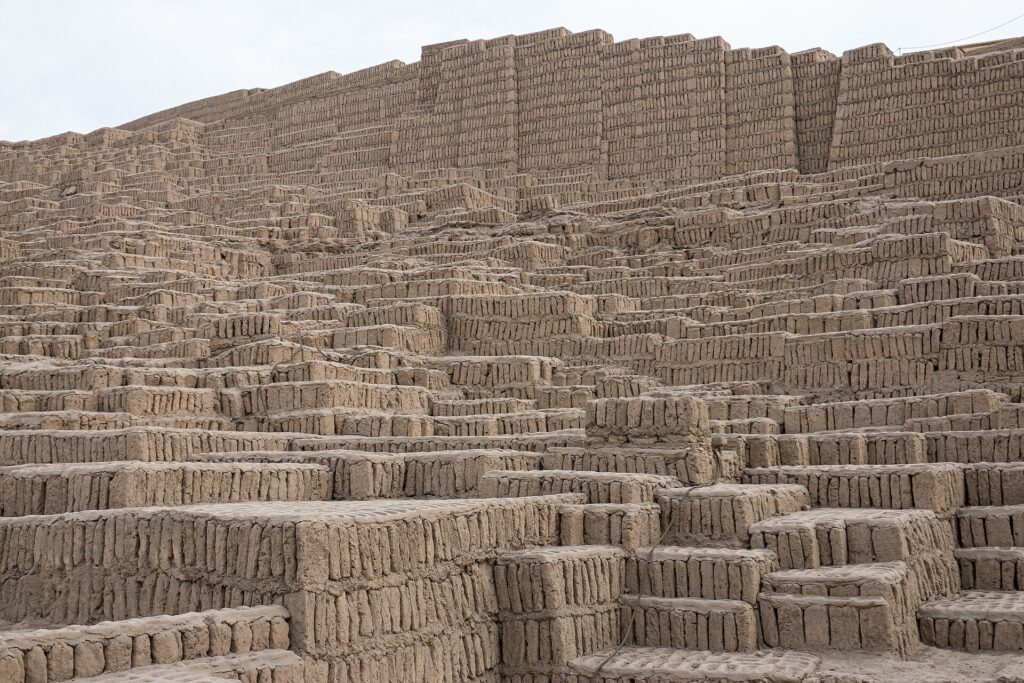
| Huaca Pucllana | S/ 15 by day, S/ 17 at night | Closed Tuesdays |
| Santo Domingo convent | S/ 15 | Guided visit and tower included |
| Real Felipe fortress, Callao | S/ 15 | A flat rate for foreigners; guided visit of about 2.5 hours |
| Pachacamac | S/ 15 | Optional guide S/ 50 per group |
| Caral | S/ 11 | Entry requires a heritage guide hired on site |
| Magic Water Circuit | S/ 7 | Shows at 7:15, 8:15 and 9:10 p.m. |
| Museo de Arte Italiano | S/ 6 | Closed Sundays (except the first) and Mondays |
| Huaca Huallamarca | S/ 5 | San Isidro’s small pyramid |
| LUM, MUCEN, the national museum in Pueblo Libre | Free | LUM asks for ID |
One catch with Lima’s “free first Sunday” deals: several apply only to Peruvians and residents, including Pachacamac’s free entry and the Pedro de Osma’s reduced rate. The guide to Lima’s museums and art galleries compares every museum by collection and closing day, the historic center guide prices a downtown day, and the day trips from Lima guide covers Pachacamac, Caral, Lachay and the Palomino Islands.
Cash, Cards and ATMs
Peru’s currency is the sol, written S/, and on September 23, 2026 the central bank’s banking-system rate was S/ 3.380 buying and S/ 3.385 selling per US dollar. That’s the benchmark to compare with the rate a bank or exchange house offers you.
- Cards work in most hotels, malls and sit-down restaurants in the districts visitors use. When a card machine offers to charge you in your home currency, choose soles; the conversion the machine offers is rarely in your favor.
- Cash is still needed for markets, set-lunch restaurants, small shops and tips. Carry small notes, because change for a S/ 100 or S/ 200 note can be hard to find in a market.
- ATMs: use those inside banks, supermarkets or large commercial buildings during business hours, as the UK Foreign Office advises. Peruvian ATMs usually show a fee for foreign cards on screen before you confirm, and your own bank may add another, so fewer, larger withdrawals cost less.
- Exchanging money: banks and exchange houses are the safe options. Counterfeit US and Peruvian notes are in circulation, the FCDO warns, so avoid street changers and look at every note you’re handed.
- US dollars: some hotels and tour operators quote in dollars, but day-to-day prices are in soles, and paying in soles avoids a second conversion.
How much cash to carry comes down to safety as much as budget: take one day’s worth and a single card, and leave the rest in the hotel safe. The Lima travel planning guide covers what to sort out with your bank before you fly.
Tipping in Lima
Tipping in Peru is voluntary. If your restaurant bill already carries a recargo al consumo, that’s the service charge, and nothing more is expected. If it doesn’t, rounding up or leaving around 10% for good table service in a sit-down restaurant is common practice; at a set-lunch counter, leaving the coins from your change is plenty. For guides and drivers who’ve looked after you well, a tip is appreciated rather than required. App rides and official taxis don’t expect one.
Costs People Forget
- The Metropolitano card: S/ 4.50 before your first S/ 3.20 trip, because the buses don’t take cash.
- Required guides: Casa de Aliaga has no guides of its own, so you hire a licensed one, and Caral admits visitors only with a heritage guide hired at its ticket office.
- Optional guides that are worth it: S/ 50 per group at Pachacamac, S/ 60 per group at the Amano and S/ 10 per person at the Pedro de Osma.
- The ride home: the Magic Water Circuit’s last show starts at 9:10 p.m., Huaca Pucllana’s evening visits end at 9 p.m., and Barranco’s bars close later still. Budget a booked car for each night out.
- Two ATM fees: the Peruvian bank’s charge shown on screen, and your own bank’s foreign-withdrawal fee on top.
- The recargo al consumo: up to 13% on some restaurant bills, which should be announced before you order.
- The transit fee: if you’re only connecting through Lima, the transfer TUUA isn’t included in airline tickets, according to the UK Foreign Office.
Ways to Save, and Where Not To
Where saving is easy
- Make lunch your main meal: the menú del día and lunchtime ceviche are the best food value in the city.
- Buy your Museo Larco ticket online and save S/ 5.
- Build a day around the free museums: MUCEN downtown, the LUM in Miraflores and the national museum in Pueblo Libre.
- Take the Metropolitano to the historic center by day instead of an app ride through rush-hour traffic.
- Travel to the airport by Airport Express if you land by day and you’re staying near its Miraflores stops; two people pay S/ 30 together.
- Check that your hotel rate doesn’t include IGV you shouldn’t be paying.
- Look for the recargo al consumo notice before you order, and pay in soles.
Where saving costs more than it saves
- Hailing a street taxi to shave a few soles off an app fare. The official advice is clear, and the risk isn’t worth it.
- Using a street ATM at night to avoid a fee, or a street money changer for a better rate.
- Staying far from the areas you want to see. A cheaper room across the city can cost more in rides and hours in traffic than it saves.
- Skipping travel insurance. A single hospital visit or stolen phone costs more than the policy.
For how the costs line up with the sights themselves, the best things to do in Lima notes which of the city’s highlights cost nothing at all, and the best time to visit Lima guide shows what each month is like, from the sunny summer to the gray winter.
Lima Travel Cost FAQ
Is Lima expensive for tourists?
Not for the basics. Most museum tickets cost S/ 50 or less, several are free, a Metropolitano trip costs S/ 3.20 and a set lunch S/ 10 to S/ 18. Lima gets expensive through choices: a sea-view hotel in Miraflores, app rides across the city at rush hour and tasting-menu dinners. Foreign visitors in 2024 spent an average of US$1,417 in Peru per trip.
How much money do I need per day in Lima?
Before lodging and rides, a shoestring sightseeing day costs about S/ 43 to S/ 51 and a museum-heavy day about S/ 101 to S/ 109, using September 2026 prices. As a whole-trip benchmark, PROMPERÚ’s figures work out to roughly US$118 (about S/ 400) a night per visitor across Peru, including hotels, domestic flights and tours.
Should I bring US dollars or soles to Lima?
Bring a card that works abroad and withdraw soles from ATMs inside banks or malls; bring some US dollars as a backup if you like, since banks and exchange houses change them. Pay everyday costs in soles. Avoid street money changers, because the UK Foreign Office warns that counterfeit US and Peruvian notes circulate.
Do foreign tourists pay IGV on hotels in Peru?
Not on lodging stays of up to 60 days. Under Legislative Decree 919, lodging and the meals a hotel provides to non-resident foreigners count as an export of services and aren’t charged Peru’s 18% IGV. Show your passport and entry record at check-in, and check whether a quoted rate includes the tax.
Do foreigners pay more at Lima’s attractions?
Often, yes. MALI charges foreign adults S/ 40 against S/ 15 for Peruvians and residents, MAC Lima S/ 20 against S/ 12, and the Pedro de Osma S/ 35 against S/ 30. Others charge everyone the same: Pachacamac’s S/ 15 and Caral’s S/ 11 apply to every nationality. Several first-Sunday discounts are also for Peruvians and residents only.
How much does the airport transfer to Miraflores cost?
The official Airport Express Lima bus costs S/ 20 per person, or S/ 15 each for two or more, and stops at several Miraflores hotels and Parque Kennedy. Official taxis are sold at fixed prices at counters in the arrivals hall, and app fares are quoted before you book. The drive covers 20.9 km, so traffic decides the time.
Is the menú del día safe and worth it for visitors?
It’s how most of Lima eats on a weekday, and it’s the best food value in the city. Choose a busy place with a fast turnover, which in any city is the best sign of fresh food, and follow the CDC’s general advice to choose safe food and drinks. Expect a starter, a main and a drink.
Related Lima Guides
- Where to Stay in Lima, Peru for Tourists: Which Area Fits Your Trip: the district choice that shapes your budget most.
- How to Get Around Lima, Peru as a Tourist: Taxis, Apps, Buses and Walking: cards, fares and when a car is worth it.
- What to Eat in Lima, Peru: Food Guide to Dishes, Markets and Restaurants: where the set lunch and the splurge fit.
- Best Museums and Art Galleries in Lima, Peru: every museum’s price and closing day.
- Lima, Peru Travel Planning Guide for First-Timers: money, phones and paperwork before you fly.
- Is Lima Safe for Tourists? Practical Guide: ATMs, taxis and cash without the risks.
Sources and How We Checked
Prices, fares and rates were checked on September 24, 2026 against the sources listed below. This guide is compiled from those sources rather than from other travel lists, and it claims no first-hand visits.
- PROMPERÚ: profile of foreign tourists who visited Lima, 2024
- Banco Central de Reserva del Perú: banking-system exchange rate, daily series
- SUNAT: Legislative Decree 919 on lodging as an export of services
- Indecopi: restaurants and hotels must include IGV and surcharges in their prices
- Infobae: set-lunch prices, March 2026; the recargo al consumo, August 2024
- Transport: Jorge Chávez airport, Airport Express and buses; Metro Line 2; Cruz del Sur; TomTom Traffic Index, Lima 2025
- Venues: Museo Larco; MALI; Ministry of Culture museum directory; Cathedral of Lima; Santo Domingo; Casa de Aliaga; Museo Pedro de Osma; MAC Lima; Museo Amano; MUCEN; Pachacamac; Magic Water Circuit; Parque de las Leyendas; Caral
- Protected areas and boats: SERNANP; Tour Marino Isla Palomino; PROMPERÚ’s Real Felipe page
- UK Foreign, Commonwealth and Development Office: Peru safety and security and entry requirements
- The World’s 50 Best Restaurants: ceremony and list
Lima Tourism Guide is an independent publication. We are not affiliated with PROMPERÚ, the Municipality of Lima or any attraction listed here, and no one paid to be included.
Photo Credits
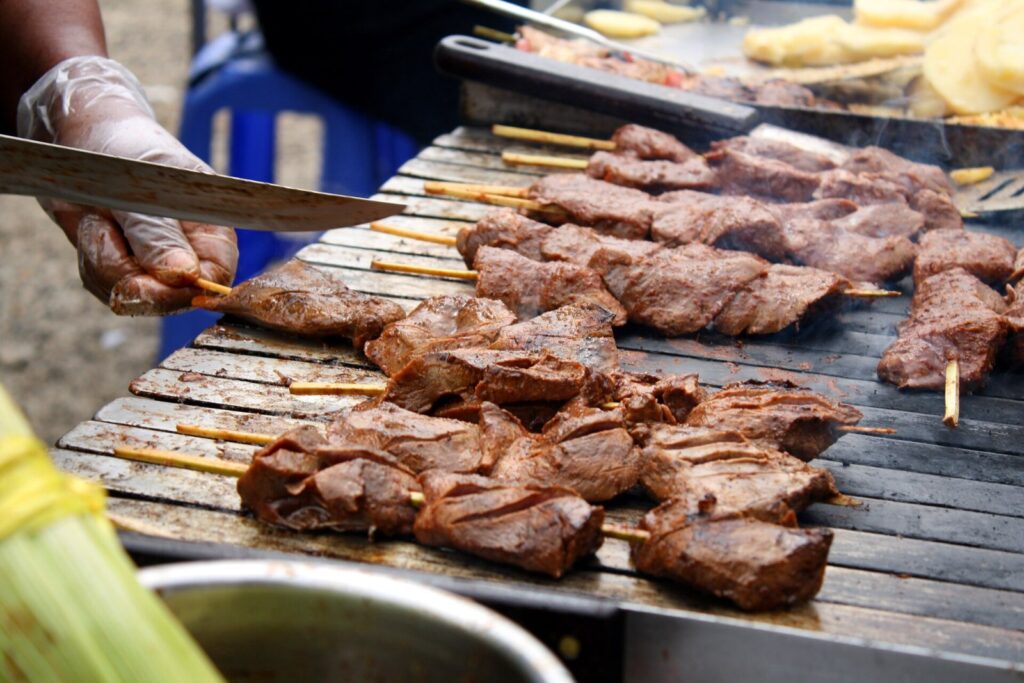
- Anticuchos on a street grill, Lima: photo by Renzo Vallejo from Lima, Perú, Wikimedia Commons (CC BY 2.0)
- Mercado N° 1 de Surquillo: photo by Miguel Angel Chong, Wikimedia Commons (CC BY 3.0)
- Ceviche, Lima: photo by Yogma, Wikimedia Commons (CC BY 2.0)
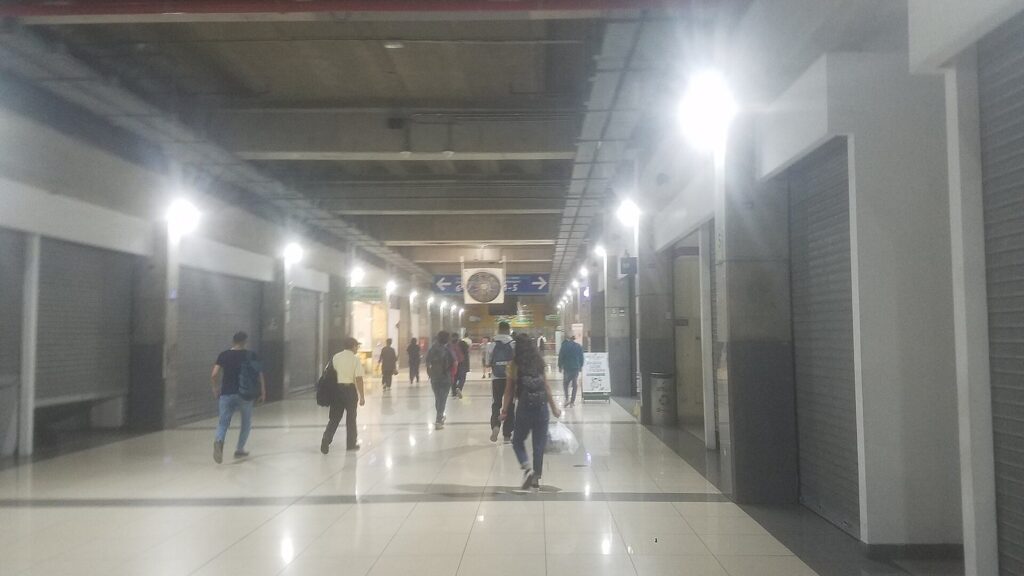
- Estación Central, Metropolitano: photo by Privado (imagen donada al publicador), Wikimedia Commons (CC BY-SA 4.0)
- Huaca Pucllana, Miraflores: photo by PsamatheM, Wikimedia Commons (CC BY-SA 4.0)
- Larcomar, Miraflores: photo by Miguel Vera León, Wikimedia Commons (CC BY 2.0)