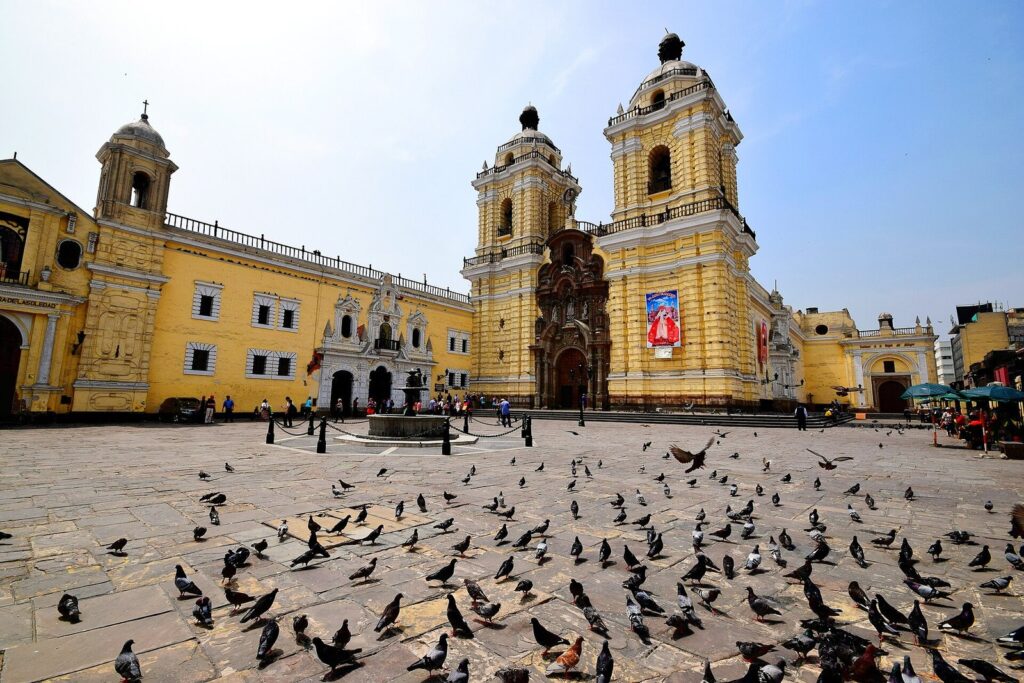
This Lima historic center and archaeological sites guide covers the two cities under Lima’s streets: the colonial capital that Francisco Pizarro founded in January 1535, now a UNESCO World Heritage Site, and the adobe pyramids, the huacas, that were already ancient when he arrived. Walk the center first, from Plaza San Martín to the Plaza Mayor and the San Francisco catacombs. Then see one huaca in the middle of the modern city, Huaca Pucllana in Miraflores or Mateo Salado near Pueblo Libre, and give half a day to the Pachacamac sanctuary south of the city if you can.
This guide is for visitors who want context as well as a checklist: what each site is, when it was built, and how to fit it into a day. The caveat is the calendar. Most museums in the center close on Mondays, Huaca Pucllana closes on Tuesdays, Mateo Salado opens only Wednesday to Sunday, and protests and religious processions can close the streets around the Plaza Mayor at short notice. Hours, fees and closures were checked on September 24, 2026, against the sites’, the Ministry of Culture’s and UNESCO’s own websites.
On this page: At a glance · Lima in three layers · Walking route · Reading the architecture · Churches and convents · Houses and balconies · The huacas · Pachacamac · Museums · Callao’s fortress · Two-day heritage plan · Costs · Closures and processions · Guides · Kids and accessibility · FAQ
Lima’s Historic Sites at a Glance
Fees are standard prices for a foreign adult, in soles, as published on September 24, 2026. Where a site doesn’t publish a price online, we say so. Opening days are the ones that trip visitors up.
| Site | Period | District | Open | Adult fee | Time to allow |
|---|---|---|---|---|---|
| Plaza Mayor and the changing of the guard | Colonial, from 1535 | Cercado de Lima | Always; guard changes at noon | Free | 45 minutes |
| Cathedral of Lima | Colonial | Cercado de Lima | Mon to Fri 9 a.m. to 8 p.m., Sat 10 a.m. to 10 p.m., Sun 1 to 7 p.m. | S/ 30 | 1 hour |
| San Francisco convent and catacombs | Colonial | Cercado de Lima | Daily; guided visits in Spanish and English | At the door (not published online) | 1 hour |
| Santo Domingo convent | Colonial | Cercado de Lima | Tue to Sun, 9 a.m. to 1 p.m. and 2 to 5 p.m. | S/ 15, guide and tower included | 45 minutes |
| Casa de Aliaga | Colonial mansion | Cercado de Lima | Daily, 10 a.m. to 4 p.m. | S/ 35, plus a licensed guide | 45 minutes |
| Museum of Congress and the Inquisition | Colonial | Cercado de Lima | Daily, 9 a.m. to 5 p.m. | Free | 1 hour |
| Huaca Pucllana | Lima culture, AD 450 to 650 | Miraflores | Wed to Mon, 9 a.m. to 5 p.m.; nights Wed to Sun | S/ 15 (S/ 17 at night) | 1 hour |
| Huaca Huallamarca | Pre-Hispanic ceremonial center | San Isidro | Tue to Sat and first Sunday, 9 a.m. to 5 p.m. | S/ 5 | 45 minutes |
| Mateo Salado | Ychsma, AD 900 to 1450, then Inca | Cercado de Lima, by Pueblo Libre | Wed to Sun, 8:30 a.m. to 4 p.m. | S/ 10, guide S/ 10 | 1 hour |
| Pachacamac sanctuary | Pre-Hispanic oracle, Inca temple | Lurín | Tue to Sat 9 a.m. to 5 p.m., Sun 9 a.m. to 4 p.m. | S/ 15 | Half a day |
| Real Felipe fortress | Colonial | Callao | Daily, 9 a.m. to 4 p.m. | S/ 15, guided in Spanish | 2.5 hours |
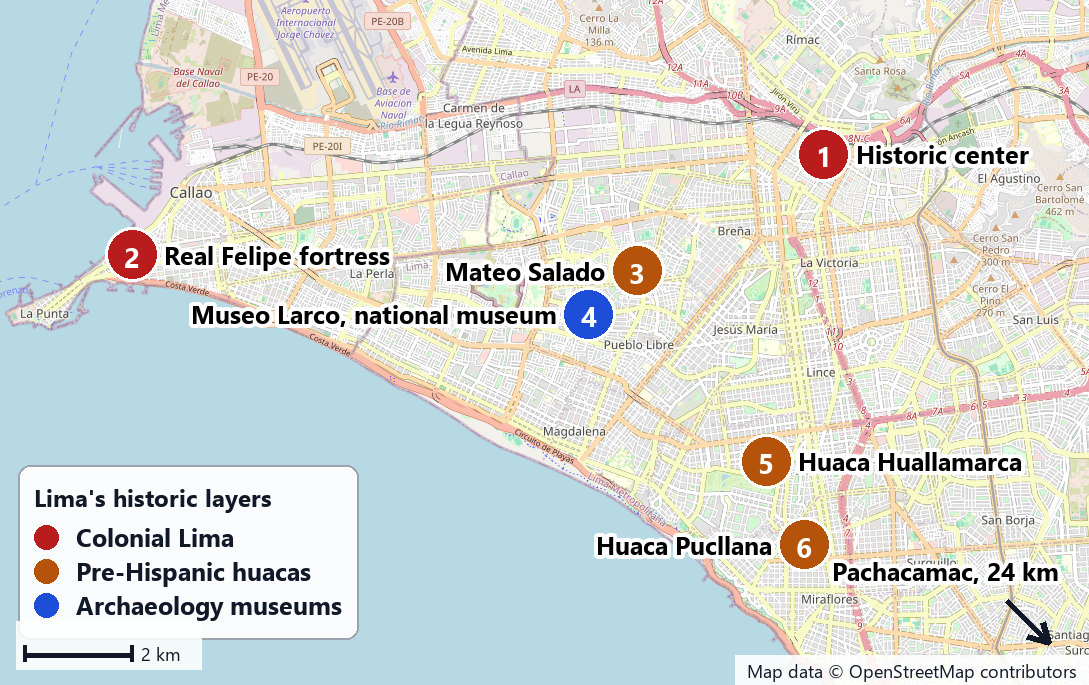
Lima in Three Layers: A Short History
Before the Spanish. People built on this coast for well over a thousand years before Pizarro. The Lima culture raised Huaca Pucllana, in what is now Miraflores, between AD 450 and 650. Pachacamac, south of the city, drew pilgrims for more than a thousand years to consult its oracle, and the Incas added a Temple of the Sun there. The Ychsma, the culture most associated with pre-Hispanic Lima, built the five pyramids of Mateo Salado between about AD 900 and 1450, and the Incas reoccupied them after 1450. These adobe mounds, the huacas, survive all over the modern city, some fenced and excavated, others squeezed between apartment blocks.
The City of the Kings. Francisco Pizarro founded Lima in January 1535 as the City of the Kings, and it became, in UNESCO’s words, the political, administrative, religious and economic capital of the Viceroyalty of Peru and, until the middle of the 18th century, the most important city of the Spanish dominions in South America. Earthquakes damaged it badly and much was rebuilt, but the grid around the Plaza Mayor, the great convents and the carved wooden balconies still define the center. UNESCO inscribed the Historic Centre of Lima on the World Heritage List in 1988 and extended it in 1991; the San Francisco convent, which it calls the largest of its type in this part of the world, is part of the listing.
The Republic. After independence, proclaimed in 1821 by José de San Martín, whose statue stands on the plaza that bears his name, Lima grew south toward the sea. Plaza San Martín belongs to that later city, and so do the clifftop districts of Miraflores and Barranco.
A Walking Route Through the Historic Center
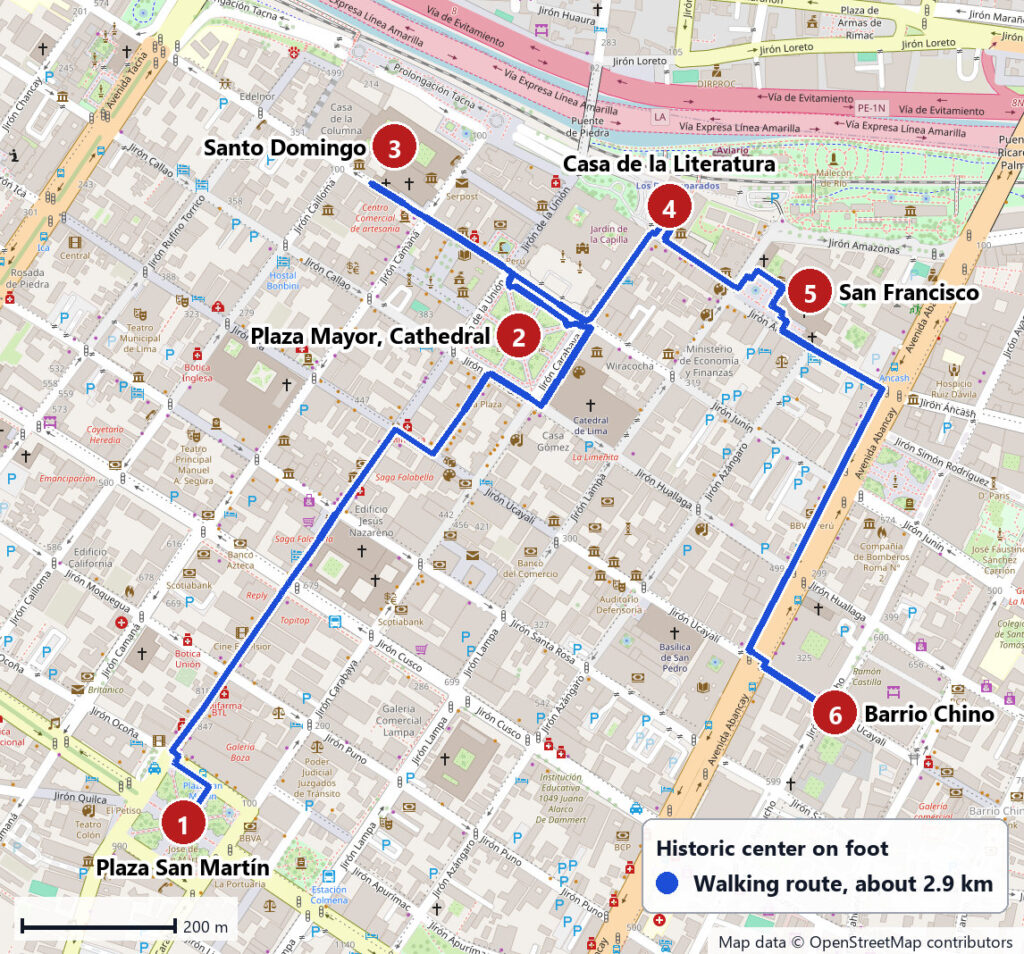
This route follows the order in which the stops close, so it works best from about 9:30 a.m. on a Tuesday to Saturday. The distances come from OpenStreetMap’s walking routes; allow a full morning plus lunch.
- Plaza San Martín. Start at the republican-era square, then walk the pedestrian Jirón de la Unión 950 m to the Plaza Mayor, about 13 minutes.
- The Plaza Mayor. Lima’s main square, also called the Plaza de Armas, is lined by the Cathedral, the Archbishop’s Palace with its carved wooden balconies, the Government Palace and the Municipal Palace. Visit the Cathedral first, and be at the palace railings by about 11:45 for the changing of the guard at noon.
- Casa de Aliaga. On Jirón de la Unión beside the square, this colonial family mansion can be visited only with a licensed guide you bring, daily from 10 a.m. to 4 p.m.
- Santo Domingo. 441 m from the Plaza Mayor. The convent keeps relics of Santa Rosa de Lima and San Martín de Porres, and the ticket includes a guided visit and the tower, which only visitors aged 18 and over may climb. It closes from 1 to 2 p.m.
- Casa de la Literatura Peruana. 537 m on, in the old Desamparados railway station, free and closed on Mondays.
- San Francisco. 238 m farther. The guided visit of about an hour covers the cloisters, the library and the catacombs.
- Chinatown. 758 m more to the streets around Calle Capón, for a chifa lunch.
Extensions: the Museum of Congress and the Inquisition is 595 m from the Plaza Mayor, about 8 minutes on foot, and the Santa Rosa de Lima sanctuary, on Avenida Tacna, is 683 m away, about 9 minutes. Las Nazarenas, the church of the Señor de los Milagros, is also on Avenida Tacna. Our Lima itinerary times this route stop by stop, with an afternoon at MALI and the Magic Water Circuit.
What to Look For: Reading Colonial Lima
The historic center rewards a slower look. A few features explain most of what you’ll see, and they make the difference between a walk past old buildings and an understanding of how the city worked.
- The grid. The Spanish laid out Lima around a main square with streets at right angles, and the Plaza Mayor still holds the city’s powers on its four sides: the Cathedral and the Archbishop’s Palace for the church, the Government Palace for the state, and the Municipal Palace for the city.
- Baroque church facades. The carved stone portals of San Francisco and Santo Domingo show the wealth of the orders that built them, and their bell towers were the tallest structures in the colonial skyline.
- Cloisters. Behind the churches, the convents are built around arcaded courtyards, and the guided visits at San Francisco and Santo Domingo take you through them.
- Enclosed balconies. The dark, latticed wooden balconies let the people inside watch the street without being seen; the Archbishop’s Palace has the most photographed pair.
- Earthquake scars. UNESCO notes that the city was severely damaged by earthquakes, so much of what stands today is rebuilt, which is why styles from different centuries sit side by side on the same street.
Churches and Convents Worth Going Inside
The Cathedral of Lima
The Cathedral fills the east side of the Plaza Mayor, and its museum route takes you through the nave, the chapels and the religious art collection; one chapel holds the tomb of Francisco Pizarro. Visit on a weekday morning, since on Sundays it opens to visitors only at 1 p.m.
Plan it: S/ 30 for foreign adults, S/ 20 for Peruvians and residents, and S/ 15 for foreign children aged 6 to 12. Open Monday to Friday 9 a.m. to 8 p.m., Saturday 10 a.m. to 10 p.m. and Sunday 1 to 7 p.m. The museum asks for no flash photography, food or animals.
San Francisco convent and catacombs
San Francisco is the historic center’s showpiece: a baroque church and convent with tiled cloisters, a library and, underneath, the catacombs that served as the city’s cemetery in colonial times. UNESCO singles it out as the largest convent of its type in this part of the world, built by local and European craftsmen together.
Plan it: visits are guided, in Spanish and English, and last about an hour; the museum’s site lists daily opening from 9 a.m., though its closing times vary between listings, and it doesn’t publish its prices online, so pay at the door. The old website museocatacumbas.com, still cited in many guides, no longer belongs to the museum.
Santo Domingo
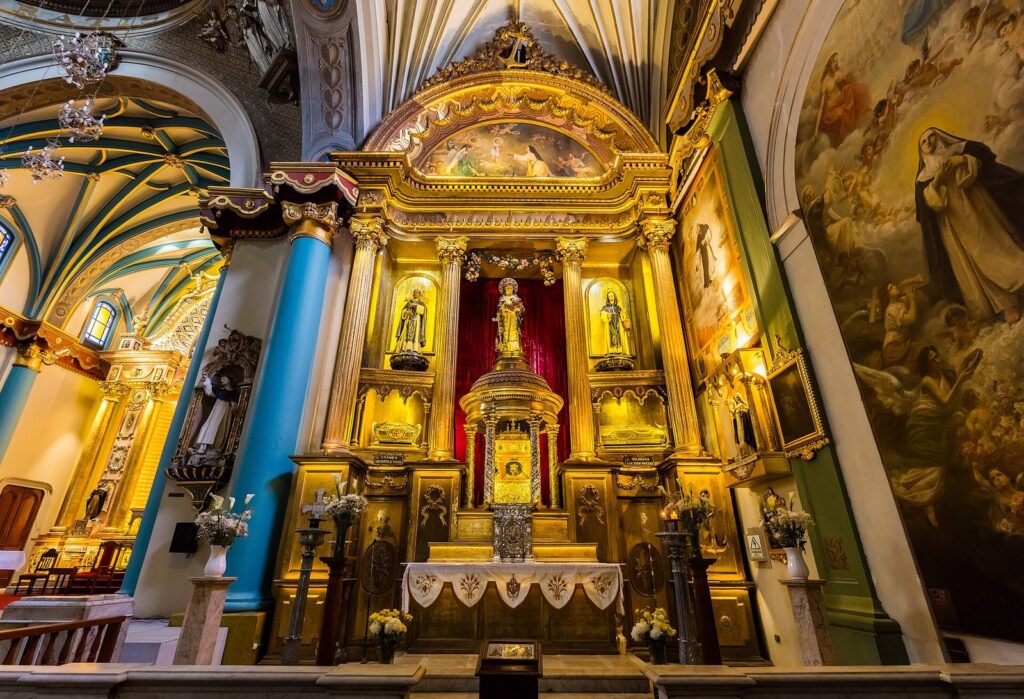
Santo Domingo, a block from the Plaza Mayor, is where Lima’s two best-known saints are remembered: the convent keeps relics of Santa Rosa de Lima and San Martín de Porres. The visit includes a guide and the bell tower, which only visitors aged 18 and over may climb.
Plan it: S/ 15 general admission; seniors over 60 and university students pay S/ 7, children aged 5 to 16 S/ 2. Open Tuesday to Sunday, 9 a.m. to 1 p.m. and 2 to 5 p.m.; closed Mondays.
Las Nazarenas and the Santa Rosa sanctuary
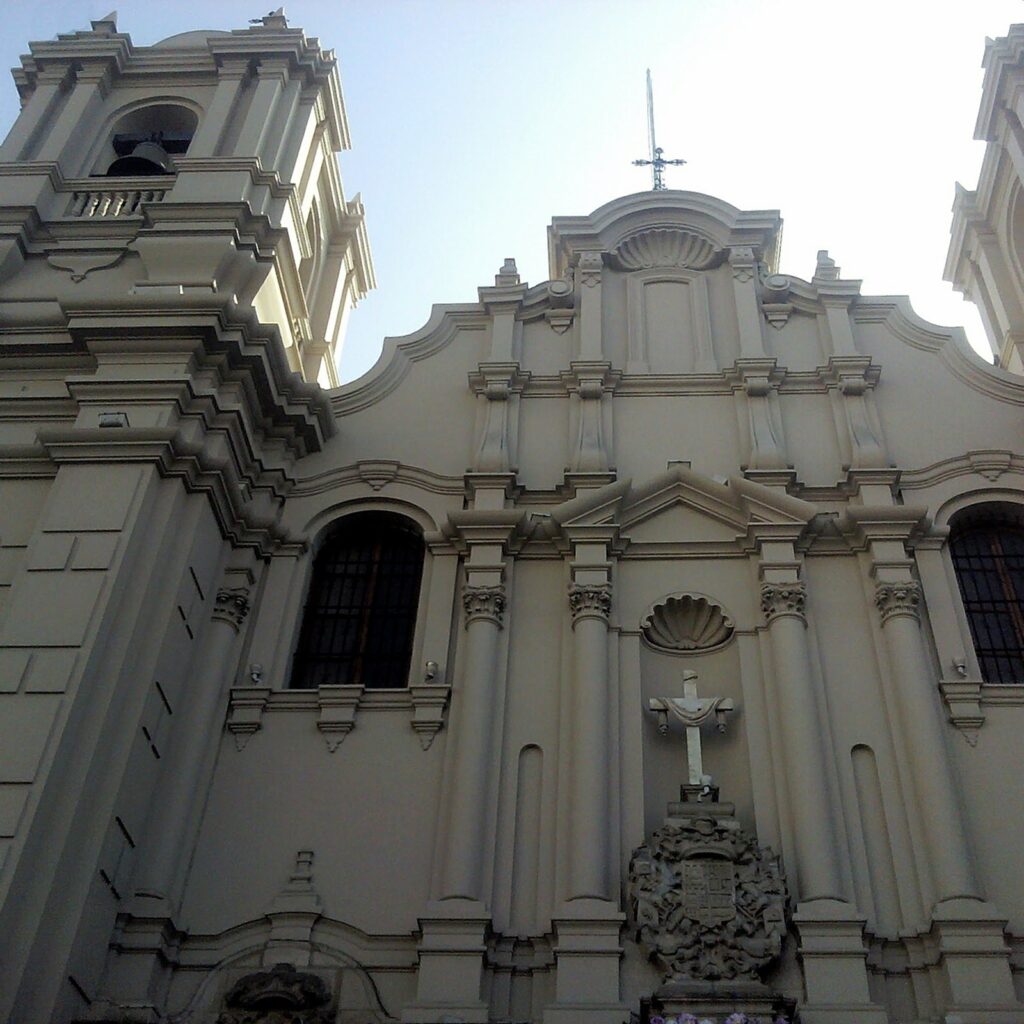
Two churches on Avenida Tacna matter more to Limeños than to most visitors. Las Nazarenas is the sanctuary of the Señor de los Milagros, the Lord of Miracles, a painting of Christ at the center of Lima’s best-known religious devotion; in 2026 its processions go through the city on October 3, 18, 19 and 28 and November 1. It opens for worship roughly from 6 a.m. to noon and 4 to 8 p.m. The sanctuary of Santa Rosa de Lima, where the saint lived, has a garden open Tuesday to Sunday, 9 a.m. to 1 p.m. and 2 to 5:30 p.m., with special hours around her feast day on August 30.
Colonial Houses and Lima’s Balconies
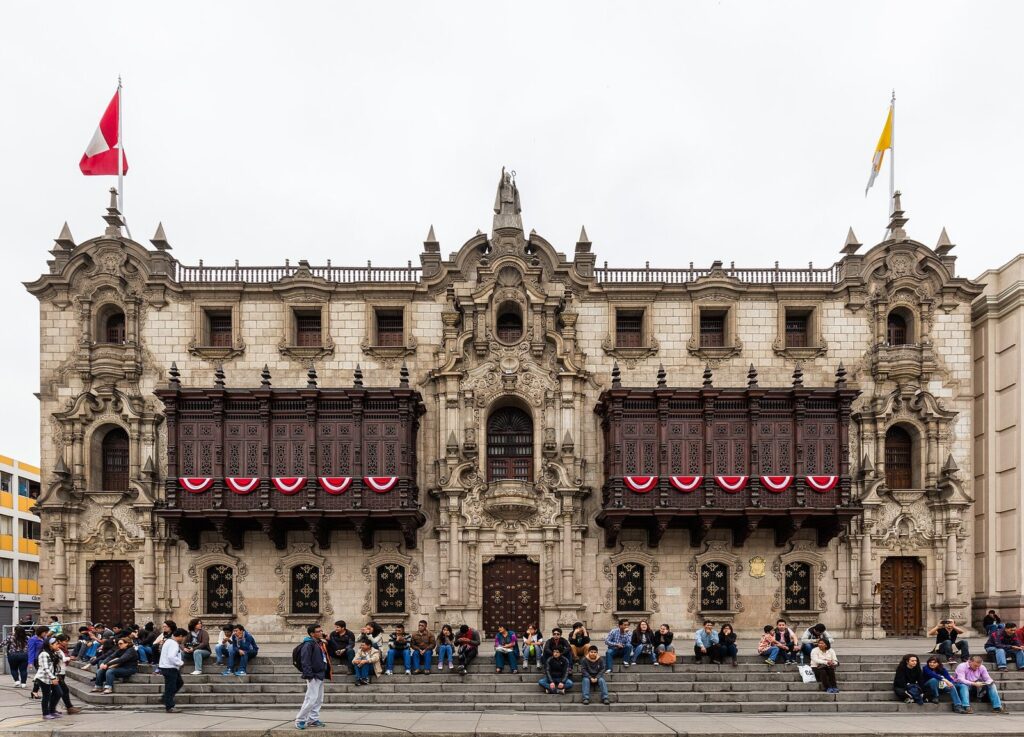
Lima’s enclosed wooden balconies, carved and latticed so that people inside could watch the street unseen, are the detail to look up for on any walk. The two long balconies of the Archbishop’s Palace on the Plaza Mayor are the grandest and the easiest to find; others survive on the streets around the Plaza Mayor.
To see inside a colonial house, book Casa de Aliaga on Jirón de la Unión. It opens daily from 10 a.m. to 4 p.m. and costs S/ 35, but it has no guides of its own, so you must bring a licensed guide; agencies and groups book by phone or email. The Casa de la Literatura Peruana, free and open Tuesday to Sunday from 10 a.m. to 7 p.m., shows another side of the city’s architecture: the old Desamparados railway station behind the Government Palace.
The Huacas: Pre-Hispanic Lima in the Modern City
Huaca is the Quechua-rooted word Peruvians use for a sacred place, and in Lima it means the adobe pyramids and platforms that dot the city. Three are easy to visit and give three different pictures of pre-Hispanic Lima.
Huaca Pucllana, Miraflores
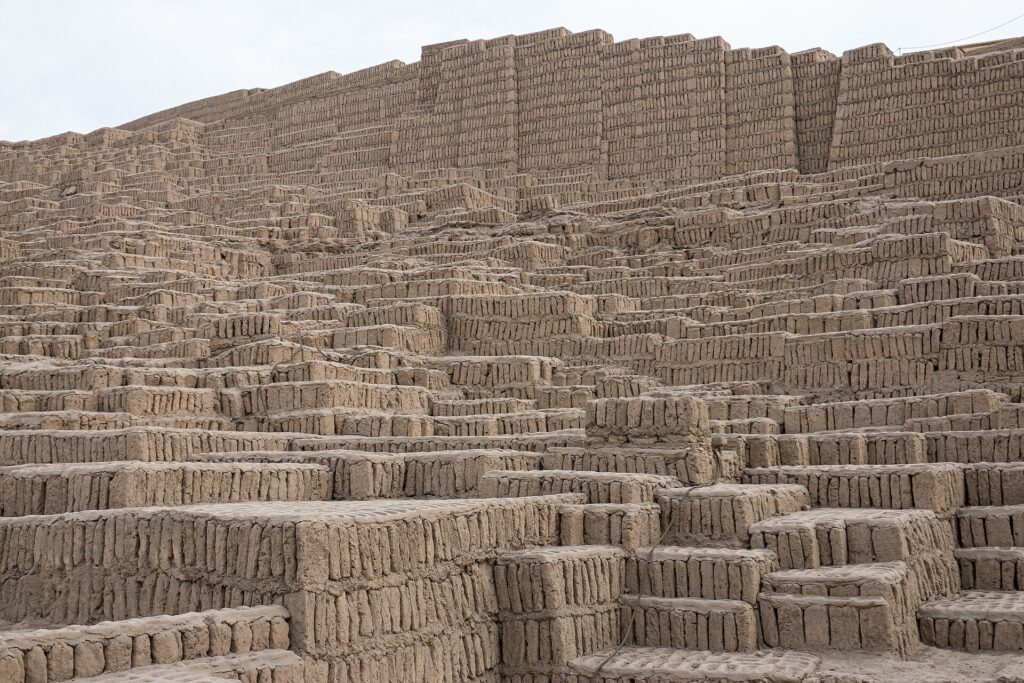
Pucllana is the showpiece: a great adobe pyramid built by the Lima culture between AD 450 and 650, long before the Incas, with patios and plazas, a room of original artifacts from the excavations and a small park of native plants and animals. Every visit includes a guided walk, and there’s Pukllaywasi, an interactive room designed for visitors with visual impairments and for children. PROMPERÚ suggests reaching it from the Metropolitano’s Angamos station by walking seven blocks west along Avenida Angamos to Calle General Borgoño.
Plan it: S/ 15 by day, 9 a.m. to 5 p.m., Wednesday to Monday; closed Tuesdays. Night visits run Wednesday to Sunday from about 6:30 p.m. by reservation, for S/ 17, except on the first Sunday of the month. The restaurant inside the site overlooks the excavations.
Huaca Huallamarca, San Isidro
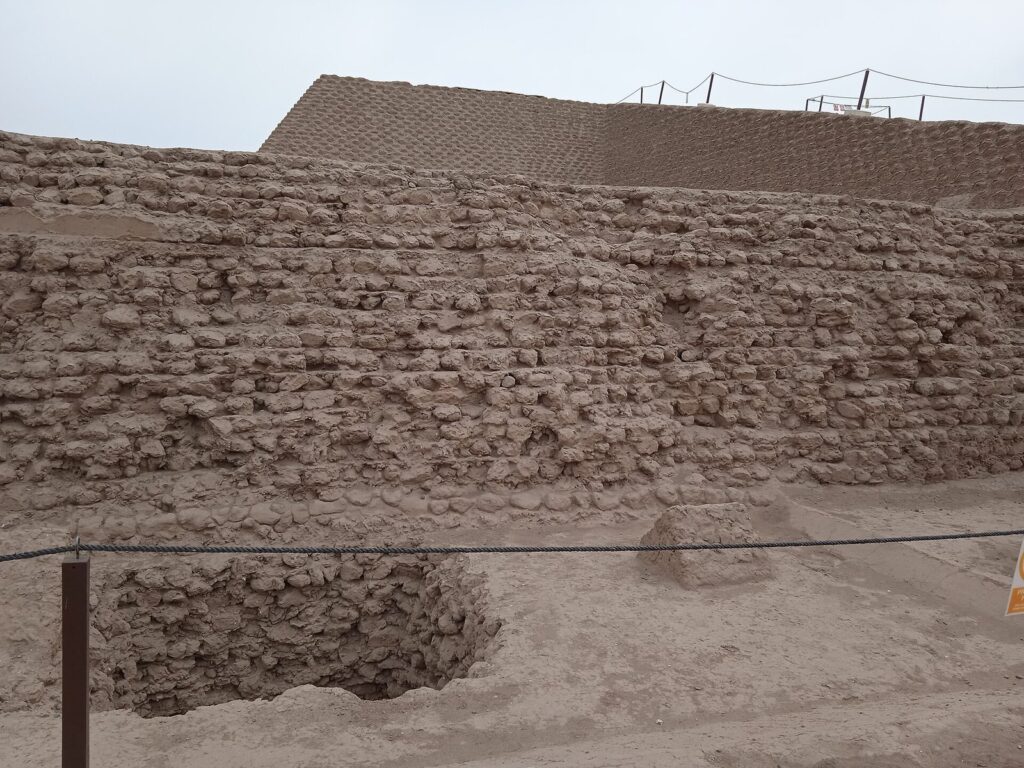
Huallamarca, at Avenida El Rosario and Avenida Nicolás de Ribera 201, was both a ceremonial center and a necropolis. Its pyramid was restored in the 20th century, and its site museum, opened in 1960, displays burial bundles, textiles, farming tools and ceramics. It’s small and quiet, which makes it the natural alternative on a Tuesday, when Pucllana is closed.
Plan it: S/ 5 for adults; open Tuesday to Saturday and on the first Sunday of the month, 9 a.m. to 5 p.m.
Mateo Salado, between the center and Pueblo Libre
Mateo Salado is one of Lima’s largest archaeological complexes: five truncated pyramids of rammed earth built by the Ychsma between about AD 900 and 1450 and reoccupied by the Incas until the Spanish arrived. PROMPERÚ says the name comes from a French hermit, Matheus Salade, who lived there in the 1560s. It’s run by the Ministry of Culture’s Qhapaq Ñan office, which also organizes night tours and “huacatones,” guided walks across all five pyramids.
Plan it: open Wednesday to Sunday, 8:30 a.m. to 4 p.m.; adults pay S/ 10, seniors S/ 5 and minors S/ 1, and an optional guide costs S/ 10 for a visit of about 45 minutes that climbs the pyramids. It’s 6.1 km from the Plaza Mayor and only 1.8 km by road from Museo Larco, so pair the two on a Wednesday to Sunday morning.
Pachacamac: The Great Sanctuary South of Lima
If you see only one archaeological site beyond the city’s huacas, make it Pachacamac. For more than a thousand years pilgrims traveled to this sanctuary on the coast to consult its oracle, and the Incas built a Temple of the Sun on the hill above the sea. The site museum, included in the ticket, explains the layers before you walk the circuit.
Plan it: S/ 15 for adults, the same for every nationality; open Tuesday to Saturday from 9 a.m. to 5 p.m. and Sunday from 9 a.m. to 4 p.m., with ticket sales ending half an hour before closing; closed Mondays. It’s at km 31.5 of the Antigua Panamericana Sur in Lurín, 24 km by road from Miraflores. An optional guide costs S/ 50 per group for about 1 hour 30 minutes. Our guide to day trips from Lima covers getting there and back.
Museums That Explain What You’re Seeing
The sites make more sense after a museum, and Lima’s best are close to the huacas.
- Museo Larco, Pueblo Libre: thousands of years of Peruvian history told through ceramics, gold and textiles, with labels in seven languages, including English. Open every day, 9 a.m. to 7 p.m.; S/ 50 at the door or S/ 45 online.
- The national museum of archaeology, anthropology and history, Pueblo Libre: on Plaza Bolívar, free, open Tuesday to Sunday from 9 a.m. to 7:30 p.m.
- MALI, the Lima Art Museum: Peruvian art from ancient times to the present in the Parque de la Exposición, including the colonial collection; S/ 40 for foreign visitors, Tuesday to Sunday.
- Museo Pedro de Osma, Barranco: colonial paintings of the Cusco school, silverwork and furniture in a Republican-era mansion; S/ 35, Tuesday to Sunday.
- The Museum of Congress and the Inquisition: in the historic center, free, daily from 9 a.m. to 5 p.m., in the building where the colonial Inquisition sat.
The Government Palace isn’t regularly open to walk-in visitors. It offers a 360-degree virtual tour online, and occasional special visits are announced as events; the changing of the guard, free from the railings at noon, is the way most people see it.
Callao’s Colonial Fortress
The Real Felipe fortress in Callao, the colonial fort that guarded Lima’s port, is worth the trip for anyone interested in military history. Visits are guided in Spanish and last 2 hours 30 minutes, photos without flash are allowed but video isn’t, and the fort sometimes closes for maintenance, so phone ahead. It opens daily from 9 a.m. to 4 p.m., and foreign visitors pay a flat S/ 15. It’s 14.5 km by road from the Plaza Mayor, about 50 minutes, and pairs with Callao Monumental’s restored streets and the seafront at La Punta.
A Two-Day Heritage Plan
For travelers who came mainly for history, this plan covers the colonial core, the best museums and two huacas in two days, arranged around the closing days. Run it from Wednesday to Saturday, when every site on it is open.
| When | Day 1: colonial Lima | Day 2: pre-Hispanic Lima |
|---|---|---|
| Morning | Plaza San Martín, Jirón de la Unión, the Cathedral and Santo Domingo; the changing of the guard at noon | Museo Larco at its 9 a.m. opening, then Mateo Salado, 1.8 km away |
| Lunch | Chinatown, around Calle Capón | Pueblo Libre, near Museo Larco |
| Afternoon | San Francisco and its catacombs; the Museum of Congress and the Inquisition | The national museum on Plaza Bolívar, free, or Huaca Huallamarca in San Isidro |
| Evening | The Magic Water Circuit in the Parque de la Reserva | Huaca Pucllana’s night visit, booked ahead, and dinner at its restaurant |
With a third day, spend the morning at Pachacamac and the afternoon at Museo Pedro de Osma in Barranco, which is on the way back. For the time between sites, remember the traffic: Museo Larco is 7.3 km from the Plaza Mayor by road, about 25 minutes at TomTom’s 2025 average for Lima, and Huaca Pucllana is 8.6 km from it.
What Does a Heritage Day Cost?
Entry fees are modest, and three important sites are free. These are the foreign-adult prices as published on September 24, 2026.
| Site | Fee | Extras |
|---|---|---|
| Cathedral of Lima | S/ 30 | None |
| San Francisco convent and catacombs | Paid at the door | Guided visit included |
| Santo Domingo | S/ 15 | Guide and tower included |
| Casa de Aliaga | S/ 35 | A licensed guide you hire |
| Museum of Congress and the Inquisition | Free | None |
| MALI | S/ 40 | None |
| Museo Larco | S/ 50, or S/ 45 online | None |
| National museum of archaeology | Free | None |
| Huaca Pucllana | S/ 15, or S/ 17 at night | Guided walk included |
| Huaca Huallamarca | S/ 5 | None |
| Mateo Salado | S/ 10 | Optional guide S/ 10 |
| Pachacamac | S/ 15 | Optional guide S/ 50 per group |
| Real Felipe fortress | S/ 15 | Guided visit in Spanish |
The two-day plan above comes to about S/ 124 to S/ 129 in fees for a foreign adult, plus San Francisco’s door price, with the free national museum in place of Huaca Huallamarca and Mateo Salado’s optional guide left out.
Planning Around Closures, Processions and Protests
| Day | Closed | Open, and a good choice |
|---|---|---|
| Monday | Santo Domingo, MALI, the national museum, the Casa de la Literatura, Pachacamac, Huaca Huallamarca, Mateo Salado | The Cathedral, San Francisco, Casa de Aliaga, Huaca Pucllana, Museo Larco |
| Tuesday | Huaca Pucllana, Mateo Salado | The whole historic center route, Huaca Huallamarca, Pachacamac |
| Wednesday to Saturday | Nothing on this page | Everything; Mateo Salado and Huaca Pucllana’s night visits too |
| Sunday | Huaca Huallamarca, except the first Sunday | The Cathedral from 1 p.m.; Pachacamac until 4 p.m.; Mateo Salado |
Beyond the weekly pattern, three things close the center at short notice. Religious processions come first: in 2026 the Señor de los Milagros procession goes through Lima on October 3, 18, 19 and 28 and November 1. Protests come second: from June 19 to 22, 2026, the Municipality of Lima and the National Police closed a perimeter that included the Plaza Mayor and Plaza San Martín, with the stated aim of protecting public safety and the historic heritage, and the Colmena, Jirón de la Unión, Tacna and Castilla stations of the Metropolitano shut. Third, a 60-day state of emergency declared on August 28, 2026, covers Lima Metropolitana and Callao. Check the news the evening before a center day.
Do You Need a Guide?
At several sites a guide is built in or required: San Francisco’s visit is guided, Santo Domingo’s ticket includes a guide, Huaca Pucllana’s visit includes a guided walk, the Real Felipe is guided in Spanish, and Casa de Aliaga admits visitors only with a licensed guide. Elsewhere it’s optional, at S/ 10 at Mateo Salado and S/ 50 per group at Pachacamac.
For the center as a whole, a licensed guide for the morning turns a walk past facades into a history lesson, and tip-based walking tours are easy to find. The UK Foreign Office advises using licensed taxis booked by app or phone between sites, rather than hailing one in the street.
Visiting With Children or Limited Mobility
Several historic sites cater well to families. Huaca Pucllana has Pukllaywasi, an interactive room designed for children and for visitors with visual impairments, plus a small park of native plants and animals. Museo Larco charges S/ 1 for children aged 3 to 8, and Pachacamac charges S/ 1 for anyone aged 3 to 17. At Santo Domingo, the tower is closed to visitors under 18 by order of the civil defense authority, so families should expect to skip it.
For visitors with limited mobility, the museums are the easiest places: Museo Larco has ramps and free wheelchair loans, MALI has ramps, lifts and adapted toilets, and Museo Pedro de Osma lends wheelchairs. At Pachacamac, wheelchairs are lent free at the ticket office, though they can’t go into the archaeological zone, and a free service carries visitors with reduced mobility around the circuit from Tuesday to Friday, booked at the ticket office. Old churches, convents and huacas often involve steps, uneven floors and climbs, so ask each site before you go.
Lima Historic Sites FAQ
How long do you need for Lima’s historic center?
A full morning covers the essentials on foot: the Plaza Mayor and the changing of the guard, the Cathedral, Santo Domingo and the San Francisco catacombs, on a route of about 2.9 km. Add lunch in Chinatown and an afternoon at MALI or the Museum of Congress and the Inquisition, and it becomes a full day.
What is a huaca?
In Lima, a huaca is a pre-Hispanic sacred site, usually an adobe pyramid or platform. Hundreds of years older than the colonial city, they survive across the modern districts. Huaca Pucllana in Miraflores, built between AD 450 and 650, is the easiest to visit; Mateo Salado and Huaca Huallamarca are quieter alternatives.
Which huaca should you visit if you only have time for one?
Huaca Pucllana, because it’s in Miraflores, includes a guided walk and has a site museum, a native-species park and a restaurant. It’s closed on Tuesdays. If you’re pairing a huaca with Museo Larco, choose Mateo Salado, 1.8 km away by road, open Wednesday to Sunday.
Can you visit the Government Palace?
Not as a walk-in visitor. The palace offers a 360-degree virtual tour online and occasional special visits, announced as events. Most visitors see it from the Plaza Mayor during the changing of the guard at noon, which is free to watch, and security closures can cancel it.
Is the historic center open on Sundays?
Mostly. The Cathedral opens to visitors only from 1 to 7 p.m. on Sundays, San Francisco and Casa de Aliaga open daily, and Santo Domingo and MALI are open. Huaca Huallamarca opens only on the first Sunday of the month, and Pachacamac closes early, at 4 p.m.
Is Pachacamac worth it if you’ve seen the huacas in the city?
Yes. The city’s huacas are single pyramids; Pachacamac is a whole sanctuary, used for more than a thousand years, with an Inca Temple of the Sun and a site museum that ties the periods together. Allow half a day with the 24 km drive from Miraflores, and avoid Mondays, when it’s closed.
Related Lima Guides
- Lima, Peru Itinerary for First-Time Visitors: the historic center day, timed stop by stop.
- Best Lima Neighborhoods for Tourists: the center, Rímac, Pueblo Libre and Callao as places to explore.
- Best Day Trips From Lima, Peru: Pachacamac, Caral and more, with door-to-door times.
- Best Things to Do in Lima, Peru for First-Time Visitors: the full list of sights, with prices and a map.
Sources and How We Checked
Hours, fees and closures on this page were checked on September 24, 2026, against the sources listed below. The guide is compiled from them, not from other travel lists, and it claims no first-hand visits. Distances come from OpenStreetMap routing.
- UNESCO and PROMPERÚ: UNESCO on the Historic Centre of Lima, PROMPERÚ on the huacas of Lima, PROMPERÚ on the Real Felipe
- Churches and colonial sites: Cathedral of Lima, San Francisco convent and catacombs, Santo Domingo convent, Casa de Aliaga, Casa de la Literatura Peruana, Las Nazarenas, Andina on the Santa Rosa sanctuary, Museum of Congress and the Inquisition, Government Palace virtual tour
- Ministry of Culture and archaeological sites: Huaca Pucllana, Visit Miraflores on Pucllana’s night visits, Huaca Huallamarca, Mateo Salado, Pachacamac, national museum of archaeology
- Museums: Museo Larco, MALI, Museo Pedro de Osma
- Closures and safety: ACI Prensa on the 2026 processions, Infobae on the June 2026 closure, Andina on the state of emergency, UK FCDO travel advice for Peru, OpenStreetMap routing
Lima Tourism Guide is an independent publication. We are not affiliated with PROMPERÚ, the Municipality of Lima or any attraction listed here, and no one paid to be included.
Photo Credits
- Basilica and Convent of San Francisco: photo by BrunoLocatelli, Wikimedia Commons (CC BY-SA 4.0)
- Map of Lima's historic sites: Lima Tourism Guide, drawn from map data © OpenStreetMap contributors (ODbL)
- Historic center walking route map: Lima Tourism Guide, drawn from map data © OpenStreetMap contributors (ODbL)
- Altar, Santo Domingo church: photo by Diego Delso, Wikimedia Commons (CC BY-SA 4.0)
- Las Nazarenas church: photo by Herwarth Morales, Wikimedia Commons (CC BY-SA 4.0)
- Archbishop's Palace, Plaza Mayor: photo by Diego Delso, Wikimedia Commons (CC BY-SA 4.0)
- Huaca Pucllana: photo by PsamatheM, Wikimedia Commons (CC BY-SA 4.0)
- Huaca Huallamarca: photo by Lucía Pérez2, Wikimedia Commons (CC BY-SA 4.0)