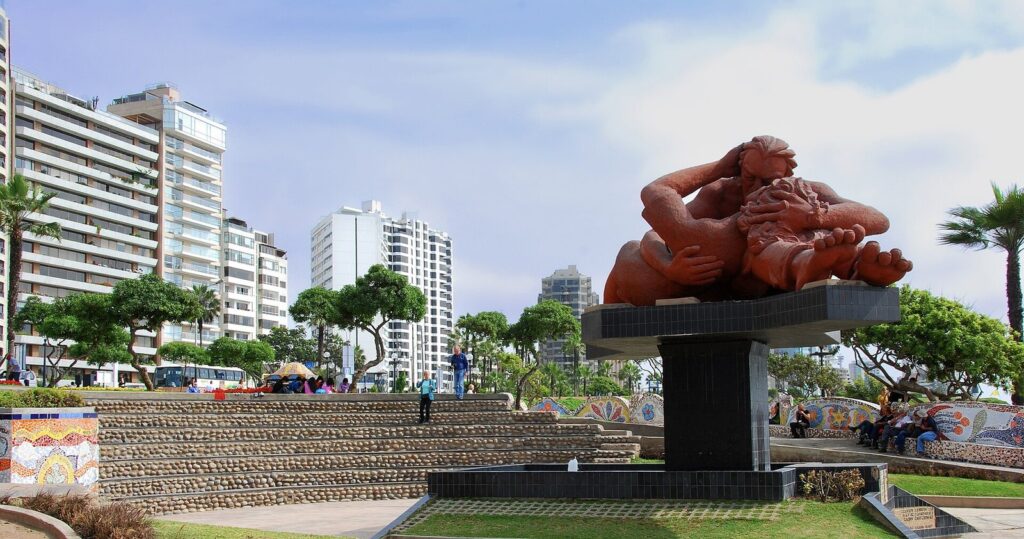
This Lima, Peru travel planning guide for first-timers puts every decision in the order you’ll face it. Months ahead: pick your dates, check that your passport is valid for at least six months after you land, and book flights, including the 1 hour 15 minute hop to Cusco if you’re going on. Weeks ahead: book a hotel in Miraflores or Barranco, check vaccines against the CDC’s advice for Peru, and read the current travel advisories. Days ahead: set up an eSIM, download a ride-hailing app and arrange your airport transfer. Then land, clear a passport-stamp-free immigration check and start with ceviche at lunch.
The guide is for anyone planning a first trip to Lima, usually alongside Cusco and Machu Picchu. The caveat is that rules and conditions change: entry allowances, the transit fee for connecting passengers, SIM-card registration and the state of emergency in Lima have all shifted recently. Entry, health, advisory and transport details were checked on September 24, 2026, against the UK Foreign Office’s, the US CDC’s and State Department’s, and Peru’s own agencies’ websites and announcements.
On this page: Checklist · When and how long · Passport and entry · Health and insurance · Flights and Cusco · Where to stay · Planning your days · Money · Phone and data · Safety and advisories · Arrival and departure · Practical details · Getting around · What to pack · What to book ahead · Fixed prices · Families and mobility · Mistakes to avoid · Spanish phrases · FAQ
Your Lima Trip Checklist, in Order
| When | What to do | Why |
|---|---|---|
| 2 to 4 months before | Choose dates and trip length; check your passport’s expiry date; book flights | Your passport needs at least six months’ validity after arrival, and most visitors book flights one to four months ahead |
| 1 to 3 months before | Book your hotel; reserve any tasting-menu restaurant; plan the Cusco leg | Summer, holidays and the first week of November 2026 fill up early |
| 4 to 6 weeks before | Check vaccines with a travel clinic; buy travel insurance | The CDC recommends hepatitis A and routine vaccines; yellow fever only for some Amazon areas |
| 1 to 2 weeks before | Read the UK Foreign Office and US State Department advisories; check Lima’s news | A state of emergency, protests and processions can change plans |
| A few days before | Set up an eSIM or roaming; install a ride-hailing app; book the Airport Express or a hotel pickup | Buying a local SIM now requires an in-person biometric check |
| If connecting through Lima | Check whether you owe the transit TUUA fee and pay it online | The FCDO says it isn’t currently included in airline tickets |
| On arrival | Immigration, bags, customs, then an authorized taxi, app or bus | Your entry is recorded electronically; there’s no passport stamp at the airport |
| During your stay | Show your passport at hotel check-in; plan one area per day | Foreign tourists staying up to 60 days aren’t charged IGV on lodging, and traffic decides the day |
| Departure day | Be at the airport three hours before an international flight | The airport operator’s advice, plus up to 1 hour 40 minutes’ drive from Miraflores |
Step 1: Decide When to Go and How Long to Stay
Lima has two seasons rather than four. From about December to April it’s sunny and warm, with mean highs of 27 to 28 °C in February and March in the 1991 to 2020 normals for the airport station. From about June to November it’s gray, cool and often drizzly, with highs around 19 to 21 °C, though it almost never rains properly. Museums, food and the historic center are good in any month; beaches and clifftop sunsets are a summer plan, and the green hills around the city, the lomas, are a July-to-October one. Our guide to the best time to visit Lima compares the months by goal.
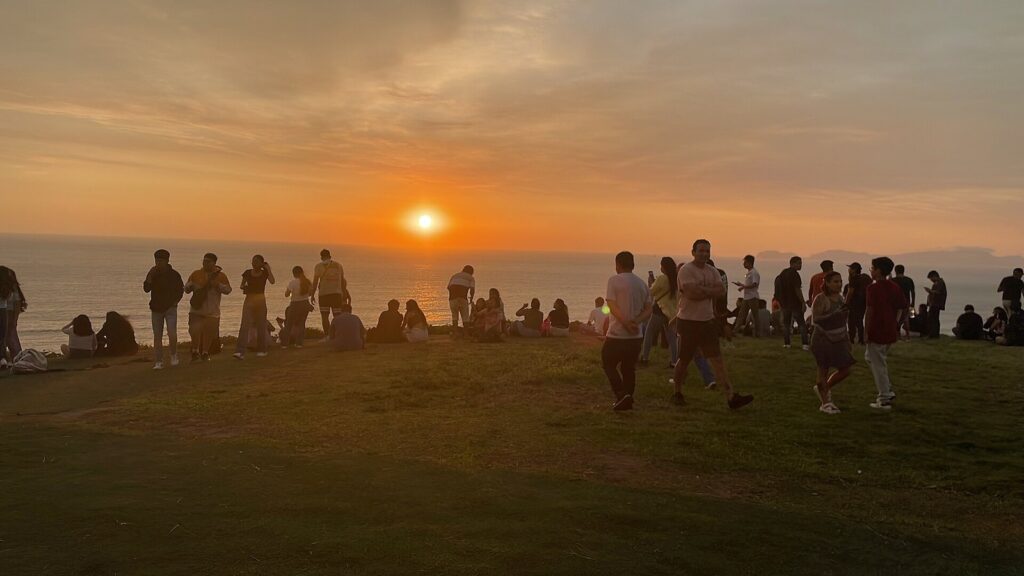
For length, three nights is the sweet spot for a first visit, and it’s what most foreign tourists give the city: PROMPERÚ’s 2024 survey found a median stay of three nights, with an average of five. Two days covers the essentials if you’re disciplined; four or five let you add day trips such as Pachacamac or the Palomino Islands. If you’re combining Lima with Cusco, a common pattern is a night or two in Lima on arrival and a buffer night before your flight home, in case a domestic flight slips.
Step 2: Check Your Passport and Entry Rules
Entry rules depend on your nationality, so check your own government’s advice and Peru’s immigration service, Migraciones, before you book. For British nationals, the UK Foreign Office says:
- Passport validity: your passport must have an expiry date at least six months after the date you arrive.
- Visa: not needed for tourism or short visits.
- Length of stay: visitors are usually given up to 90 days in a 180-day period; the maximum as a visitor or tourist is 183 days in a 365-day period, and the officer decides your allowance.
- Entry record: at the airport, your entry is registered through the Andean Migration Card, the TAM, which is now virtual, and you can check your allowance on the Migraciones website. Land border crossings are stamped.
Many other nationalities also enter visa-free as tourists, but not all, and the details differ, so don’t assume. At Lima’s airport, Peru no longer stamps passports on international flights; the TAM record is what counts, including for the hotel tax exemption described below.
Customs: the FCDO notes that you can bring one laptop and two mobile phones duty-free, and that wildlife products and archaeological artifacts are prohibited. Don’t buy anything sold as pre-Hispanic, however small.
Step 3: Health, Vaccines and Insurance
For Lima itself, the health preparations are modest. The US CDC’s advice for Peru includes:
- Routine vaccines for all travelers, and full measles vaccination (MMR) under a global measles notice.
- Hepatitis A for unvaccinated travelers aged one and over, and hepatitis B for unvaccinated travelers under 60.
- Typhoid if you’ll be in areas with poor sanitation or staying a long time.
- Yellow fever: not required for entry, and not recommended for the city of Lima or for Cusco, the Inca Trail and Machu Picchu. It is recommended for areas below 2,300 m in Amazon regions such as Loreto and Madre de Dios.
- Malaria: no transmission in Lima, Cusco, Machu Picchu or Lake Titicaca, though antimalarials are recommended for parts of the Amazon.
- Mosquito-borne illnesses such as dengue, chikungunya and Zika: use repellent with DEET, picaridin or oil of lemon eucalyptus.
- Altitude sickness at high destinations such as Machu Picchu and Cusco, which matters for your onward plans more than for Lima, at sea level.
Food and water are the everyday risks: the CDC advises choosing safe food and drinks, which in practice means eating raw fish at established cevicherías and drinking bottled or filtered water. See a travel clinic four to six weeks before you go, especially if the Amazon is on your route, and buy travel insurance that covers medical treatment and evacuation; a trip that includes the Andes and the jungle makes that cover more important, not less.
When you compare policies, check three things that matter in Peru: medical evacuation from remote areas such as the Amazon or the high Andes; cover for trip interruption, since protests and strikes can close roads, railways and sometimes airports; and cover for missed connections, which matters if you’re flying on to Cusco the same day you land.
Step 4: Book Flights, Including the Cusco Leg
Nearly every foreign visitor arrives by air at Jorge Chávez International Airport: 97% of the foreign tourists in PROMPERÚ’s 2024 survey entered Peru there. Most plan a few months ahead; 55% bought their flights or package one to four months in advance, 22% less than a month ahead and 19% five to eight months ahead. For the Peruvian summer, national holidays and early November 2026, book at the earlier end.
If you’re going on to Cusco, fly. A direct flight takes about 1 hour 15 to 1 hour 30 minutes, while Cruz del Sur’s buses take about 21 hours 30 minutes to 23 hours 45 minutes, from S/ 185 one way. Leave a generous gap between an international arrival and a Cusco flight, because immigration queues vary, and if your tickets are separate, you’ll collect your bags and check in again.
| Lima to Cusco | Time | Cost | Best for | The catch |
|---|---|---|---|---|
| Direct flight | About 1 hour 15 minutes to 1 hour 30 minutes | Varies by date and airline | Almost everyone | You arrive at altitude straight from sea level |
| Cruz del Sur bus | About 21 hours 30 minutes to 23 hours 45 minutes | From S/ 185 one way | Travelers with time and a tight budget | A full day and night on the road |
Connecting through Lima? The UK Foreign Office says passengers transiting through Lima airport must pay a transfer fee, the TUUA, which is not currently included in airline tickets and can be paid online in advance. Check with your airline whether it applies to your itinerary.
Step 5: Choose Where to Stay
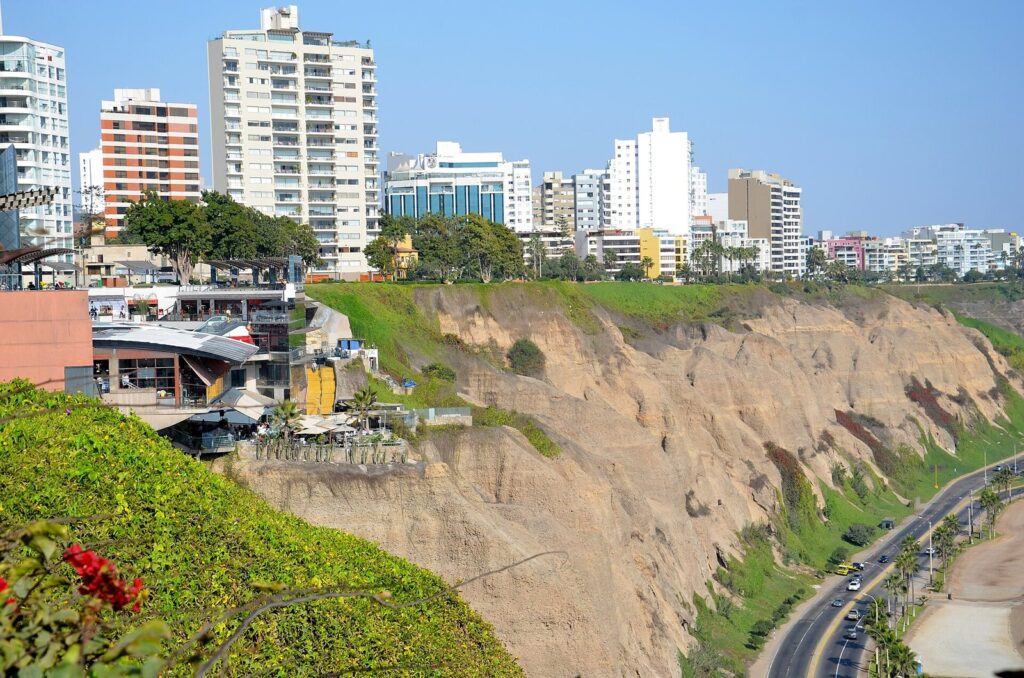
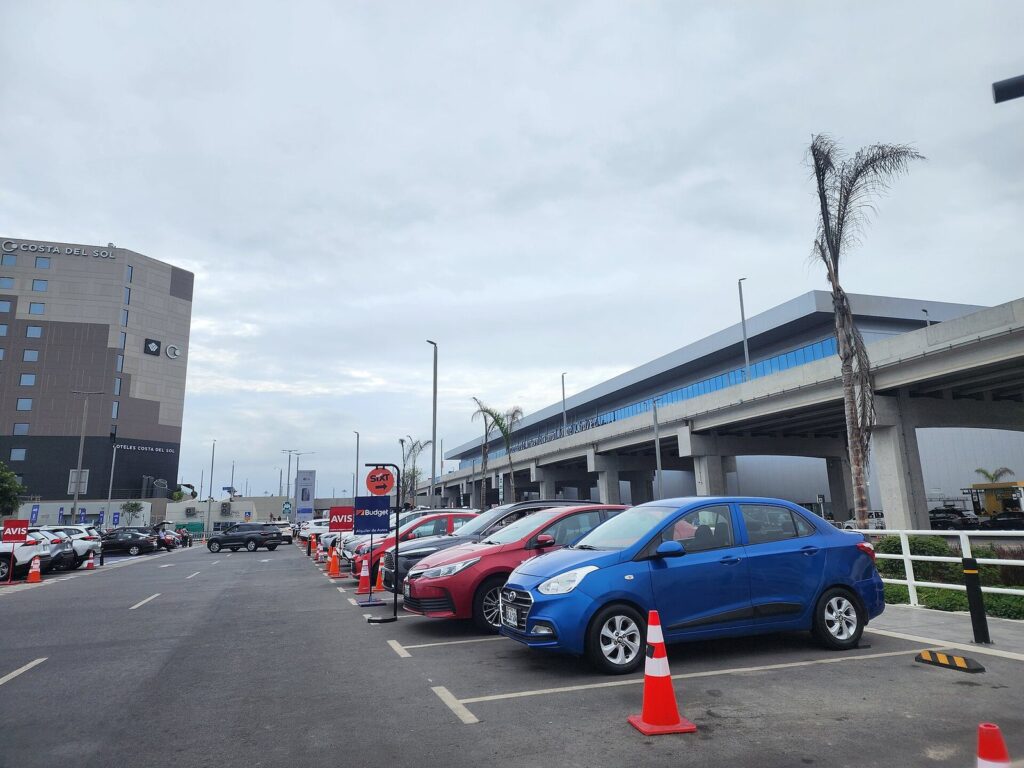
For a first trip, stay in Miraflores: the clifftops, Huaca Pucllana and dozens of restaurants are on foot, and the official Airport Express bus stops there. Barranco, next door, suits travelers who care more about bars, galleries and old houses than sea views; San Isidro gives the shortest drives to everything; and the historic center puts the colonial sights outside your door but the evening plans 10 km away. For a late arrival or a dawn flight, a five-star hotel now stands beside the new airport terminal. Our guide to where to stay in Lima compares the areas with drive times and hotels we checked.
One money point to know before you book: lodging sold to foreign tourists who aren’t resident in Peru, for stays of up to 60 days, is treated as an export of services and isn’t charged IGV, the sales tax. You show your passport and your entry record at check-in, so check which rate you’re being quoted.
Step 6: Plan Your Days Around the Traffic
Lima’s traffic shapes every plan. TomTom’s 2025 index puts the average 10 km drive in metropolitan Lima at nearly 35 minutes, and over 51 minutes in the evening rush, so the trick is one area per day: the historic center on foot one day, Museo Larco and the Miraflores clifftops the next, Barranco and Pachacamac or the Palomino Islands on a third. Our Lima itinerary for first-time visitors times each of those days.
Two calendar rules save the most frustration. Most museums close on Mondays, although Museo Larco opens every day, and Huaca Pucllana closes on Tuesdays. For what to see in each area, our guide to the best things to do in Lima has prices, hours and a map, and for eating, our Lima food guide explains why ceviche is a lunch dish.
Step 7: Money, Cards and Cash
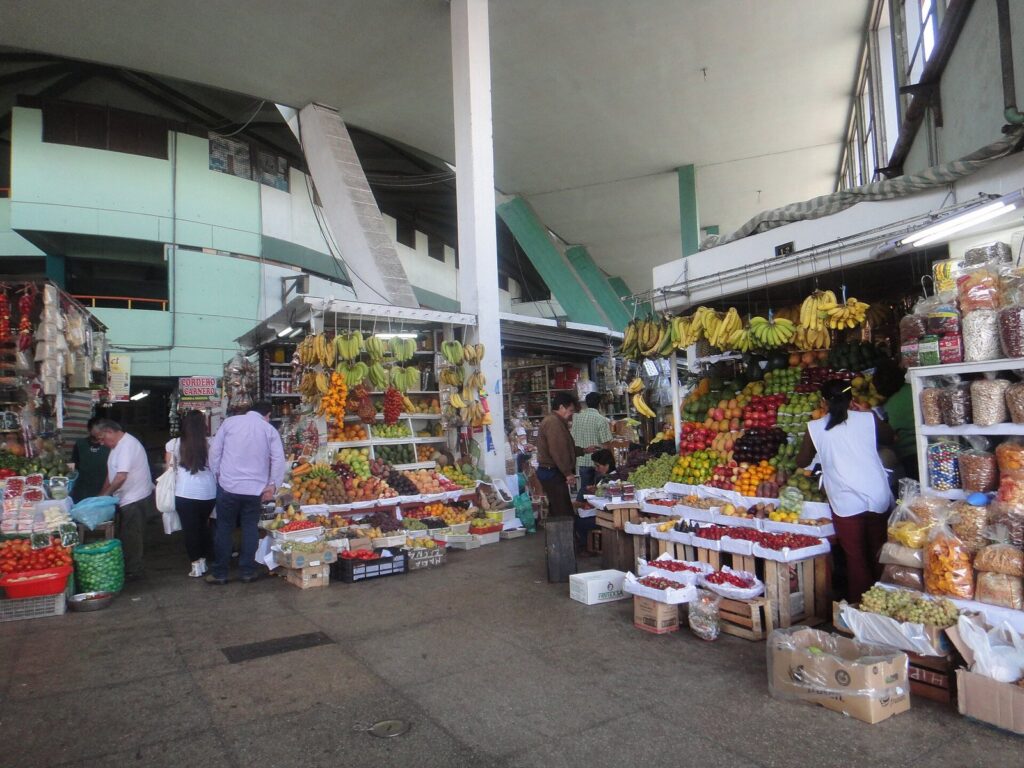
Peru’s currency is the sol, written S/, and prices are quoted in soles. Cards are widely used in hotels, restaurants and shops in the visitor areas, but carry some cash in small notes for markets, street food, tips and some taxis. Get cash from ATMs inside banks or shopping malls, in daylight when you can: the UK Foreign Office warns that tourists, especially those alone, risk “express kidnapping,” in which victims are forced to withdraw cash from ATMs, usually at night.
Budgets vary widely with your hotel and how you eat. Entry fees are modest, most S/ 50 or less; the official airport bus to Miraflores costs S/ 20; a Metropolitano bus trip costs S/ 3.20 plus a S/ 4.50 card; and a set lunch at a neighborhood restaurant costs around S/ 15 in 2026 budget guides. Tasting menus at the ranked restaurants are the big splurge. On restaurant bills, check whether a service charge has been added before you tip.
Step 8: Phone, Data and Apps
You’ll want data from the moment you land, for ride-hailing apps, maps and translations. The easiest options are an eSIM bought before you travel, which roams on Peruvian networks and needs no local registration, or your home carrier’s roaming plan.
Buying a local SIM has become harder. Under rules from OSIPTEL, the telecoms regulator, reported in November 2025, foreigners can contract mobile lines only in person at the operators’ official stores, with a biometric fingerprint check against immigration records; online and street sales are banned. Stands in the airport arrivals hall sell tourist SIMs at higher prices. Peru’s four big operators are Claro, Movistar, Entel and Bitel; if you want a local number for a long stay, go to an official store with your passport and expect the rules to be applied strictly.
| Option | How you get it | Good for | Watch out for |
|---|---|---|---|
| Travel eSIM | Online, before you fly | Short visits; working data on landing | Usually data only, no local number |
| Home carrier roaming | Switch it on with your carrier | Keeping your own number | Daily charges can add up |
| Local SIM at an official store | In person, with a biometric check | Long stays and a Peruvian number | Stricter rules since late 2025 |
| Tourist SIM at the airport | Stands in the arrivals hall | Convenience on arrival | Higher prices than the operators’ stores |
Apps to install: a ride-hailing app, since Uber, Cabify, DiDi and inDrive all operate in Lima, plus offline maps and a translation app. The UK Foreign Office advises using licensed taxis booked by phone or app rather than hailing them in the street.
Step 9: Safety and Travel Advisories
Read the official advice before you go, and again a few days before departure. The UK Foreign Office says street crime, including muggings and thefts, is a significant problem in Lima and other major cities, and that attacks can happen in tourist areas such as Miraflores and Barranco. The US State Department’s advisory for Peru, reissued in September 2026 according to the US Embassy, is Level 2, Exercise Increased Caution, because of crime, civil unrest and the risk of kidnapping. It advises against travel to specific areas, including the Colombia-Peru border area in Loreto, the VRAEM valley and parts of Ayacucho, Cusco, Huancavelica and Junín, and notes that the city of Cusco, the Sacred Valley, the Inca Trail and Machu Picchu are not in the affected areas.
Local conditions matter too. A 60-day state of emergency covering Lima Metropolitana and Callao was declared on August 28, 2026, under Supreme Decree 123-2026-PCM, restricting rights including freedom of assembly and movement; check whether it’s been extended when you travel. Protests can close the historic center at short notice, as they did from June 19 to 22, 2026, and religious processions fill its streets in October. The everyday habits that help are simple: book taxis by app, keep your phone out of sight on busy streets, and carry only the cash you need.
Step 10: Arrival and Departure
Since June 2025, every flight at Jorge Chávez has used the new terminal. After immigration, where tourists use the staffed booths because the e-gates are for Peruvians and residents registered with MigraCheck, and after bags and customs, you’ll reach the arrivals hall. There, authorized taxi counters run by CMV, Mitsoo and Taxi Green, the Airport Express Lima bus to Miraflores at S/ 20, app pickups and hotel drivers are all options; the bus runs roughly hourly until about 10 p.m. Miraflores is 20.9 km from the terminal, about 1 hour 15 minutes at TomTom’s 2025 average and 1 hour 45 minutes in the evening rush.
For departure, the airport operator, Lima Airport Partners, advises international passengers to arrive at least three hours before takeoff; from Miraflores in the evening rush, that means leaving about five hours ahead. Our Lima airport guide covers the new terminal step by step, and our guide to getting around Lima covers everything between the airport and your hotel.
Practical Details
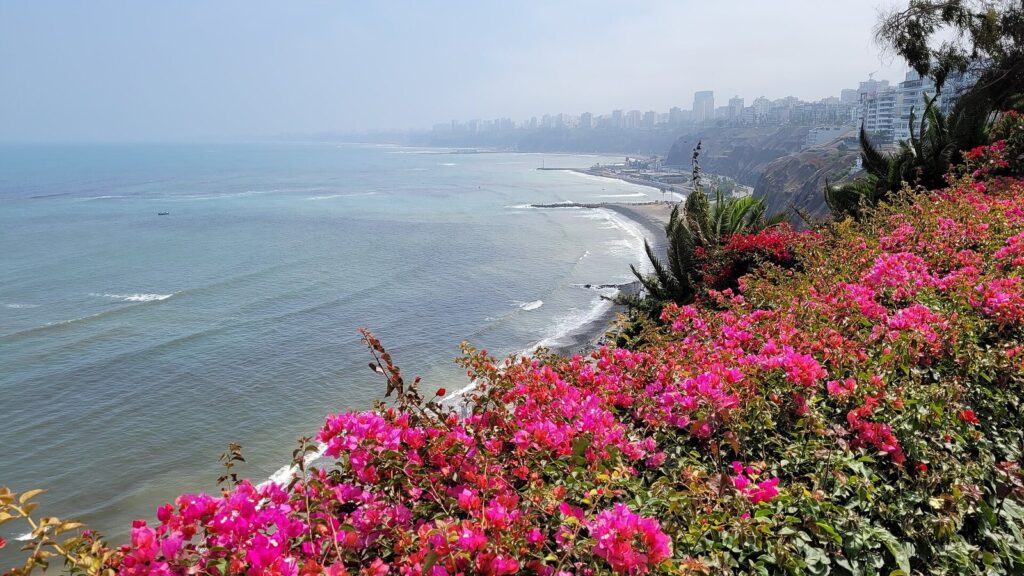
- Time zone: Peru is on UTC−5 all year, with no daylight saving time.
- Electricity: 220 volts, with type A and type C sockets, so bring an adapter and check that your chargers handle 220 V.
- Language: Spanish is the everyday language. You’ll often find English spoken at hotels and in visitor-facing restaurants in Miraflores and Barranco, but a few phrases, “por favor,” “gracias,” “la cuenta, por favor,” go a long way, especially in markets and taxis.
- Water: drink bottled or filtered water, and follow the CDC’s advice to choose food and drinks carefully.
- Weather: pack layers from June to November and sun protection from December to April; you won’t need an umbrella.
- Sunsets: between about 5:50 and 6:40 p.m. all year, by our calculation from NOAA’s solar equations, so plan clifftop walks accordingly.
- Holidays: the next national holidays are October 8 and November 1, 2026, then December 8, 9 and 25; in 2027, Holy Thursday and Good Friday fall on March 25 and 26.
Getting Around Once You’re There
Within Miraflores, Barranco and the historic center, walk. Between them, use a ride-hailing app: Uber, Cabify, DiDi and inDrive all operate in Lima, and the app quotes the fare before you confirm. For the run between Miraflores or Barranco and the historic center, the Metropolitano bus rapid transit line runs in its own lanes along the Vía Expresa for S/ 3.20 a trip with a S/ 4.50 card. Metro Line 1 exists, but it doesn’t reach the areas most visitors stay in. The one thing not to do is hail a taxi in the street.
What to Pack for Lima
- Layers. From June to November, highs around 19 to 21 °C and damp air call for a sweater or fleece and a light waterproof jacket; from December to April, light clothes and sun protection.
- Walking shoes for the historic center’s cobbles and the clifftop paths.
- A plug adapter for type A and type C sockets, and chargers that handle 220 volts.
- Insect repellent if you’re heading on to the Amazon, where the CDC flags dengue and other mosquito-borne diseases.
- Copies of your passport and your booking details, stored offline on your phone.
- A small day bag that closes, worn in front in crowds.
- Warmer clothes for the Andes if Cusco is next; Lima’s weather tells you nothing about it.
What to Book Ahead, and What to Buy There
| Book before you go | Why |
|---|---|
| International flights and the Cusco flight | Most visitors book one to four months ahead; holiday dates fill first |
| Your hotel | Sea-view rooms, summer and early November 2026 sell out earliest |
| Tasting-menu restaurants | The ranked restaurants book up, especially around the November 4, 2026, ceremony |
| The Airport Express or a hotel pickup | The bus can be booked online; a pickup matters most for late arrivals |
| A Palomino Islands boat | Only authorized operators may visit, and rough seas can force a second try |
| Huaca Pucllana’s night visit | It runs by reservation only, Wednesday to Sunday |
| A licensed guide for Casa de Aliaga | The house has no guides of its own |
Most other things are better bought on the spot: museum tickets at the door (or online at Museo Larco, which saves S/ 5), Metropolitano cards at the stations, market food, walking tours and most restaurant meals.
What Things Cost: The Fixed Prices
Hotel rates and restaurant bills vary too much to quote, but many of a first trip’s costs are fixed and published. These were checked on September 24, 2026.
| Item | Price |
|---|---|
| Airport Express Lima to Miraflores | S/ 20 a person, or S/ 15 each for two or more |
| Metropolitano trip / card | S/ 3.20 / S/ 4.50 |
| Museo Larco | S/ 50, or S/ 45 online |
| Cathedral of Lima | S/ 30 |
| Huaca Pucllana | S/ 15 by day, S/ 17 at night |
| Pachacamac | S/ 15 |
| Palomino Islands boat (Tour Marino) | S/ 160 for adults |
| Magic Water Circuit | S/ 7 |
| Set lunch (menú) at a neighborhood restaurant | Around S/ 15 in 2026 budget guides |
Traveling With Children or Limited Mobility
Lima works well for families with a little planning. Many sights have child rates: at Museo Larco, children aged 3 to 8 pay S/ 1, and at Pachacamac anyone aged 3 to 17 pays S/ 1. App taxis are the easiest way to move around with young children, though you should bring your own car seat or book a transfer that supplies one.
For travelers with limited mobility, several major museums are well equipped: Museo Larco has ramps and lends wheelchairs, MALI has ramps, lifts and adapted toilets, and Pachacamac runs a free service around its circuit for visitors with reduced mobility from Tuesday to Friday. Sidewalks outside the main visitor areas can be uneven, so plan door-to-door rides and ask hotels about step-free access and elevators before you book.
First-Timer Mistakes to Avoid
- Ignoring the traffic. Cross the city once a day, not three times; the evening rush adds about half again to any drive.
- Planning museums for a Monday. Most close; Museo Larco and Huaca Pucllana don’t.
- Ordering ceviche for dinner. Many cevicherías close by late afternoon.
- Hailing taxis in the street. Use an app, a phoned taxi or the airport’s authorized counters.
- Booking a tight connection to Cusco. Immigration queues vary, and separate tickets mean collecting your bags.
- Expecting sun in August. From June to November, the coast is usually gray.
- Forgetting the advisories. Check the UK Foreign Office and US State Department before you go, and the local news during your stay.
- Buying “antiques.” Archaeological artifacts are prohibited exports.
Spanish Phrases That Help
| Spanish | English | When |
|---|---|---|
| Buenos días / buenas tardes | Good morning / good afternoon | Greeting anyone, anywhere |
| ¿Cuánto cuesta? | How much is it? | Markets, taxis |
| La cuenta, por favor | The bill, please | Restaurants |
| ¿Acepta tarjeta? | Do you take cards? | Shops, taxis |
| Sin picante | Not spicy | Ordering food |
| ¿Dónde está…? | Where is…? | Asking directions |
| No entiendo | I don’t understand | Anywhere |
Lima Trip Planning FAQ
Do you need a visa to visit Lima?
It depends on your nationality. British nationals don’t need one for tourism, according to the UK Foreign Office, and many other nationalities also enter visa-free, but check your own government’s advice and Peru’s Migraciones before booking. Your passport should be valid for at least six months after you arrive.
How long can tourists stay in Peru?
The UK Foreign Office says visitors are usually given up to 90 days in a 180-day period, and the maximum as a tourist is 183 days in 365. The immigration officer decides your allowance, which is recorded electronically in the virtual Andean Migration Card, and you can check it on the Migraciones website.
Do you need a yellow fever vaccine for Lima?
No. The CDC says yellow fever vaccine isn’t required to enter Peru and isn’t recommended for the city of Lima or for Cusco, the Inca Trail and Machu Picchu. It is recommended for some Amazon areas below 2,300 m, so talk to a travel clinic if the jungle is on your route. Hepatitis A and routine vaccines are recommended for all.
What’s the easiest way to have mobile data in Lima?
An eSIM bought before you fly, or your home carrier’s roaming. Since late 2025, OSIPTEL rules require foreigners to buy local lines in person at operators’ official stores, with a biometric check, so a local SIM takes more effort than it used to. Airport stands sell tourist SIMs, at higher prices.
How far ahead should you book a Lima trip?
Most foreign visitors buy flights one to four months ahead, according to PROMPERÚ’s 2024 survey. Book earlier for the Peruvian summer, from December to March, for national holidays, and for the first week of November 2026, when the World’s 50 Best Restaurants ceremony is in Lima. Tasting-menu restaurants should be booked as early as their systems allow.
Is Lima safe for first-time visitors?
Take the advisories seriously. The UK Foreign Office reports significant street crime, including in Miraflores and Barranco, and the US rates Peru at Level 2, Exercise Increased Caution. Use app or phone taxis, keep valuables out of sight, use ATMs inside banks by day, and check the news for protests.
Should you visit Lima before or after Cusco?
Either works. Before is slightly easier: you recover from the long-haul flight at sea level before Cusco’s altitude, which the CDC flags as a health consideration. After is good for a relaxed finish and a buffer against a delayed domestic flight. What doesn’t work is a tight same-day connection with no slack for immigration queues.
Related Lima Guides
- Lima, Peru Itinerary for First-Time Visitors: day plans for one to five days.
- Where to Stay in Lima, Peru for Tourists: the areas and hotels compared.
- Lima Airport Guide for International Arrivals: the new terminal, step by step.
- Best Time to Visit Lima, Peru by Weather and Activities: the months compared by goal.
- How to Get Around Lima, Peru as a Tourist: apps, buses and route examples.
- What to Eat in Lima, Peru: Food Guide: the dishes, the meal times and where to eat.
Sources and How We Checked
Entry rules, health advice, advisories, fares and closures on this page were checked on September 24, 2026, against the sources listed below. The guide is compiled from them, not from other travel lists, and it claims no first-hand visits. Entry rules vary by nationality; always confirm with your own government and with Peru’s Migraciones before you travel.
- Entry and advisories: UK FCDO, Peru entry requirements, UK FCDO, Peru safety and security, US State Department, Peru travel advisory, US Embassy in Peru, September 2026 advisory, Migraciones, information for tourists, Gestión on the end of passport stamping
- Health: US CDC, travelers’ health for Peru
- Phones: La República on OSIPTEL’s rules for foreigners, La República on ride-hailing apps
- Travel and transport: PROMPERÚ, 2024 profile of foreign tourists visiting Lima, Cruz del Sur, Lima to Cusco, Lima Airport buses, Lima Airport taxis, Infobae on check-in times, TomTom Traffic Index for Lima
- Money and lodging: SUNAT, Legislative Decree 919
- Conditions and calendar: Andina on the state of emergency, Infobae on the June 2026 closure, Peru’s public holidays, 2027 holiday calendar, The World’s 50 Best Restaurants 2026, NOAA solar calculator
Lima Tourism Guide is an independent publication. We are not affiliated with PROMPERÚ, the Municipality of Lima or any attraction listed here, and no one paid to be included.
Photo Credits
- El Beso, Parque del Amor: photo by Quado678, Wikimedia Commons (CC BY 3.0)
- Sunset over the Pacific, Miraflores: photo by Águila Resonante, Wikimedia Commons (CC BY-SA 4.0)
- New terminal, Jorge Chávez International Airport: photo by Mathias Rufino, Wikimedia Commons (CC BY-SA 4.0)
- Larcomar and Miraflores: photo by Avodrocc, Wikimedia Commons (CC BY 2.0)
- Mercado N° 1, Surquillo: photo by Miguel Angel Chong, Wikimedia Commons (CC BY 3.0)
- Costa Verde from Barranco: photo by BBCLCD, Wikimedia Commons (CC BY-SA 4.0)