Is Lima safe for tourists? Practical guide, short answer: yes, for most visitors, most of the time, as long as you treat it like the big Latin American capital it is. The risks that come up again and again in the official advice are theft and robbery: a phone snatched from a hand at the curb, a bag lifted in a crowd, a car that looked like a taxi and wasn’t. Nearly all of it is avoidable with a handful of routines, and those routines matter more than which district you sleep in.
This is for first-time visitors spending a few days in the usual bases (Miraflores, Barranco, San Isidro and the historic center) and for anyone passing through on the way to Cusco. One caveat matters right now: a 60-day state of emergency has covered Lima Metropolitana and Callao since August 28, 2026, and protests can close the historic center at short notice, so check the news the night before a downtown day. Everything here was checked on September 24, 2026 against the UK Foreign Office, the US State Department, PROMPERÚ and the Peruvian government’s own websites.
On this page: At a glance · Official advice · The real risks · Walking · District by district · Taxis and the airport · Money and ATMs · Scams · Nights out · Solo travelers · Protests · Earthquakes · Beaches · Health and traffic · Emergency numbers · If you’re robbed · FAQ
Lima Safety at a Glance
If you read nothing else, read this table. Every row is explained further down the page.
| Question | Short answer | What to do |
|---|---|---|
| Official advice | US: Level 2 of 4, Exercise Increased Caution (reissued September 2026). UK: street crime is a significant problem in Lima | Read both advisories when you book and again the week you fly |
| Most common problem | Phone snatching, pickpocketing and bag-snatching | Phone away at the curb; bag zipped and in front in any crowd |
| Most serious risk | Fake taxis and express kidnapping, usually at night | Book every ride by app, by phone or through your hotel; never hail one |
| Cash | Counterfeit soles and US dollars circulate | Use ATMs inside banks, supermarkets or malls during business hours |
| After dark | The risk rises on quiet streets and between districts | Ride between districts at night, even for short hops |
| Protests | Mostly in the historic center; they can close streets and Metropolitano stations | Check the news before a downtown day and walk away from crowds |
| State of emergency | In force in Lima and Callao for 60 days from August 28, 2026 (to about October 27, unless extended) | Carry your passport or a clear copy; police have wider powers to stop people |
| Natural hazards | An active earthquake zone with frequent small tremors | Find your hotel’s exits; after a strong quake on the beach, climb the cliff |
| Emergency numbers | Police 105, SAMU ambulance 106, fire 116 | Save iPerú’s 24-hour WhatsApp, +51 944 492 314, for tourist help |
What Do the Official Travel Advisories Say?
Two government advisories are worth reading in full, once when you book and again the week you fly.
US State Department: Level 2, “Exercise Increased Caution”
The US rates Peru as a whole at Level 2 of 4, citing crime, civil unrest and the risk of kidnapping. According to the US Embassy in Lima, the advisory was reissued in September 2026 at the same level as the May 2025 version. It describes crime, from petty theft to muggings, assaults and carjackings, as common, and says it often happens in daylight with plenty of witnesses around. Express kidnappings, in which a victim is taken to withdraw money from their own accounts, are described as rare but possible.
The advisory’s Level 4 “Do Not Travel” areas are nowhere near Lima: the Colombia-Peru border area in Loreto, deep in the Amazon, and the VRAEM, the valley of the Apurímac, Ene and Mantaro rivers in the central highlands, where it says the Shining Path is still active and the US government can’t provide emergency services. It also notes that the city of Cusco, the Sacred Valley, the Inca Trail and Machu Picchu are outside the affected areas, which answers the question most people flying through Lima are really asking.
UK Foreign Office: street crime is “a significant problem”
The UK’s FCDO advice is blunter about the capital. It says street crime, including muggings and thefts, is a significant problem in Lima; that British tourists and residents have been robbed at gunpoint; and that attacks can happen in tourist areas such as Miraflores and Barranco. It warns that visitors, especially those traveling alone, risk express kidnapping, usually at night, and that criminals pose as taxi drivers at Jorge Chávez airport and at bus terminals. Its terrorism section starts from the FCDO’s global warning and adds that attacks in Peru can’t be ruled out; nothing in it singles out Lima.
Peru’s state of emergency in Lima and Callao
Peru’s government declared a 60-day state of emergency in Lima Metropolitana and Callao by Supreme Decree 123-2026-PCM, published on August 28, 2026. Unless it’s extended, it runs to about October 27. It restricts or suspends the inviolability of the home, freedom of movement, freedom of assembly, and personal liberty and security. It isn’t the first: the State Department notes a 30-day emergency for the same two provinces from October 22, 2025, declared over rising insecurity.
The rights it restricts are the ones that matter for policing and protest, not for sightseeing. The practical effects for a visitor are three. Police have wider powers to stop and check people, so carry your passport or a clear copy of it. Demonstrations are riskier than usual, so don’t join them or stop to film them. And the decree has an end date, so search for “estado de emergencia Lima” the week you travel to see whether it has been extended or changed.
What Are the Real Risks for Tourists in Lima?
Read the advisories side by side and the same short list keeps coming up. Here it is, roughly in the order a visitor is likely to meet it, with what actually works against each one.
| Risk | Where and when | What works |
|---|---|---|
| Phone snatching | At the curb, often by passing motorbike riders (FCDO); any sidewalk with traffic, day or night | Step into a doorway or shop to use your phone; keep it in a front pocket |
| Pickpocketing and bag-snatching | Crowds: the Metropolitano at rush hour, markets, processions and events on the Plaza Mayor | Bag zipped and worn in front; nothing in back pockets |
| Fake taxis | The airport and bus terminals especially (FCDO); any street pickup at night | Book by app or through your hotel; at the airport, use the official counters in arrivals |
| Express kidnapping | Usually at night; travelers alone are most at risk (FCDO) | Never hail a car; share app trips; carry one card with a modest daily limit |
| Armed robbery | Has happened to tourists, including in Miraflores and Barranco (FCDO) | Avoid walking alone on quiet streets at night; if it happens, hand things over |
| Counterfeit notes | Street money changers and cash change | Use ATMs and exchange houses; pay by card; look at the change you get |
| Spiked or tainted drinks | Bars and clubs; methanol-laced spirits have killed people in Peru (FCDO) | Buy your own drinks, keep them in sight, skip cheap spirits of unknown origin |
| Traffic | Everywhere: drivers often ignore stop signs and red lights (FCDO) | Cross with the lights and still look both ways; wear a seatbelt in the back of cars |
None of this calls for a money belt and a nervous look over your shoulder. It calls for routines you set on the first day and then stop thinking about: the phone goes into a front pocket before you step up to a curb, every car is booked on an app, cash comes from an ATM inside a supermarket, and a crowd is your cue to swing your bag to the front. If you change only one habit, make it the taxi rule.
Is It Safe to Walk Around Lima?
By day, in the areas visitors use, yes, and walking is the best way to see the city. The clifftop path from Miraflores to Barranco, the pedestrian streets of the historic center and the lanes around Barranco’s main square are made for it, and most of the route planning on this site assumes you’ll walk within a neighborhood and ride between them.
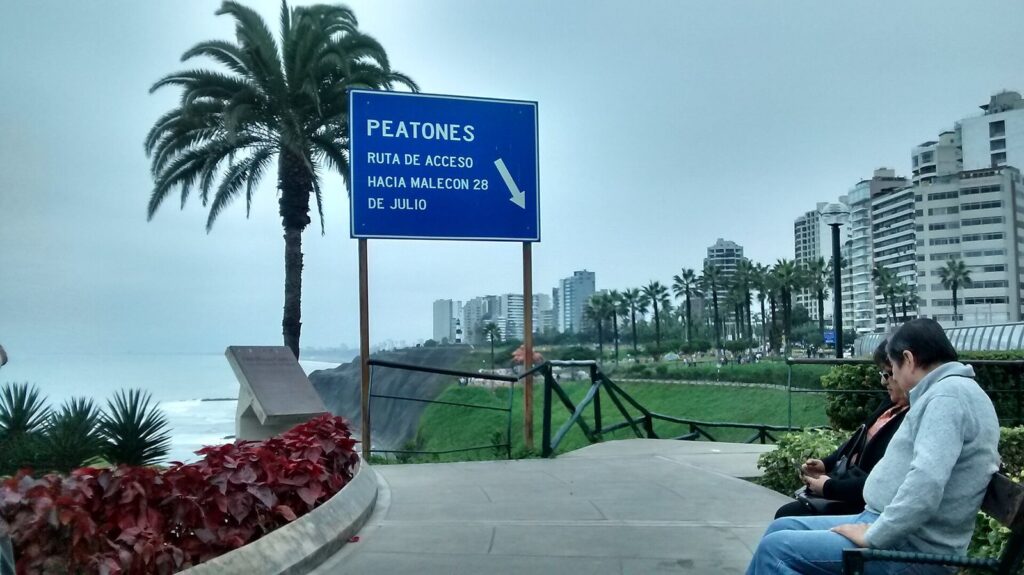
What changes the picture is the time of day and how empty a street is. The FCDO’s advice is not to walk alone in quiet areas or at night, and not to use your phone at the roadside, where motorbike riders can snatch it. The first rule covers the side streets that empty after dark and the long gaps between neighborhoods. The second covers any sidewalk with traffic on it, in broad daylight too. If you need the map, step into a doorway or a shop to check it.
Distance decides the rest. Lima’s sights are spread out, and a walk that’s pleasant at 11 a.m. is a long stretch of dark clifftop at 11 p.m.:
| Route | On foot | By car | Verdict |
|---|---|---|---|
| Parque Kennedy (Miraflores) to Barranco’s Parque Municipal | 3.7 km, about 50 min | 3.6 km, about 13 min; 19 min in the evening rush | Walk the clifftop by day; ride back after dark |
| Plaza San Martín to the Plaza Mayor | 0.9 km, about 12 min | Not worth a car | Walk it by day along Jirón de la Unión |
| Plaza Mayor to Parque Kennedy | Too far to walk | 9.7 km by road | The Metropolitano by day, a booked car at night |
| New airport terminal to Parque Kennedy | Not a walk | 20.9 km, about 73 min; about 107 min in the evening rush | The official taxi counters, an app or the Airport Express bus |
Walking distances and times come from OpenStreetMap routing. Drive times apply TomTom’s 2025 average speeds for Lima, so treat them as typical rather than promised. To build whole days around walkable clusters, the Lima itinerary for first-time visitors groups the sights by area, so you’re never crossing the city after dark.
District by District: What Changes and What Doesn’t
No Lima district deserves a flat “safe” or “unsafe” label, and neither advisory hands one out. The FCDO names Miraflores and Barranco, where most visitors stay, as places where attacks happen: the risks follow the visitors, and what changes between districts is the setting, the crowds and how empty the streets get at night. For what each area is like beyond safety, the guide to Lima’s neighborhoods covers the districts one by one, and choosing where to stay in Lima matches them to different kinds of trips.
Miraflores
Miraflores is most visitors’ base, with the densest spread of hotels, restaurants and clifftop parks in the city. The habits that matter most here are the crowd ones: phone off the curb on the big avenues, bag in front around Parque Kennedy and Larcomar, and a booked car rather than a flagged one after a late dinner. The municipality runs a tourist information center on block 7 of Av. José Larco, open Monday to Friday from 9 a.m. to 6 p.m., which is a sensible first stop if something goes wrong on a weekday. Miraflores gets its own safety guide in this series.
Barranco
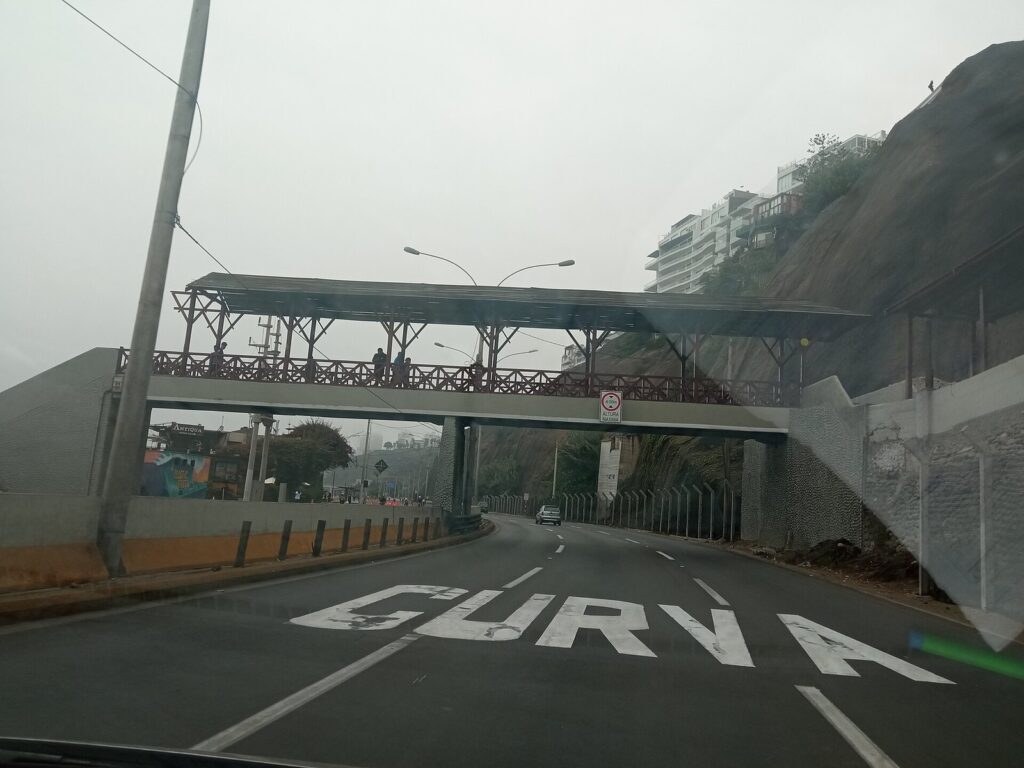
Barranco is smaller and older, and it’s Lima’s main nightlife district, with bars and restaurants around the main square, the Puente de los Suspiros and the Bajada de los Baños down to the sea. The FCDO names it alongside Miraflores. By day it’s an easy walk from Miraflores along the clifftop. At night, book a car home even for the 13-minute ride, because a 50-minute walk alone after midnight is exactly what the FCDO advises against.
San Isidro
San Isidro is the financial district, with business hotels, the El Olivar olive grove and a quieter feel than Miraflores. Because it’s built around offices, some streets empty out after business hours and on Sundays, so the night rule applies with more force here: ride between dinner and your hotel rather than walking.
The historic center (Cercado de Lima)
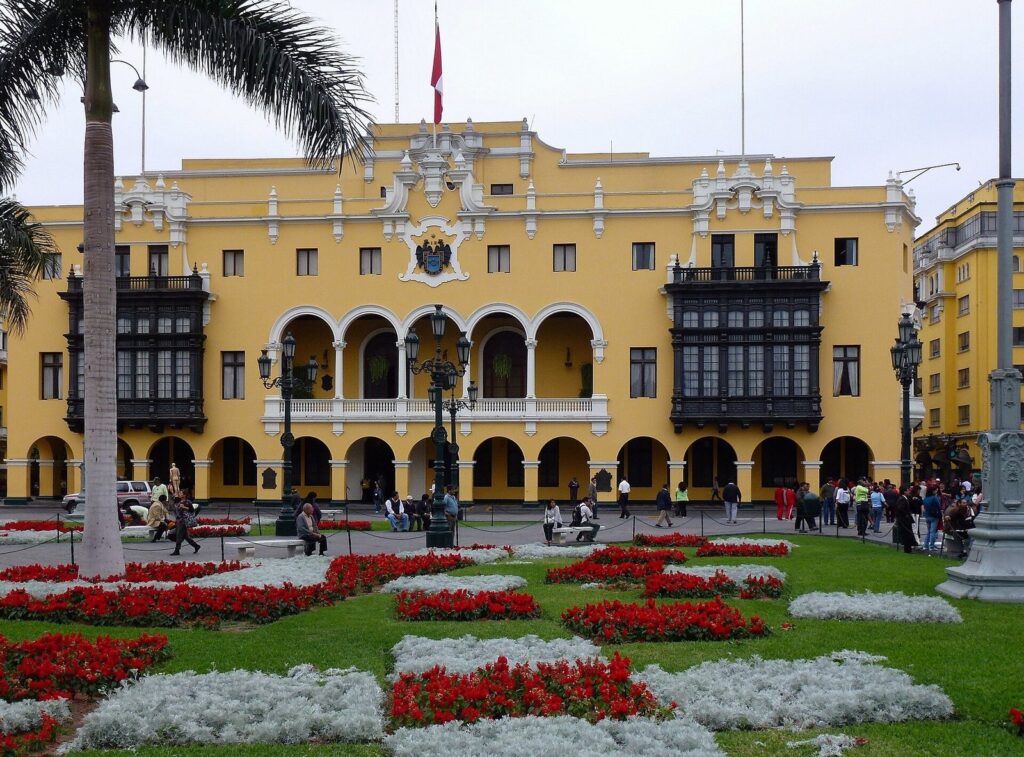
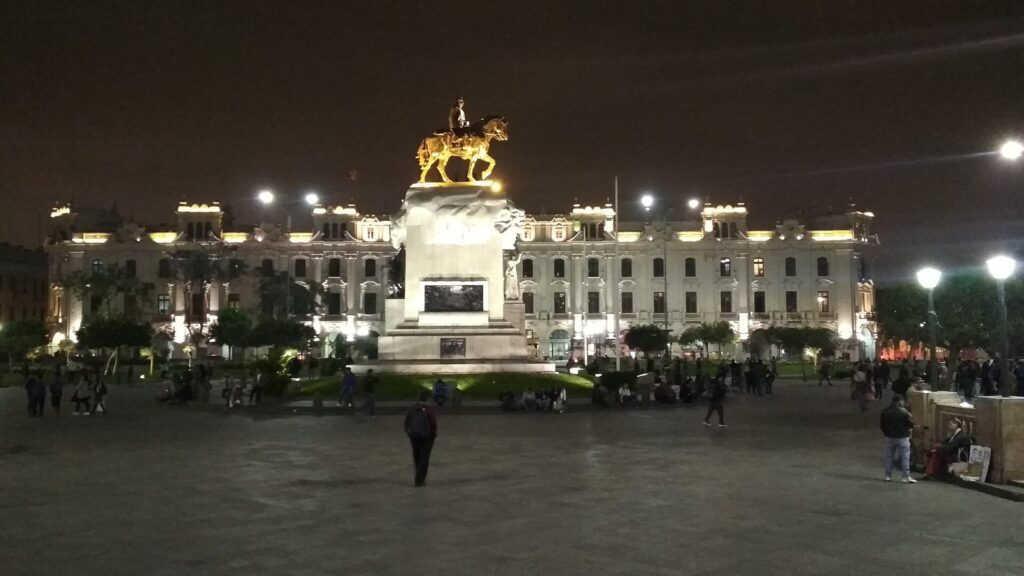
Downtown Lima, the UNESCO-listed center around the Plaza Mayor (Plaza de Armas) and Plaza San Martín, is where the city’s history is and where most of its protests happen. By day, with the museums and churches open and the pedestrian streets full, it’s a normal city-center visit with a pickpocket warning attached: keep your bag in front on Jirón de la Unión, around the Plaza Mayor and in the crowd at any procession or event. Arrive in the morning, and leave by car or the Metropolitano before dark.
Protests are the downtown wild card. From June 19 to 22, 2026, the Municipality of Lima and the National Police sealed a perimeter of the historic center bounded by avenidas Grau, Abancay, Tacna and Garcilaso de la Vega, among others, and the Metropolitano’s Colmena, Jirón de la Unión, Tacna and Castilla stations were shut. Crowds of a gentler kind arrive in October: in 2026 the Señor de los Milagros procession, Lima’s largest, goes through the center on October 18, 19 and 28 and November 1. For what to see once you’re there, read the guide to the historic center and Lima’s archaeological sites.
Rímac and Cerro San Cristóbal
Rímac, across the river from the Plaza Mayor, is one of the oldest parts of the city and the way up Cerro San Cristóbal, whose 400 m summit looks out to the Chorrillos and La Punta beaches on clear days, according to SERPAR, the city’s parks service. Go by taxi or with a tour, in daylight, rather than walking over the bridge.
Callao
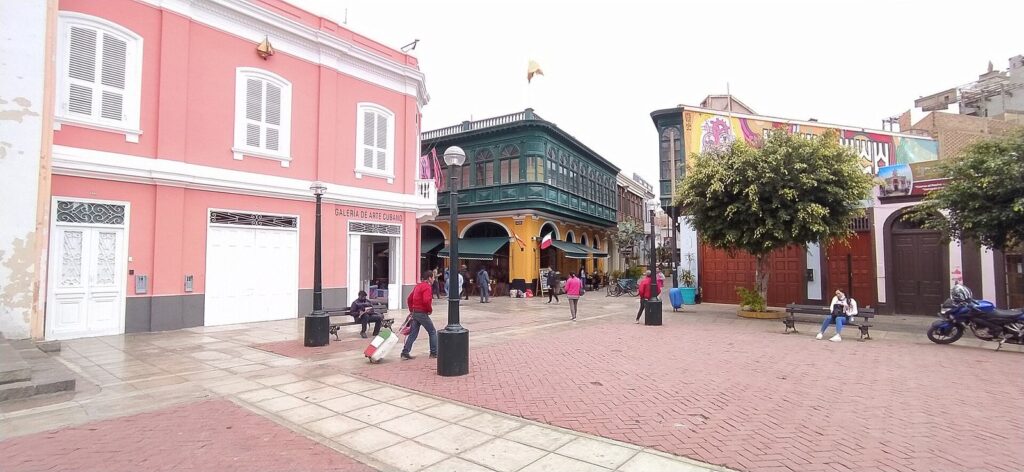
Callao is a separate region from Lima, and it’s where you land: the airport is in Callao. Visitors come for La Punta’s seafront promenade and calm water, the galleries of Callao Monumental, the Real Felipe fortress (open daily, 9 a.m. to 4 p.m.) and the boat trips to the Palomino Islands from the pier on Plaza Grau. These are daytime outings, and the rule is simple: take a booked car to the door of each place, and ride between them rather than walking through the port neighborhoods in between. The day trips from Lima guide covers the Palomino boat trips alongside the longer excursions.
Taxis, Ride Apps and the Airport
This is the rule that matters most. The FCDO advises using licensed taxis booked by phone or through an app, never hailing one on the street, and asking your hotel to call a car for you. The fake-taxi robberies it describes all start the same way, with a car you didn’t book.
Ride-hailing apps
Uber, Cabify, DiDi and inDrive all operate in Lima in 2026. Peru has no national regulation written specifically for ride apps, so the protections are the app’s own: a named driver, a plate number, a tracked route and a record of the trip. They only work if you use them:
- Match the plate and the car model before you open the door, and let the driver say your name first rather than offering it.
- Share the trip from the app with someone you trust, especially at night or when you’re alone.
- Sit in the back, keep the windows up in traffic and keep bags off the seat by the door; the FCDO says criminals target cars stopped at traffic lights.
- Wait for the car inside a restaurant or a hotel lobby, not on the curb with your phone in your hand.
- Install the app and add a payment method before you land, so you’re not doing it on the sidewalk outside arrivals.
The guide to getting around Lima compares the apps, taxis, the Metropolitano and walking in detail, with fares.
Arriving at the airport
The FCDO singles out Jorge Chávez airport and the bus terminals for criminals posing as taxi drivers. At the new terminal, the airport sells Regular and VIP taxis at counters in national and international arrivals, and staff walk you to your driver in a private parking area inside the airport. The official Airport Express Lima bus costs S/ 20 per person, or S/ 15 each for two or more, and stops at the Marriott opposite Larcomar, the tourist information center on Av. Larco, Parque Kennedy and Hotel Boulevard. Anyone who walks up to you in the hall offering a ride is, by definition, not one of those options.
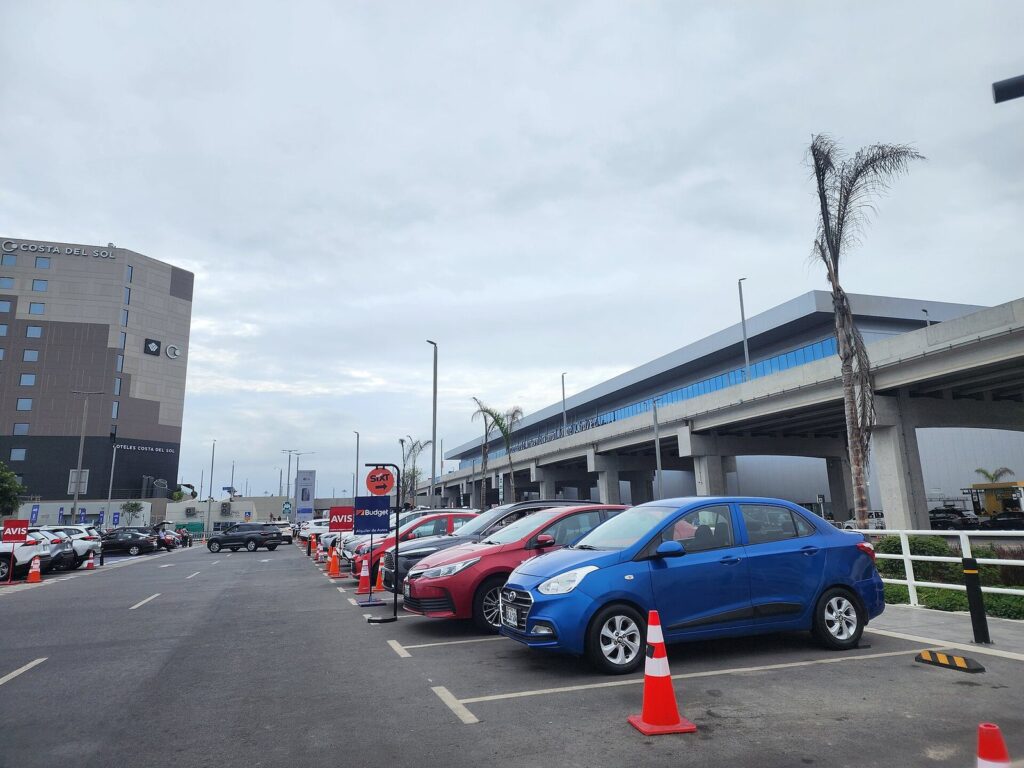
The drive to Miraflores is 20.9 km, about 73 minutes at Lima’s 2025 average speed and closer to 107 in the evening rush, so a late-evening landing is worth planning before you fly. The Lima airport guide walks through the new terminal step by step, including where each counter is.
Buses and the Metropolitano
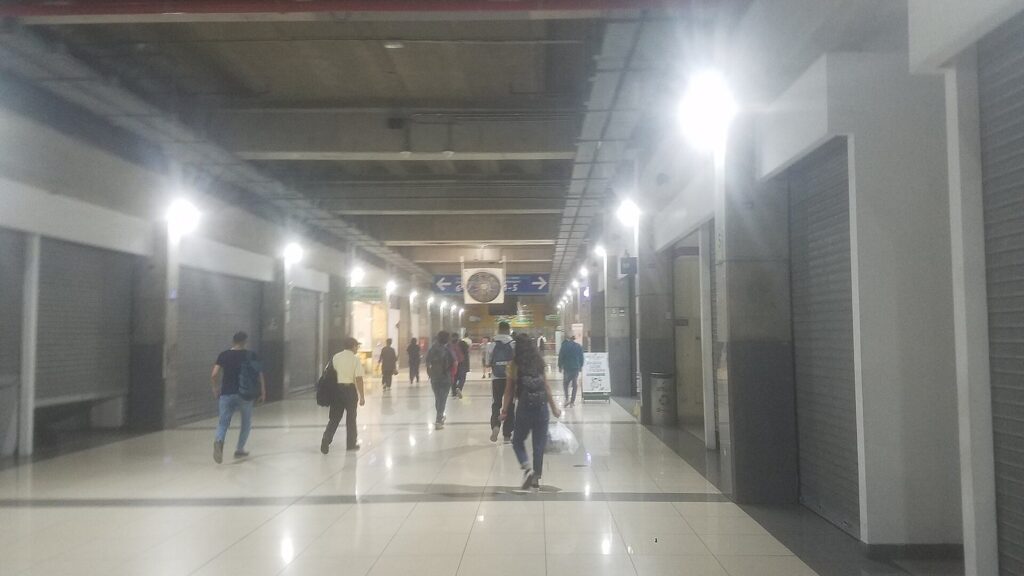
The Metropolitano, Lima’s bus rapid transit line, is quick and cheap at S/ 3.20 per trunk-line trip with a card, and it’s the sensible way to reach the historic center at rush hour. It’s also packed at rush hour, and crowds are where pickpockets work: wear your backpack on your front and keep your phone in a zipped pocket. For long-distance buses, the FCDO’s advice is to keep your passport on you.
Money: ATMs, Cards and Counterfeit Notes
Use ATMs inside banks, supermarkets or large commercial buildings during business hours, as the FCDO advises. An indoor, daytime withdrawal is the opposite of the setup for express kidnapping, which the FCDO says usually happens at night and ends with victims being forced to withdraw money from cash machines for their release.
A few more habits that cost nothing:
- Carry one card and one day’s cash. Leave the backup card, most of the cash and the passport in the hotel safe, with a copy of the passport on your phone and on paper.
- Counterfeit US and Peruvian banknotes are in circulation, the FCDO says. Pay by card where you can, change money at banks or exchange houses rather than with street changers, and look at the change you’re handed, especially large notes.
- Split your money between two pockets, so one lifted wallet isn’t the whole day.
- Agree the price before any service that doesn’t post one, and let the app settle ride fares rather than paying cash at the destination.
Common Scams and Pickpocketing
Lima’s scams are mostly the unglamorous kind. These are the ones the official sources name:
- Counterfeit money. Fake US dollars and soles circulate. The FCDO even reports street changers in Cusco handing over old intis, a currency Peru replaced in 1991.
- Unlicensed surfboard rentals. The FCDO flags unauthorized board rentals on the Miraflores beaches, where there may also be no lifeguard.
- Tours and transfers that aren’t what you paid for. Part of iPerú’s job is guidance when a tourism service doesn’t match what the operator offered, including where to file a complaint. Book with established operators and keep your receipts.
Pickpocketing is about crowds more than places: the Metropolitano at rush hour, the markets, the Plaza Mayor during events and processions, and the line for anything popular. Keep bags zipped and in front, wallets out of back pockets, and phones out of your hand when you’re standing at a curb.
Is Lima Safe at Night?
Plenty of Lima happens after dark: dinner, Barranco’s bars, and the Magic Water Circuit, whose water and light shows run at 7:15, 8:15 and 9:10 p.m. Being out at night is normal. What changes is the margin for error. The FCDO says express kidnapping usually happens at night and advises against walking alone in quiet areas after dark, so the night version of every rule is stricter:
- Ride between districts after dark, even for short hops such as Barranco to Miraflores.
- Book the car before you leave the restaurant or bar, and wait inside until it pulls up.
- At the Magic Water Circuit, book your ride home before the last show ends, when everyone leaves at once.
- If you do walk, stay on lit, busy streets, and keep the phone in your pocket while you’re moving.
- Carry only what the evening needs: one card, some cash and a copy of your passport.
Drinks, spiking and methanol
The FCDO’s drink advice is short: buy your own drinks and keep them in sight. It also reports deaths and serious illness in Peru from alcoholic drinks containing methanol, and says even small amounts can kill. In practice that means drinking at established bars, sticking to bottled beer, wine by the bottle or cocktails made in front of you, and walking away from cheap spirits of unknown origin, however friendly the price.
Solo, Women and LGBTQ Travelers
Traveling alone raises one specific risk in the advisories: the FCDO says tourists, especially those traveling alone, are at risk of express kidnapping. The answer is the same set of habits applied without exceptions: every car booked and shared with someone at home, cash only from indoor ATMs, and an earlier rather than later trip back to the hotel.
For women, the FCDO says sexual assaults are infrequent but do happen, mostly in the Cusco and Arequipa areas, and it advises buying your own drinks, keeping them in sight and reporting any incident to the police as soon as possible. Choose a hotel or hostel with a staffed 24-hour reception, arrange your airport pickup before you fly if you land late, and use the app’s trip sharing on every night ride.
For LGBTQ travelers, the same everyday habits apply. A dedicated guide to LGBTQ travel in Lima, covering the legal and social picture, follows in this series, alongside one for solo female travelers.
Protests, Strikes and Road Closures
Political protest is part of life in Peru, and it’s the risk most likely to change your plans rather than hurt you. The FCDO says protests are unpredictable and can escalate quickly, and that in Lima they often happen in the historic center, where access can be restricted, though they can spread to other areas.
- Check Peruvian news the evening before and the morning of a downtown day. The state news agency Andina, RPP and El Comercio all report closures.
- If a march is planned, swap days: do the coast, the museums in Pueblo Libre or a day trip instead.
- If you run into a crowd, walk away from it rather than through it, and don’t stop to photograph police lines.
- Leave extra time for the airport on protest days, since road closures don’t always stay downtown.
The best time to visit Lima guide covers the months and holidays when downtown fills up for happier reasons, and a dedicated guide to protests and travel safety follows in this series.
Earthquakes and Tsunamis
Peru sits in an active earthquake zone with frequent tremors, the FCDO says, and its advice is to follow the local authorities. Small tremors are common and over in seconds. Big ones are rare, and preparing for one takes about two minutes:
- When you check in, find the stairs and the nearest exit, and look for the safe-zone and evacuation signs that Peruvian buildings post.
- If the ground shakes hard, stay where you are, get low and protect your head. Don’t run for the street, where glass and cables fall.
- If you’re on the beach and a quake is strong or long, don’t wait for a siren: climb to the clifftop by the nearest stairs or ramp. The FCDO says tsunamis are rare in Peru but higher tides often follow earthquakes, and the Costa Verde beaches sit at the foot of the cliffs.
- Afterward, follow the instructions of staff and the authorities, and send one message home once you’re safe, because phone networks jam.
Earthquake safety gets its own guide in this series.
Beaches, the Sea and Outdoor Activities
Lima’s beaches are city beaches with cold Pacific water, around 17 °C in winter and 20 °C in summer, and the FCDO flags two things about them: unauthorized surfboard rentals on the Miraflores beaches, and the possibility that there’s no lifeguard. If you want to surf, book a lesson with a surf school rather than taking a board handed over on the sand, and don’t swim alone or far out.
Water quality is the other check. In January 2026, DIGESA, the Ministry of Health’s environmental health agency, rated the Los Pavos and Las Sombrillas beaches in Barranco and La Herradura and Villa in Chorrillos unfit for bathers. Ratings change through the summer, so check the current status on DIGESA’s site before you swim. On any beach, don’t leave a bag on the sand while you’re in the water.
A dedicated guide to Lima’s beaches and outdoor activities follows in this series.
Health and Traffic: The Risks That Aren’t Crime
Traffic is the everyday danger that visitors underrate. The FCDO says driving standards in Peru are poor, that drivers often ignore stop signs and traffic lights, and that fatal crashes are frequent. On foot, cross with the lights and still look both ways, and don’t assume a car will stop at a zebra crossing. In taxis, wear the seatbelt in the back.
On health, the US CDC advises all international travelers to be fully vaccinated against measles, warns of dengue, chikungunya and Zika in Peru (repellents with DEET, picaridin or oil of lemon eucalyptus help), and advises choosing safe food and drinks. In Lima that means bottled or filtered water, and raw fish at established cevicherías; the Lima food guide covers what to order and where. Altitude isn’t a Lima problem, since the city sits on the coast. It becomes one when you fly on to Cusco.
Emergency Numbers and Who to Call
Save these before you land. Peru’s emergency numbers work nationwide, and iPerú, run by PROMPERÚ, is the state’s free tourist information and assistance service.
| Who | Number | Use it for |
|---|---|---|
| National Police (Policía Nacional del Perú) | 105 | A crime in progress, a robbery, any police emergency |
| SAMU ambulance | 106 (free call) | Medical emergencies |
| Fire brigade (Bomberos) | 116 | Fire and rescue |
| Defensa Civil | 115 | Earthquake damage and disasters |
| iPerú, 24 hours a day | (+51 1) 574-8000; WhatsApp +51 944 492 314; [email protected] | Tourist information and help, and guidance when a tour or service isn’t what you paid for |
| Your hotel | The front desk | A safe taxi, the district’s serenazgo (municipal security) number, a doctor |
| Your embassy | Listed on your government’s Peru travel page | A lost or stolen passport, an arrest, a serious accident |
Peru’s tourism ministry, MINCETUR, runs a tourist protection network that coordinates municipal security, the National Police and the Tourism Police on the main tourist routes. If you’re robbed, the Tourism Police are the officers most used to dealing with visitors.
What to Do If You’re Robbed in Lima
- Hand it over. Nothing in your pockets is worth a fight, and the FCDO says robberies at gunpoint do happen in Lima.
- Get somewhere safe and staffed: a hotel lobby, a shop or a restaurant. Borrow a phone if yours is gone.
- Block and lock. Call your bank to freeze your cards, and use your phone’s find-my-device service from another device to lock or erase it.
- Get a police report. Your insurer will want the report (the denuncia) from the police station, or comisaría, that covers the area. Ask your hotel which one, and take someone who speaks Spanish if you don’t.
- Passport gone? Contact your embassy for an emergency travel document, and ask what Peru’s immigration service needs from you before you fly out.
- Tell iPerú if the problem involves a tourism business, such as a tour that wasn’t delivered or a transfer that never showed. It gives guidance and tells you where to file a complaint.
A Lima Safety Checklist Before You Fly
- Read the US and UK advisories, and search “estado de emergencia Lima” the week you travel.
- Save 105, 106 and iPerú’s WhatsApp number in your phone.
- Photograph your passport and entry details, and keep a paper copy too.
- Book your airport transfer, or know which official counter or bus you’re heading for.
- Buy travel insurance that covers theft and medical care.
For the rest of the pre-trip list, from entry rules to phone SIMs, the Lima travel planning guide goes step by step. Then get on with the best things to do in Lima: nearly all of them are daytime outings in the districts covered above.
Lima Safety FAQ
Is Lima safe for tourists right now?
As of September 24, 2026, the US rates Peru at Level 2, Exercise Increased Caution, and a 60-day state of emergency has covered Lima and Callao since August 28. Neither advisory tells visitors to avoid Lima. The practical changes are protests downtown and wider police powers, so carry ID and check the news the evening before you visit the historic center.
Is it safe to walk from Miraflores to Barranco?
By day, yes: the clifftop route from Parque Kennedy to Barranco’s main square is about 3.7 km and 50 minutes, much of it through parks above the sea. After dark, take a car for the 13-minute ride, since the FCDO advises against walking alone in quiet areas at night.
Should I carry my passport in Lima?
Carry a clear copy day to day and keep the original in the hotel safe, except when you’ll need it: some museums ask for ID, Palomino Islands boat trips take passport details, and the FCDO advises keeping your passport on you on buses. Under the state of emergency police have wider powers to check people, so make sure the copy includes your entry details.
Are there areas of Lima tourists should avoid?
Neither the US nor the UK advisory names Lima districts to avoid. The US Level 4 areas are far away, on the Amazon border and in the VRAEM valley. The workable rule is to go where you have a reason to be, travel there by booked car, visit in daylight, and don’t wander between destinations through streets you don’t know.
What should I do if there’s an earthquake while I’m in Lima?
Most tremors are brief and do no damage. If a strong one hits, stay inside, get low and protect your head until the shaking stops, then follow staff and the local authorities. On the beach, climb to the clifftop at once without waiting for an alert. Call 115 (Defensa Civil) or 116 (fire) to report damage or injuries.
Related Lima Guides
- How to Get Around Lima, Peru as a Tourist: Taxis, Apps, Buses and Walking: fares, ride apps and the Metropolitano, compared.
- Lima Airport Guide for International Arrivals: The New Terminal, Step by Step: where the official taxi counters and the Airport Express are.
- Where to Stay in Lima, Peru for Tourists: Which Area Fits Your Trip: choosing a base you can walk around.
- Best Lima Neighborhoods for Tourists: What Each District Is Like to Visit: the districts beyond their safety record.
- Lima, Peru Travel Planning Guide for First-Timers: What to Do and When: the full pre-trip checklist, in order.
- Lima Historic Center and Archaeological Sites Guide: how to plan a downtown day.
Sources and How We Checked
Advisories, prices, hours and closures were checked on September 24, 2026 against the sources listed below. This guide is compiled from those official sources rather than from other travel lists, and it claims no first-hand visits.
- UK Foreign, Commonwealth and Development Office: Peru travel advice, safety and security
- US Department of State: Peru travel advisory; US Embassy in Lima: Travel Advisory: Peru, September 2026
- Government of Peru: Supreme Decree 123-2026-PCM in El Peruano; emergency telephone numbers; MINCETUR tourist protection network; Andina: state of emergency in Lima and Callao
- PROMPERÚ: iPerú tourist assistance; Peru Travel, dealing with emergencies; Real Felipe fortress
- Jorge Chávez International Airport: official taxis; Airport Express and buses
- US Centers for Disease Control and Prevention: Peru traveler health
- DIGESA, Ministry of Health: environmental health and beach quality; RPP: DIGESA beach ratings, January 2026
- Municipality of Miraflores: Visit Miraflores tourist information; SERPAR: Cerro San Cristóbal
- Infobae: historic center closure, June 2026
- Routing: OpenStreetMap data via OSRM; drive times use TomTom’s 2025 Traffic Index averages for Lima
Lima Tourism Guide is an independent publication. We are not affiliated with PROMPERÚ, the Municipality of Lima or any attraction listed here, and no one paid to be included.
Photo Credits
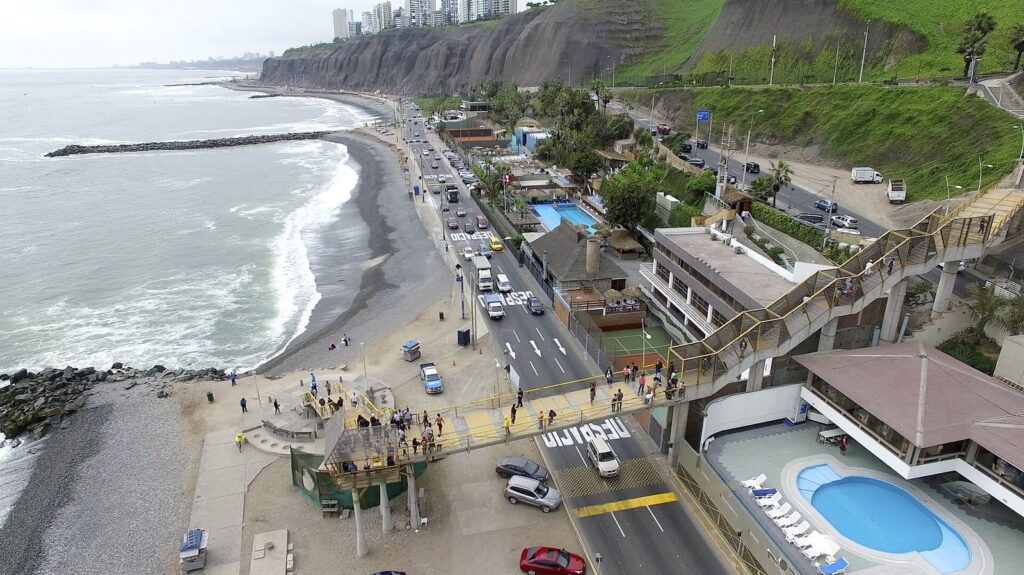
- Aerial view of the Costa Verde below Miraflores: photo by Municipalidad de Miraflores, Wikimedia Commons (CC BY 2.0)
- Malecón de Miraflores walkway: photo by Wasiwatana, Wikimedia Commons (CC BY-SA 4.0)
- Municipal Palace, Plaza Mayor: photo by Pierre André Leclercq, Wikimedia Commons (CC BY-SA 4.0)
- Callao Monumental: photo by Johnattan Rupire, Wikimedia Commons (CC BY-SA 4.0)
- New terminal, Jorge Chávez International Airport: photo by Mathias Rufino, Wikimedia Commons (CC BY-SA 4.0)
- Estación Central, Metropolitano: photo by Privado (imagen donada al publicador), Wikimedia Commons (CC BY-SA 4.0)
- Plaza San Martín at night: photo by Txolo, Wikimedia Commons (CC BY-SA 4.0)
- Footbridge at the Bajada de los Baños, Barranco: photo by Gaboct, Wikimedia Commons (CC BY-SA 4.0)